King Street Station Layover, Seattle
Part of the full Seattle Layover: Downtown and the Piers, SEA
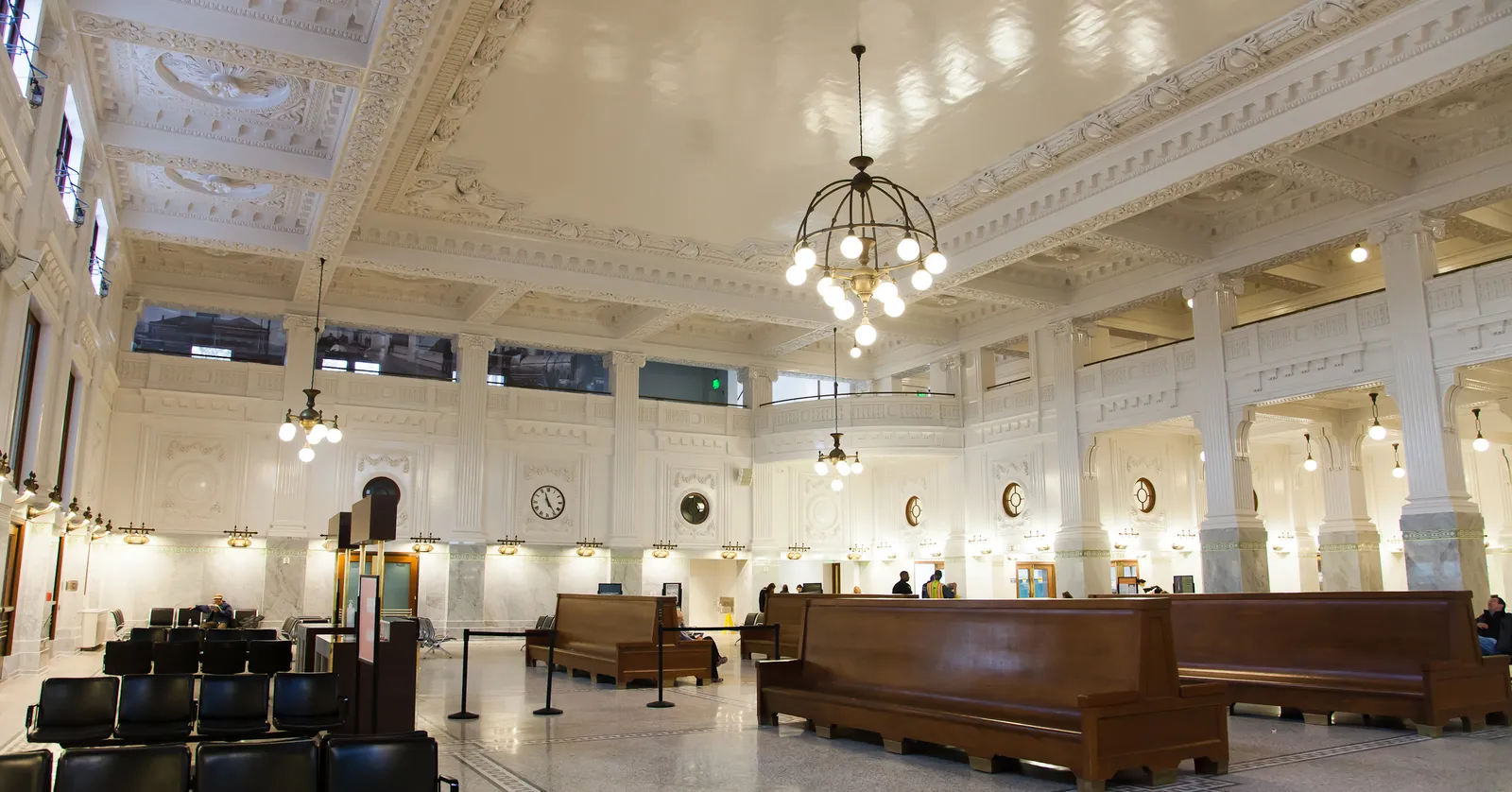
Seattle’s King Street Station has a plaster waiting room worth ten minutes before you go anywhere, a free gallery on its top floor, and two ticketed observatories, Smith Tower’s 1914 Chinese Room and Columbia Center’s, within about ten minutes on foot.
The plaster ceiling in King Street Station’s waiting room
A 1960s remodel of this building boarded the windows, split the hall into offices and hung acoustic tiles under the original ceiling. The city bought the station from the railroad for ten dollars in 2008 and spent five years undoing all of that, and what came back out from behind the tiles is a coffered plaster ceiling with fluted Corinthian columns under it, bronze chandeliers, and a terrazzo floor inlaid with tile. The hall reopened in April 2013. Nobody checks tickets to walk in and look at it.
Upstairs is the other reason to stay in the building: the top floor is a free public gallery run by the city’s arts office, open Wednesday to Saturday, 11am to 5pm, and to 8pm on Thursdays.
King Street Station’s clock tower, copied from a campanile in Venice
Reed and Stem, the firm behind Grand Central Terminal in New York, gave the station a four-faced brick clocktower directly modelled on St Mark’s Campanile in Piazza San Marco. When it opened in 1906 it was the tallest structure in Seattle, which is hard to picture now from the corner of Jackson and Fourth with the stadium roofs behind it.
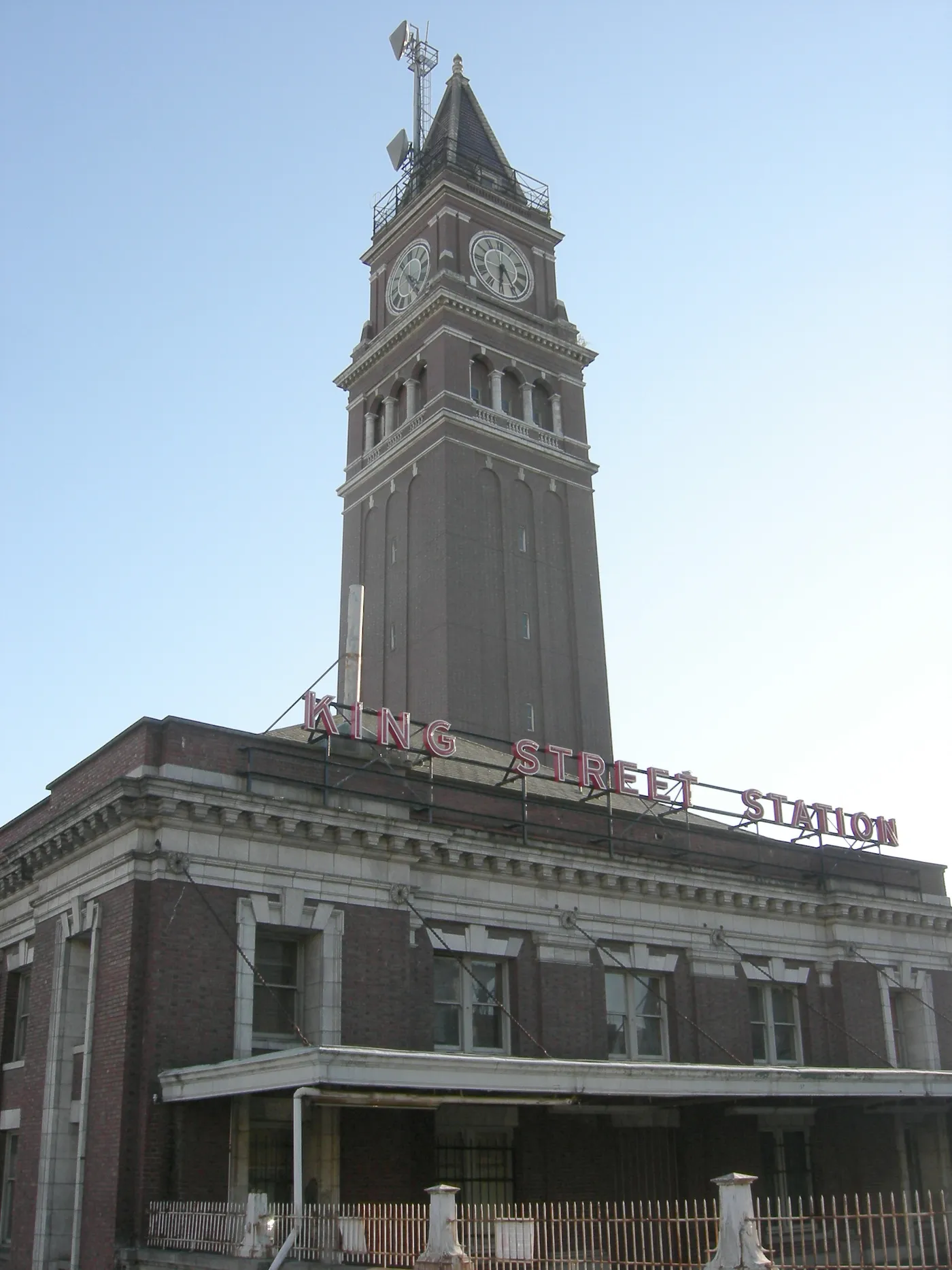
The clock stopped working for years and was repaired as part of the same restoration, along with the terracotta roof tiles, and an exterior escalator bolted to the front came off at the same time.
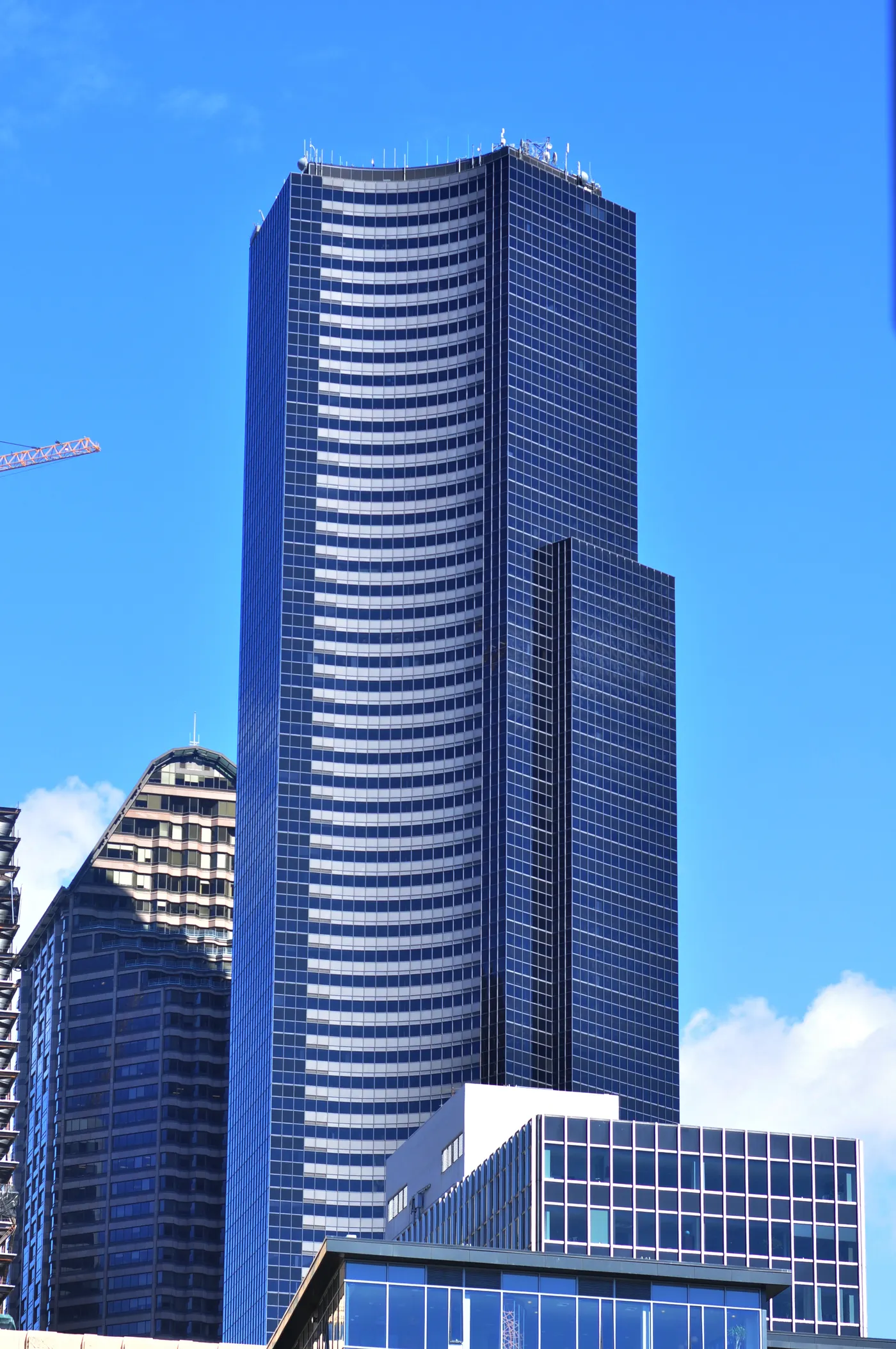
Sky View Observatory, 73 floors up in Columbia Center
Columbia Center is the black curved slab that dominates the skyline from the water, and its observatory wraps the 73rd floor at 902 feet, which is well above anything else in the city. It is fully enclosed, so it works on a wet day, and the elevator ride up takes about seventy seconds. You can buy timed admission ahead, which is worth doing here specifically because the queue is at the lift, not the door.
Long-distance trains arriving at King Street Station come in with checked baggage rather than cabin-sized carry-ons, so anyone walking out of here is usually pulling more than an air passenger would.
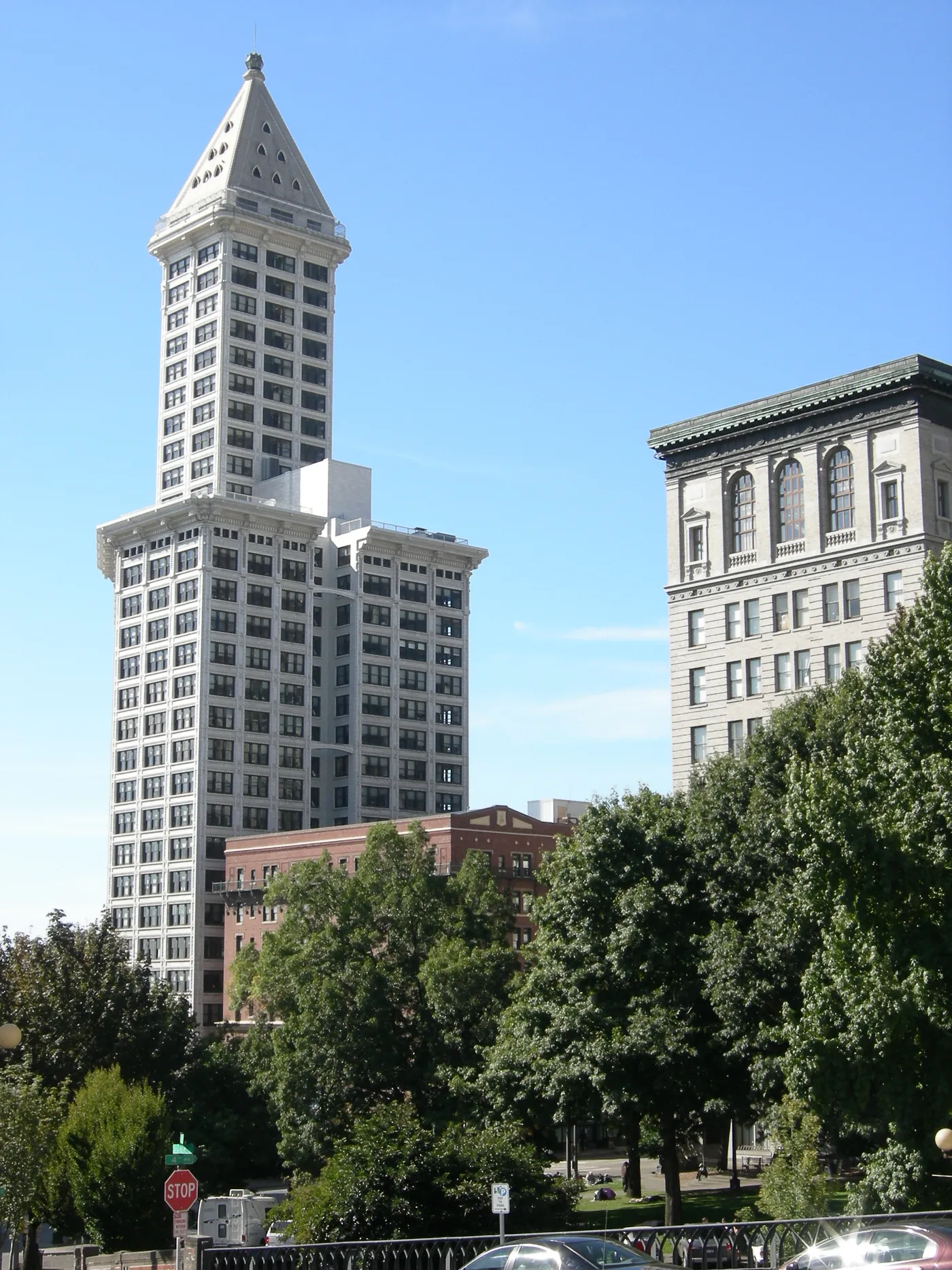
The Chinese Room at the top of Smith Tower
Smith Tower went up in 1914 on Second Avenue and was the tallest building west of the Mississippi when it did. The observatory occupies the 35th floor, in a room fitted out with a carved teak ceiling and blackwood furniture that came with the building, and the deck outside it is open to the air rather than glassed in, which makes it the better of the two towers on a still, clear afternoon. The lift is a manually operated original with an attendant.
Both towers stand in Pioneer Square, the oldest part of the city, which is worth the walk between them for the cast-iron shopfronts and the brick alleys alone.
Airport trains leave from International District station, one block east
International District/Chinatown station sits one block east of the Jackson Street entrance, and the 1 Line runs from its platform out to SeaTac/Airport Station in about 35 minutes for a flat $3 adult fare. Departures are every 8 to 10 minutes through the day, and the station is served from 5am to 1am Monday to Saturday, 6am to midnight on Sunday. The airport end is the part people underestimate: the platform is not attached to the terminal, and about 1,200 feet of covered walkway across the parking garage separates the two, so an hour door to door is the number to plan around.
If your free hours run to four or more, this station is a reasonable place to start the wider downtown Seattle route instead, which picks up Pike Place Market and the waterfront to the north. Either way, leaving a bag behind before an observatory lift is the difference between two towers and one.
Frequently asked questions
What should I do during a layover near King Street Station in Seattle?
Look up before you leave the building: the 1906 waiting room's plaster ceiling was hidden behind acoustic tiles for decades and was uncovered in the 2013 restoration, and the top floor holds a free city-run gallery. Outside, Smith Tower's 1914 observatory and the far taller Sky View Observatory in Columbia Center are both within about ten minutes on foot, and both are ticketed. Three hours covers the station, one tower and a walk through Pioneer Square. Book an observatory slot ahead if you are tight on time, since the elevator queues are the slow part.
Is there anything to see inside King Street Station itself?
The main waiting room is open to anyone, not just ticketed passengers, and the restoration put back the ornamental plaster ceiling, the bronze chandeliers, the marble columns and the terrazzo floor that a 1960s remodel had covered over. The top floor is a free public gallery run by the city's arts office, open Wednesday to Saturday from 11am to 5pm and until 8pm on Thursdays.
Which Seattle observatory is better on a short stop, Smith Tower or Columbia Center?
Smith Tower's is the shorter, older and more interesting room: the 35th-floor Chinese Room keeps its 1914 carved teak ceiling and blackwood furniture, and the deck outside it is open air. Columbia Center's Sky View Observatory is 73 floors up and enclosed, so the view is far wider but the room is a modern one. Smith Tower is five minutes from the station, Columbia Center about ten.
How do I get from King Street Station to the airport?
International District/Chinatown station is one block east of King Street Station's Jackson Street entrance, and the 1 Line runs from there out to SeaTac/Airport Station in about 35 minutes at a flat $3 adult fare. Trains serve the airport station from 5am to 1am Monday to Saturday and 6am to midnight on Sunday. Allow closer to an hour in total, since the airport platform sits about 1,200 feet of covered walkway away from the terminal.