Zilker Park Layover: Austin's Green Half
Part of the full Austin Layover Guide: Congress Avenue, AUS
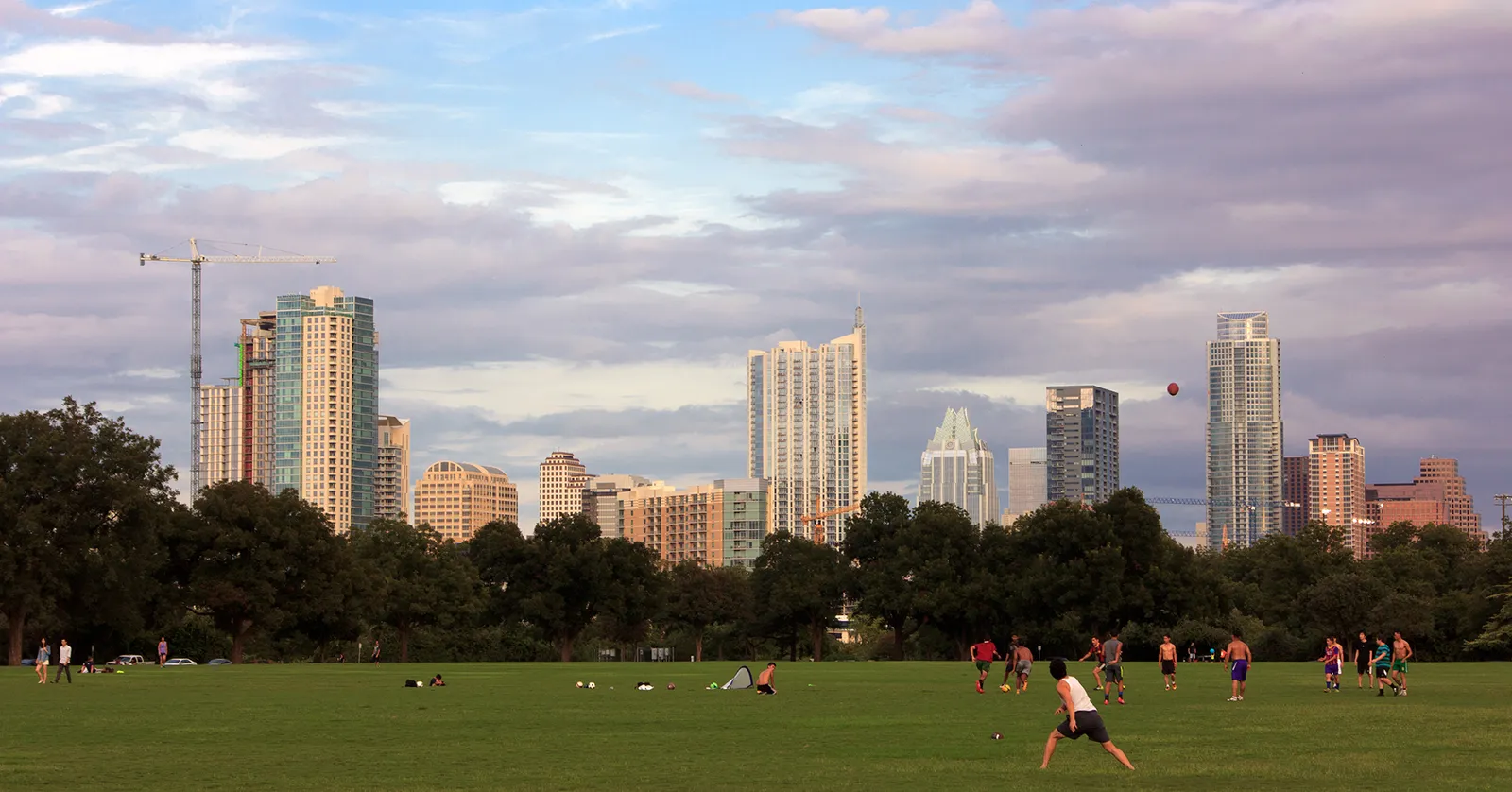
Austin’s Zilker Park holds the city’s green half: a 13-mile limestone creek corridor running west out of it, a Japanese garden one retired farmer built by hand, and a lawn with the skyline standing above the trees at the end of it.
Barton Creek’s limestone corridor runs 13 miles west
The greenbelt starts at the Zilker end of the park and follows the creek out to the Loop 360 trailhead near Lost Creek, and the change in character over that distance is the point: the first 1.2 miles are wide, flat and almost entirely unshaded, and then the walls close in and the creek bed turns into shelves of bare limestone with trees leaning over them.
Whether there is any water in it is a separate question. Barton Creek is spring and rain fed, so it runs high after a wet spring and goes dry in stretches through a hot summer, and the photographs everyone has seen of it were taken on the good side of that.
The swimming holes start three quarters of a mile in
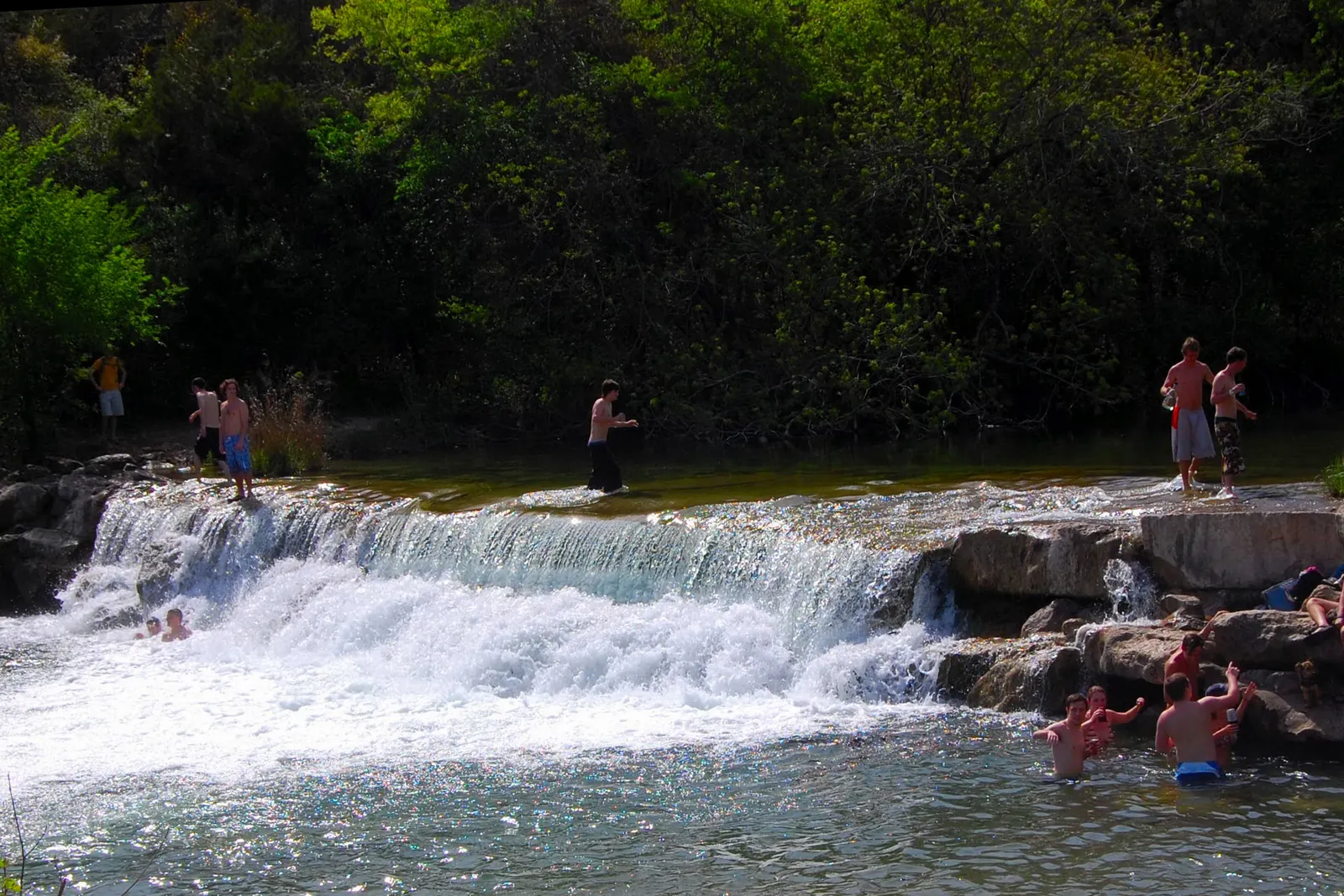
Campbell’s Hole sits around the three-quarter-mile mark, Twin Falls at about five miles and Sculpture Falls a mile and a quarter beyond that, all measured along the full corridor rather than from the park, so the far two are a real hike and the first is not. They are pools in the creek bed rather than anything built, with limestone shelves around them to sit on.
The trail underfoot is rock the whole way. Exposed ledge, loose gravel and root start within a few hundred feet of leaving the paved park, which is the difference between walking this and dragging a wheeled suitcase over it.
Isamu Taniguchi laid out the Japanese garden at seventy
Taniguchi had farmed near Harlingen in the Rio Grande Valley, spent part of the Second World War in an internment camp, and retired to Austin in 1967, where his sons had been through the University of Texas. He offered to build a garden on three rough acres of hillside inside Zilker Botanical Garden as thanks for that education, and then did it: eighteen months of daily work, alone, with no contract, no salary and no drawn plan. It opened in 1969, and the ponds he cut are shaped to spell the word Austin when you look down on them.
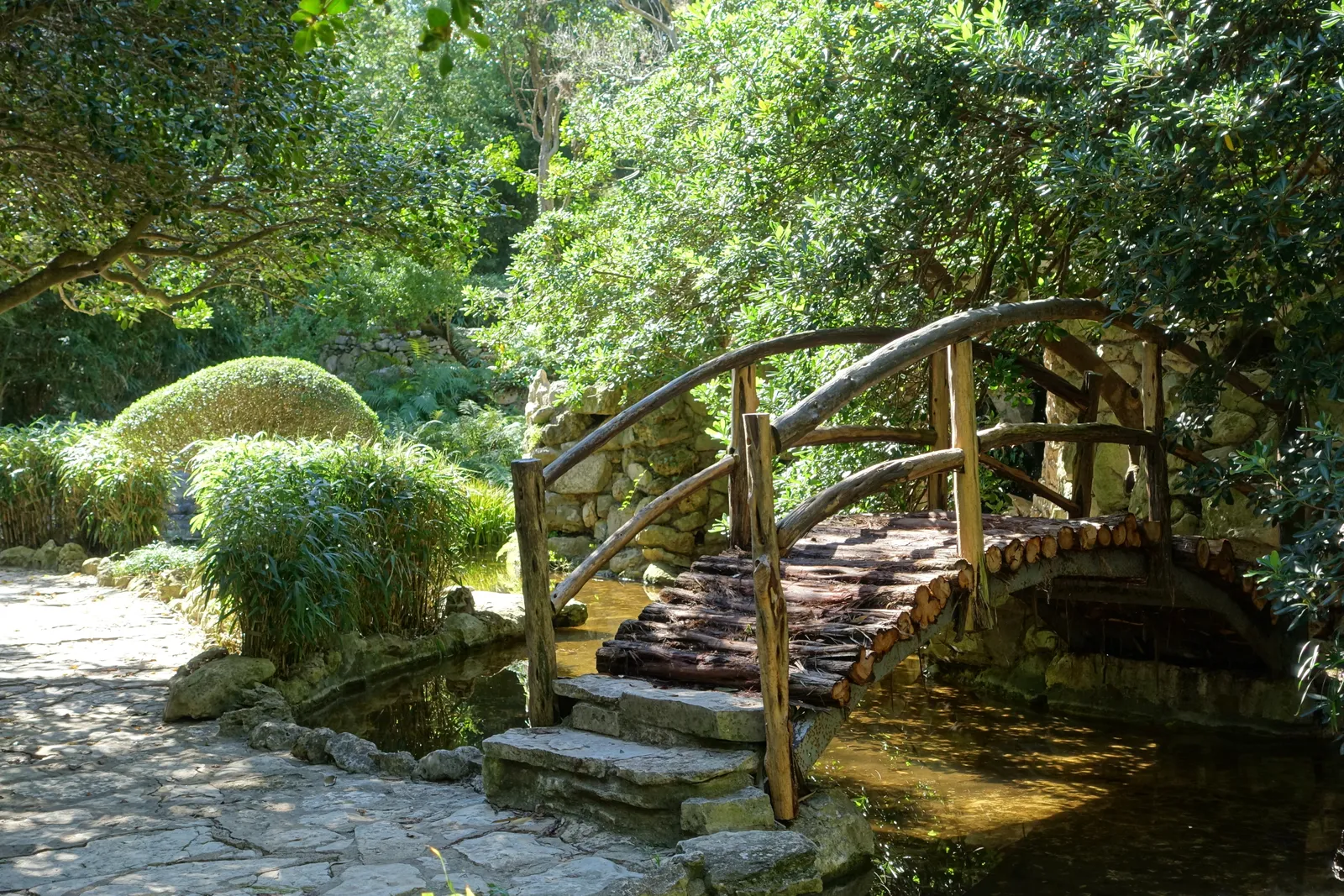
It is included in the botanical garden’s own admission, $8 for a non-resident adult, $7 over 62, $4 for youth. The garden opens 9am to 5pm from September through May, last entry 4.30pm, and 8am to 4pm across June, July and August, which is the sensible way round given what the afternoons do here. The rest of the site is worth the walk too, particularly the Hartman Prehistoric Garden, which is planted with Cretaceous-era species on the theory that a dinosaur track found on the site deserved appropriate landscaping.
A free musical has run on the Zilker hillside every summer since 1959
The Beverly S. Sheffield Zilker Hillside Theater is a grass slope facing a permanent stage, with no seats, no tickets and no gate. Austin’s parks department started the summer musical here in 1959 and it has run every year since, Thursday to Sunday, curtain around 8.15pm, pulling something like 45,000 people across a season. Nobody sells a ticket; you bring a blanket and sit on the hill.
Below it, the Great Lawn is the open middle of the park, mown grass with the downtown towers standing above the tree line on the far side of the water. This is where the big festivals set up and where the rest of the year it is just a very large field, which after the enclosed creek bed is exactly the contrast worth having.
Zilker has no airport service of its own
Getting back to Austin-Bergstrom International Airport (AUS) means crossing to downtown first, roughly two and a half miles east, and picking up Route 20 there, which runs every fifteen to thirty minutes seven days a week, takes about 35 minutes for the ride and costs $1.25, with a $2.50 cap on a day of local fares. The airport asks for two and a half hours before a domestic departure and three before an international one, so budget the park’s distance on top of that rather than inside it.
Four hours out here is a real afternoon and six is better. If you have less than that, or want sidewalk rather than creek bed, the downtown Austin route runs eleven blocks of Congress Avenue from the Texas Capitol to the bridge over Lady Bird Lake and needs no travel time at either end. The argument for doing Zilker empty-handed is simply that the good parts of it are off the paving.
Frequently asked questions
What should I do during a layover near Zilker Park in Austin?
Start with Barton Creek. The greenbelt trail runs 13 miles from the Zilker end out to Loop 360, and the first 1.2 miles from the park are wide, flat and easy to turn around on. The Zilker Botanical Garden is the other half of the afternoon: $8 for a non-resident adult, open daily, and the Isamu Taniguchi Japanese Garden inside it is worth the ticket on its own. Between the two, the Great Lawn is open grass with the skyline standing above the tree line, and the hillside above it has staged a free musical every summer since 1959. Four hours covers the creek and the garden; six lets you take the trail out past the first swimming hole.
Is there water in Barton Creek?
Not reliably. The creek is spring and rain fed and runs dry in stretches through a hot summer or a drought year, so the falls and swimming holes people photograph are a wet-season sight rather than a guarantee. Campbell's Hole is the closest of them at about three quarters of a mile in from the Spyglass access, with Twin Falls around mile five and Sculpture Falls around mile six and a quarter measured along the full greenbelt. When the creek is low the walking is better, not worse: dry limestone is the best running surface in the city.
How long does Zilker Botanical Garden take?
An hour and a half is comfortable for all of it and forty minutes is enough for the Japanese garden alone. Admission is $8 for a non-resident adult, $7 for over-62s, $4 for youth and free under two, and the garden opens 9am to 5pm from September to May with a last entry at 4.30pm, shifting to 8am to 4pm from June through August. The ground is terraced and the paths between the themed gardens involve steps and slopes, so it is not a flat walk.
Is Zilker manageable in the rain?
Partly. The Great Lawn turns to mud and the creek bed floods fast enough that the greenbelt is genuinely not the place to be during heavy rain, since Barton Creek drains a large catchment west of the city and comes up quickly. The botanical garden stays open and is the better bet, because the tree cover over the Japanese garden keeps most of it walkable, though the stone paths get slick. If it is properly wet, the honest answer is to go back into town rather than wait it out here: there is no indoor building in the park to sit in.