Austin Downtown Station Layover: Sixth Street
Part of the full Austin Layover Guide: Congress Avenue, AUS
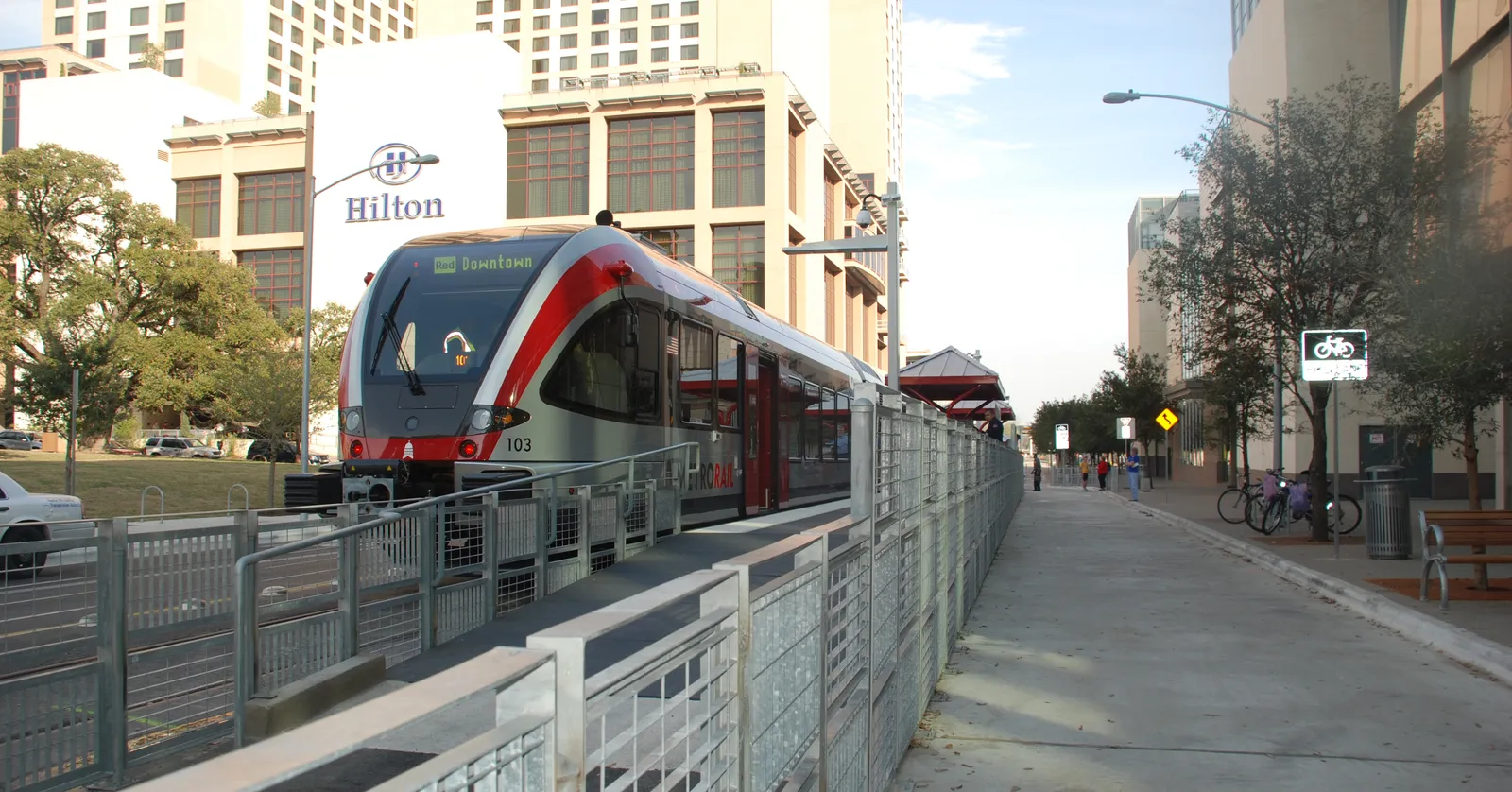
Austin’s Downtown Station stands at Fourth and Neches, two blocks from the 1880s storefronts of Sixth Street, with the Driskill’s free lobby and the Auction Oaks in Republic Square both inside a ten-minute walk of it.
Sixth Street’s 1880s storefronts run east from Congress Avenue
The blocks were called Pecan Street until 1884, and the buildings that went up along them through the 1870s and 1880s are what got the stretch onto the National Register as a historic district in 1975. Look above the awnings and the bar signage: cast-iron columns, pressed-metal cornices, arched upper windows, limestone and polychrome brick, most of it put up by German and Swedish builders working for local merchants. The street’s reputation is nocturnal, but the fabric reads far better in daylight, when the doors are shut and the sidewalks are empty.
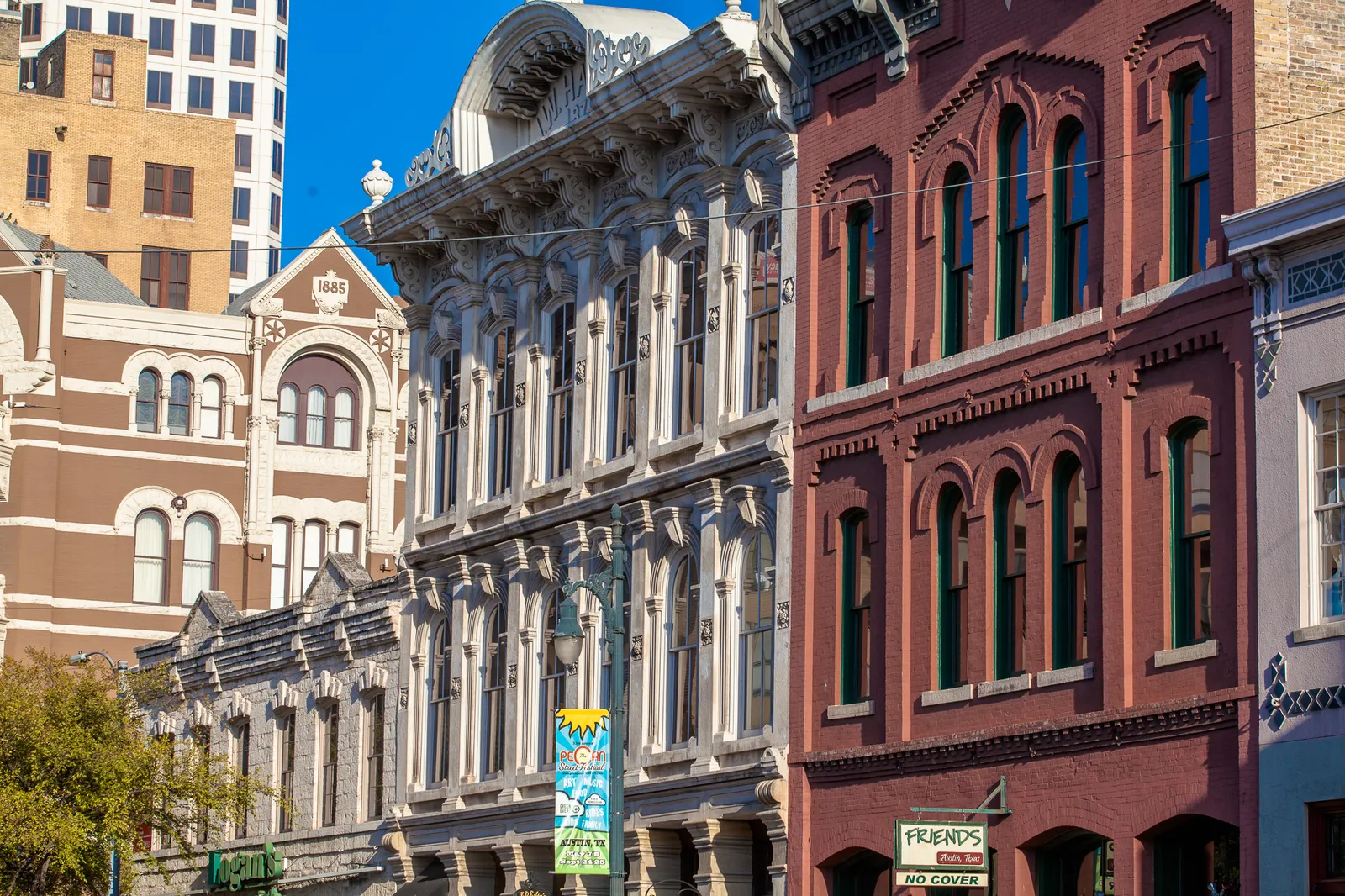
What happened inside those rooms is the other half of it, and the addresses turn over fast enough that a plaque rarely tells you. A guided walk through the downtown music history covers which club was which, which is the kind of thing worth having someone tell you rather than reading off a phone. Left to your own devices, the Ritz at 320 East Sixth is the easiest one to pick out: a 1929 cinema, later a music room, with its vertical sign still on the front.
The Driskill’s lobby has been open to the street since 1886
Colonel Jesse Driskill was a cattleman who bought the corner of Brazos and what was still Pecan Street for $7,500 in 1884 and spent $400,000 building on it. Jasper N. Preston & Son gave him a Romanesque pile with 60 rooms, twelve of them corner rooms with their own baths, an electric bell system, steam heat, gas lighting and a rotunda under a large domed skylight. It opened on 20 December 1886 and has been the oldest working hotel in the city ever since, on the National Register since November 1969.
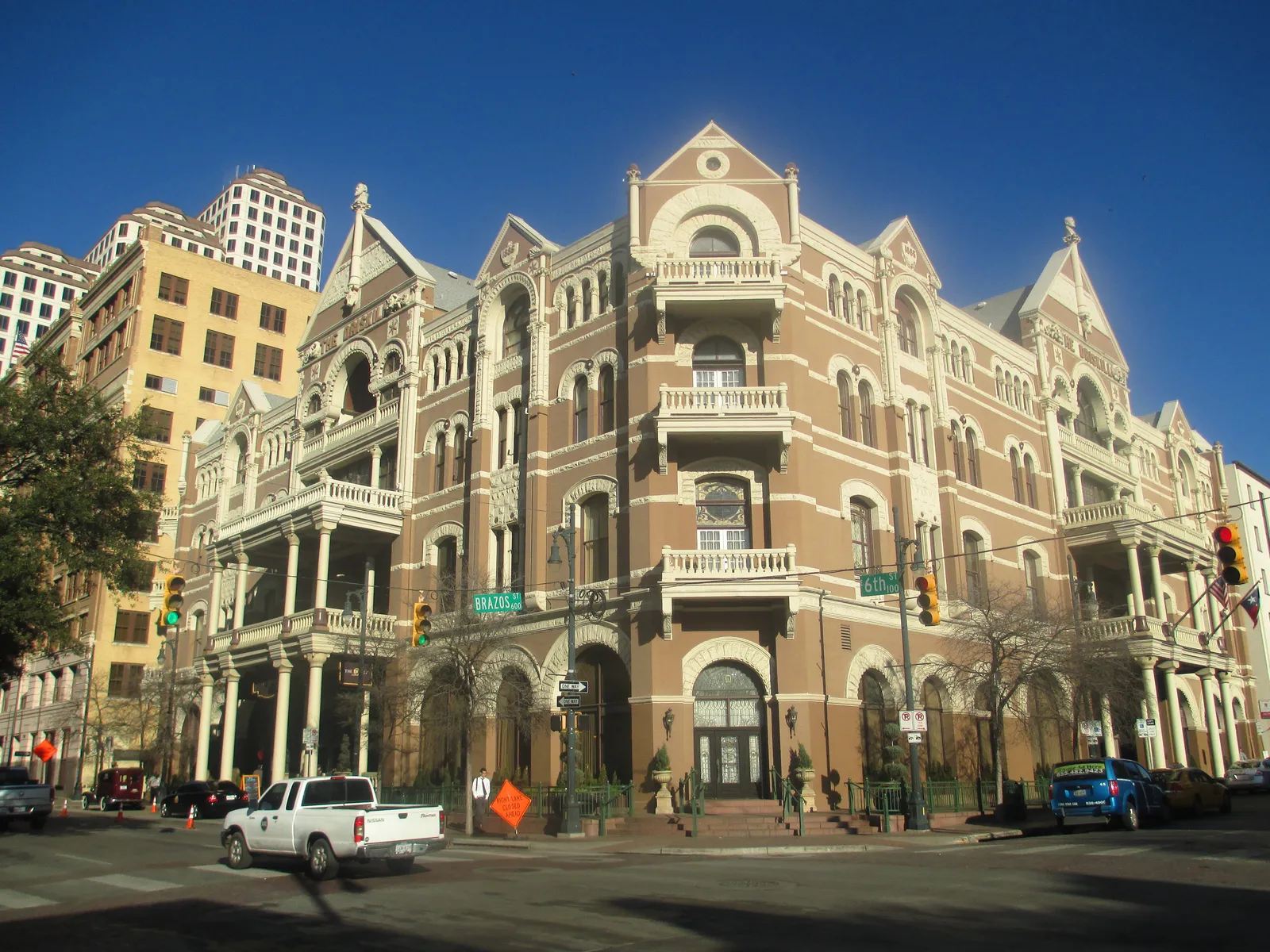
Driskill died of a stroke in May 1890, four years after opening it, and the hotel bought a life-size portrait of him that still hangs over the lobby. Nobody stops you walking in to look at it. The marble, the columns and the skylight are all on the ground floor, and the whole visit is about ten minutes unless you sit down for a drink.
The stretch of Sixth between the station and Brazos is narrow sidewalk with bar furniture, delivery pallets and queue rope on it from mid-afternoon, and a wheeled bag spends that block in the gutter.
The Auction Oaks still stand in Republic Square
Edwin Waller laid out four public squares when he planned Austin in 1839, and this one, then called Hemphill Square, is where the city’s first 306 lots were sold at auction that August, under live oaks that are still rooted in the same block. The square went through a long stretch as a parking lot before the Downtown Austin Alliance, the Austin Parks Foundation and the city’s parks department rebuilt it in 2017.
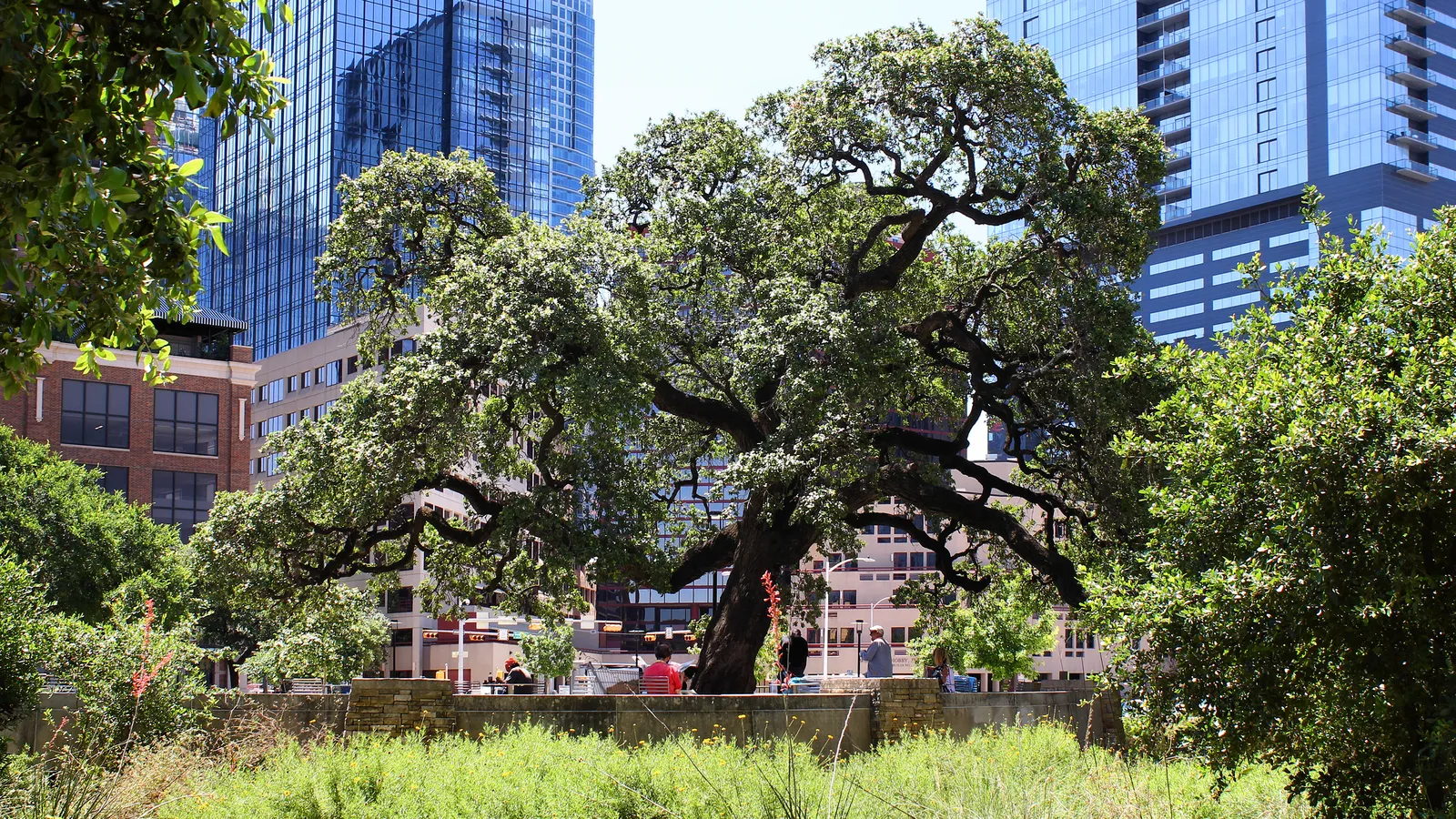
The oaks are the reason to come and the shade is the reason to stay: this is one of the few blocks downtown where a mature canopy covers most of the ground, which matters from May onward. On Saturday mornings the SFC Farmers’ Market takes the square over, which is the one time of the week it is crowded rather than quiet.
The Red Line runs about once an hour outside rush hour
Downtown Station is the southern end of a 32-mile commuter route up to Leander, and the timetable is shaped around people commuting in, not around visitors moving about: roughly every 30 to 40 minutes at peak and about hourly the rest of the day. The station itself was rebuilt with four platforms and reopened in October 2020, and it carries more passengers than any other stop on the line, which at around 2,100 weekday riders across the whole route is still a small operation by the standards of the word “rail”.
For the airport, the train is no help at all. Route 20 runs from downtown to the arrivals level at Austin-Bergstrom International Airport (AUS) every fifteen to thirty minutes, seven days a week, takes about 35 minutes for the ride and costs $1.25, with a $2.50 cap on a day of local fares. Between midnight and 4am, Route 483 covers the same corridor. The airport asks for two and a half hours before a domestic departure and three before an international one.
Three hours around this station is a full afternoon and leaves nothing out. If you have more like six, the wider Austin route carries on down Congress Avenue to the bridge over Lady Bird Lake, where the bat flight at dusk is the one thing in the city worth rearranging a day around. Either way, the walking here is four blocks in any direction, which is short enough to do twice and short enough to do empty-handed.
Frequently asked questions
What should I do during a layover near Downtown Station in Austin?
Walk two blocks west to Sixth Street and work the 1880s blocks between Congress Avenue and Interstate 35, which have been a National Register historic district since 1975 and cost nothing to look at. The Driskill at Sixth and Brazos opened in December 1886 and its lobby, rotunda skylight and Colonel Driskill's own portrait are open to anyone who walks in. Four blocks west again, Republic Square still has the live oaks the city's first 306 lots were auctioned under in 1839, and the farmers market fills it on Saturday mornings. Three hours covers all of it comfortably; the one thing to watch is the train timetable rather than the walking distances.
How often does the train actually run from Downtown Station?
Not often enough to improvise around. The Red Line is a commuter service first: headways are roughly 30 to 40 minutes at peak and about an hour off-peak, which means a missed departure is a long wait rather than a short one. The station at Fourth and Neches is the southern end of the line and its busiest stop, with four platforms since the rebuild finished in October 2020. If your plan depends on catching a specific train, check the day's timetable before you start walking, not after.
Is Sixth Street worth seeing in the daytime?
Yes, and the architecture is easier to see then. The bars that give the street its night-time reputation occupy buildings from the 1870s and 1880s, and in daylight you can actually read the cast-iron columns, pressed-metal cornices and arched upper windows above the awnings. The blocks are quiet before late afternoon, most doors are shut, and the walk from Congress Avenue east is a few minutes. If you want the street at full volume instead, that starts after dark and the sidewalks narrow fast.
When is the farmers market in Republic Square?
Saturday mornings, under the same live oaks the city's first lots were auctioned beneath in 1839. The SFC Farmers' Market has run in the square for years and is the one time of the week the block is genuinely busy rather than a quiet place to sit; the rest of the time it is shade, paving and benches. If you are passing through on a Saturday it is four blocks west of the station and worth the detour for the produce stalls alone. On any other day the square is still open, just empty.