Austin Airport Layover: What's Inside AUS
Part of the full Austin Layover Guide: Congress Avenue, AUS
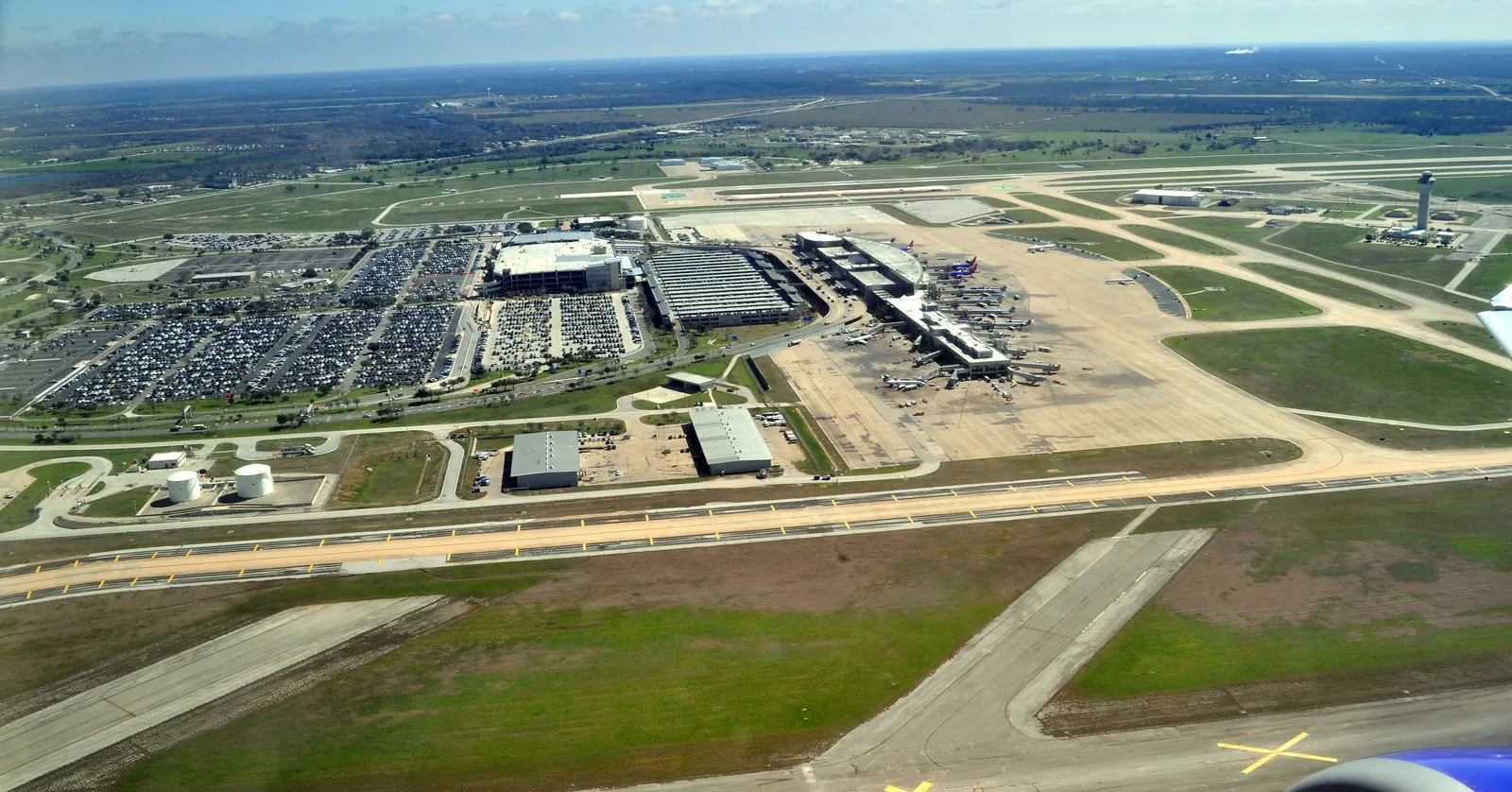
Austin-Bergstrom International Airport books more than 1,350 live sets a year across eight stages inside its single terminal, plus barbecue carved in the concourse and a city art program hung between the gates, which is why a short connection here is better spent inside than on the bus.
Eight stages of live music play past security
The Barbara Jordan Terminal has had musicians in it since June 1999, a month after the airport opened, when a program called Music in the Air started with two performances a week. It now runs to more than 1,350 shows a year across eight stages, blues, country, rock and Americana, played by Austin acts rather than touring ones. The largest is the Asleep at the Wheel Stage near Gate 19, named for the western swing band that has been based in the city since the 1970s, and a second sits between gates 23 and 24.
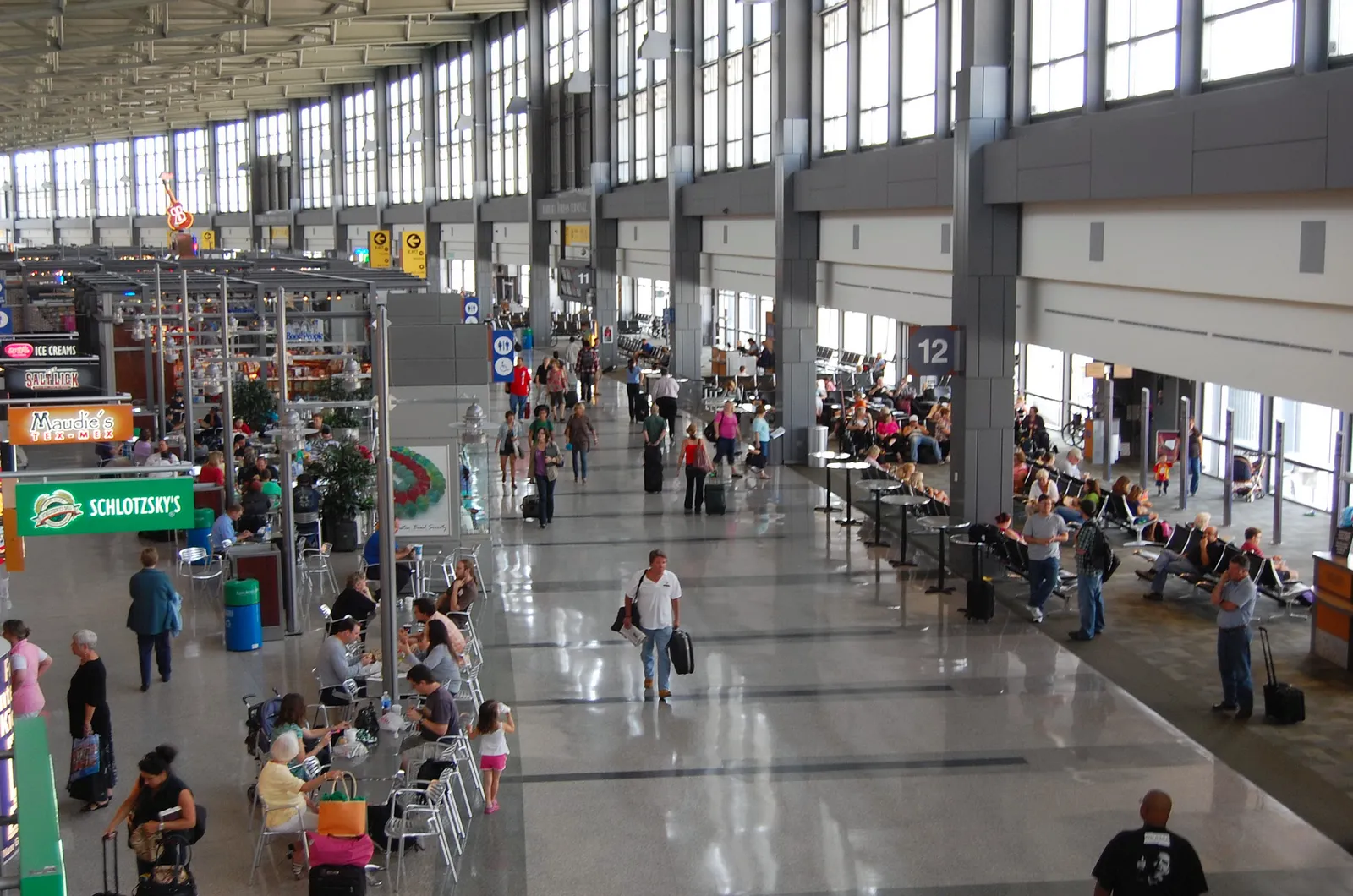
Nobody sells a ticket to any of it. Sets are short, usually under an hour, and the schedule is posted on the day rather than weeks out, so the practical approach is to look at what is playing when you land instead of planning around it. The terminal is a single concourse with gates down both sides, which means there is no wrong end of the building to be at: the walk from one stage to the other is a few minutes.
Salt Lick carves brisket between gates 21 and 22
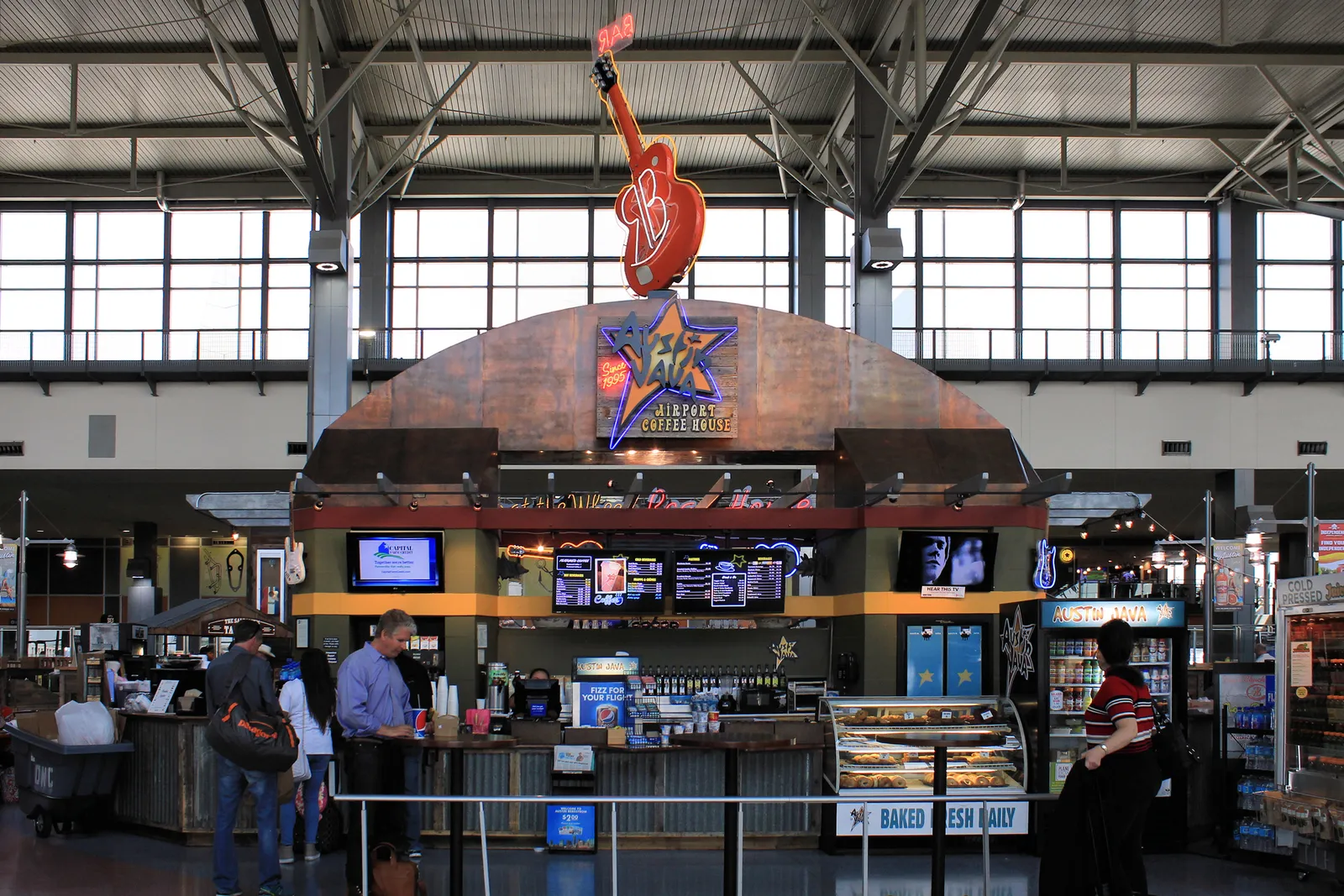
The barbecue is the other reason people rate this terminal against restaurants rather than against other airports. Salt Lick, whose original pit is out at Driftwood in the hills southwest of the city, runs an airside counter between gates 21 and 22 and carves there rather than reheating trays. Amy’s Ice Creams, an Austin company since 1984, has a counter near Gate 19 in the middle of the biggest food concentration in the building, with Tacodeli, The Peached Tortilla and Jo’s Coffee within the same stretch.
The trade-off is that all of it is airside. Leaving the building to eat means clearing security again on the way back, and security here is busiest from 6am to 9am and from 4pm to 7pm, with the airport asking for two and a half hours before a domestic departure.
That security line is also the argument for not dragging a suitcase into the city and back: whatever you take out of the terminal comes through the screening queue with you a second time.
The runways were an air force base until 1993
Bergstrom opened as a troop carrier training field in 1942 and was named the following year for Captain John A. Bergstrom, the first Austinite killed in the Second World War. It spent the Cold War as a Strategic Air Command base, closed in 1993 under the base realignment rounds, and the land went back to the city, which opened the civil airport on it on 23 May 1999. The scale is the giveaway: the aprons and the run of open grass between the taxiways are sized for bombers, not for a city this size.
The terminal itself is named for Barbara Jordan, the congresswoman from Houston who taught at the University of Texas here for most of the last two decades of her life. Art in Public Places, a City of Austin program running since 1985, was written into the building’s design from the start, so the corridor between gates carries commissioned work and rotating exhibitions from Texas artists and school groups rather than advertising panels.
Route 20 reaches downtown in about 35 minutes
The bus leaves from the arrivals level, runs seven days a week every fifteen to thirty minutes from around five in the morning to roughly midnight, and costs $1.25, with a $2.50 cap on a whole day of local fares. The ride itself is about 35 minutes down Riverside Drive and longer in the evening rush. Between midnight and 4am, Route 483 covers the same corridor. There is no train: a Blue Line light rail along Riverside has been planned and not built.
Four hours on the ground is roughly the line. Below it, the round trip plus the security queue eats whatever you went in for. Above it, the full Austin layover route starts eleven blocks up Congress Avenue at the Texas Capitol and ends on the bridge over Lady Bird Lake at dusk, where up to 1.5 million bats come out from under the deck between spring and fall. If you are landing late enough in the afternoon to make that work and want to be on the water for it, a sunset kayak tour puts you under the bridge rather than on it.
The terminal is a good place to wait and a poor place to store anything, which is the whole calculation here: the music and the barbecue cost you nothing to enjoy with your hands full, and the city costs you a screening queue to get back from.
Frequently asked questions
What should I do during a layover near Austin-Bergstrom International Airport (AUS) in Austin?
Stay airside and use the terminal, which is unusually well set up for it. Eight stages inside the Barbara Jordan Terminal run more than 1,350 live sets a year, all free to stand and listen to, and the music program has been running since June 1999. The food is local rather than franchised: Salt Lick barbecue between gates 21 and 22, Amy's Ice Creams and Tacodeli in the central food court, Jo's Coffee for the early flights. Art in Public Places has been putting work into the building since it opened, so the walk between gates is a gallery as much as a corridor. Under about four hours on the ground, none of this is worth trading for the bus ride into the city.
Does Austin's airport have luggage lockers?
No. Austin-Bergstrom International Airport does not run a left-luggage desk or lockers, which is standard for US airports and is a security rule rather than a space problem. Luggage carts are available outside the departures doors and in baggage claim, and that is the extent of what the building does with a bag you are not carrying. If you are planning to leave the terminal and come back, the storage points that exist are in the city rather than at the airport, which also means the bag is waiting where you are rather than five miles behind you.
How early should I be back at AUS?
The airport asks for two and a half hours before a domestic departure and three before an international one. Security is at its worst from 6am to 9am and again from 4pm to 7pm, and the quietest run is usually late morning, roughly 11am to 2pm. Thursday, Friday, Sunday and Monday are the heaviest days of the week. Route 20 from downtown takes about 35 minutes for the ride itself and runs every fifteen to thirty minutes, so a trip into the city and back is a two-hour commitment before anything else is added to it.
Is there anything to do outside the terminal at AUS?
Not within walking distance. The airport sits on five square miles of former air base seven miles southeast of downtown, with no neighborhood attached to it: the land around the runways is taxiway, cargo apron, rental-car lots and open grass. There is no hotel you can reach on foot from the doors, no shopping street and no park. Anything worth going out for means the bus, a taxi or a rideshare and a round trip of at least an hour, which is why the terminal itself is the answer for anything under four hours.