Austin Amtrak Station Layover: Seaholm
Part of the full Austin Layover Guide: Congress Avenue, AUS
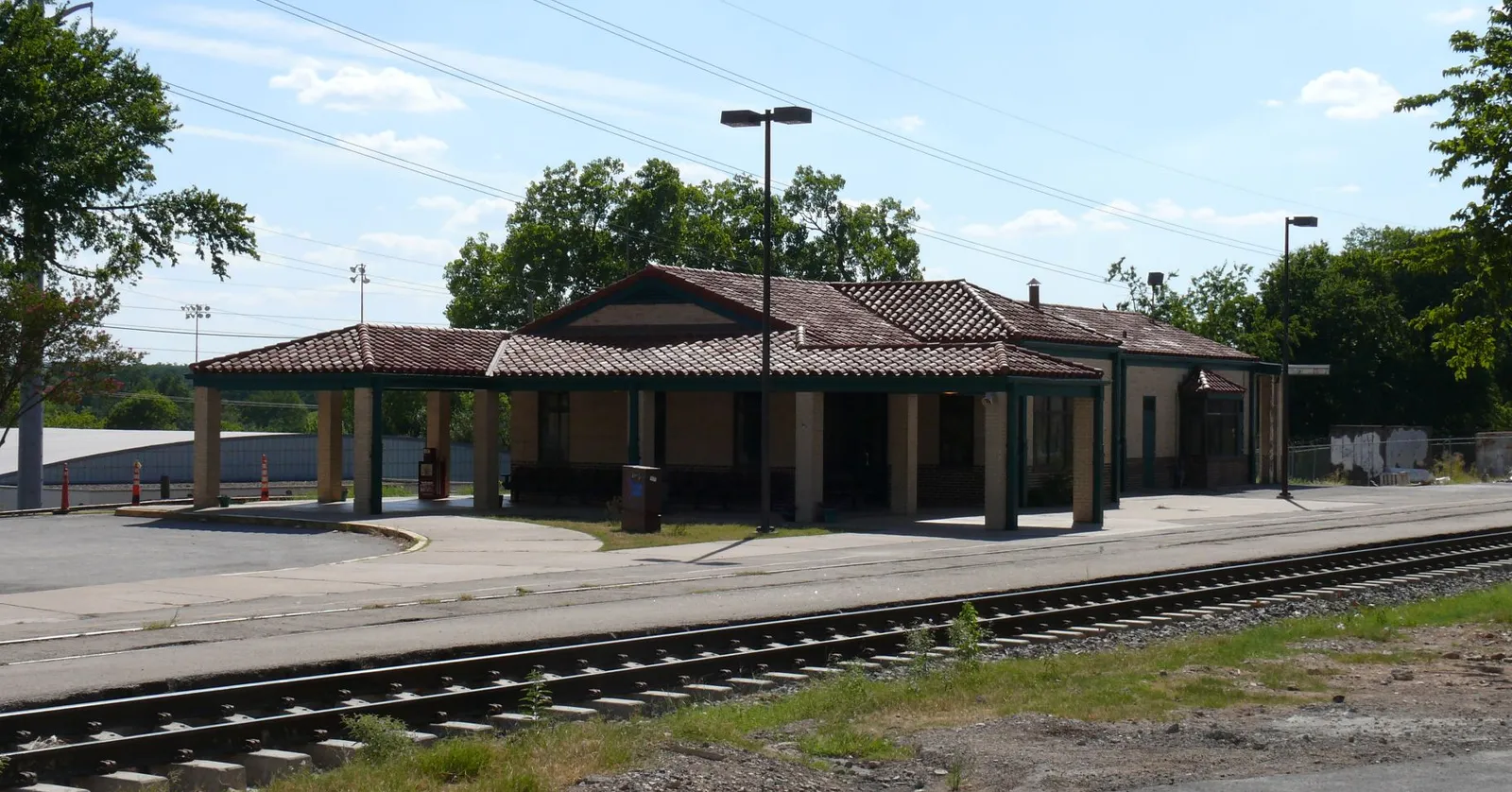
Austin’s Amtrak depot sits on North Lamar Boulevard about ten minutes’ walk from the old Seaholm power plant and the city’s central library, both of which are better places to spend a wait than the platform is.
One train a day stops at the 1947 depot on North Lamar
The Missouri Pacific built the brick station in 1947, and what runs through it now is the Texas Eagle: Chicago to San Antonio by way of Dallas, calling at Austin around nine in the morning northbound and around five in the afternoon southbound, with a connection on to Los Angeles three days a week on the Sunset Limited out of San Antonio. One departure each way, every day.
There is no train to Austin-Bergstrom International Airport (AUS) from here or from anywhere else, and the bus that goes there does not call at this depot. Route 20 runs from stops in the middle of downtown, about five minutes east of the station, every fifteen to thirty minutes, seven days a week, taking around 35 minutes for the ride down Riverside Drive and costing $1.25, with local fares capped at $2.50 for a whole day. Between midnight and 4am, Route 483 covers the same corridor. Build that on top of the two and a half hours the airport asks for before a domestic departure, three before an international one.
The depot itself is a waiting room, a ticket window and a restroom, which is fine for twenty minutes and thin for three hours. If the gap between a train and a flight is bigger than the building can absorb and you would rather have the city explained than wander it, a private guided walk of the main sights covers the downtown core in a couple of hours and starts close enough to be worth it.
Seaholm still has CITY OF AUSTIN POWER PLANT across its front
The plant went into service in 1950 and was the city’s only generating station for most of that decade. It burned its last fuel in 1989, stayed on as a training facility, and was finally decommissioned in 1996, after which it sat empty beside the lake for the better part of twenty years. Construction on the reuse started in 2013 and finished in early 2016.
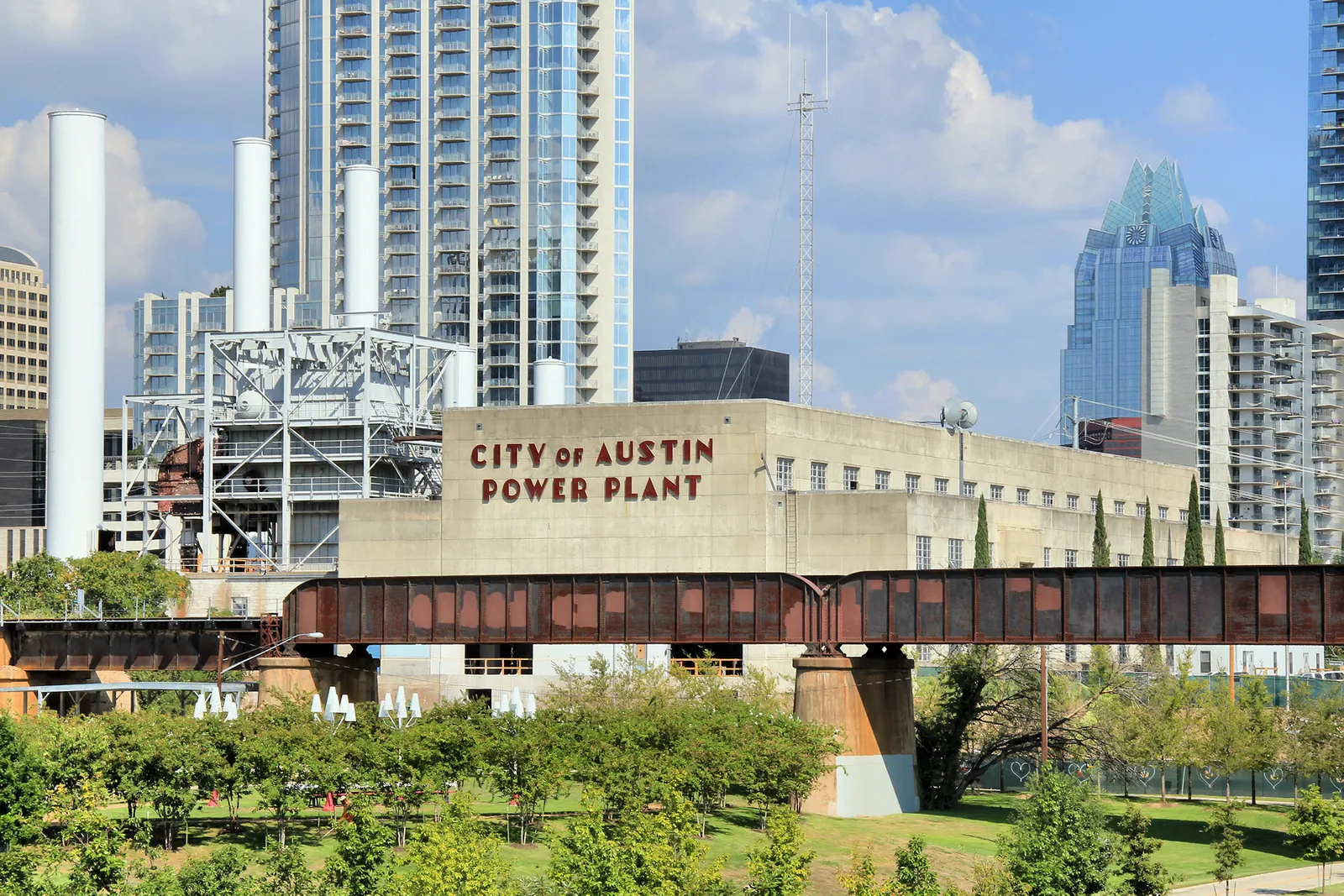
The conversion left the important things alone: the Art Deco massing, the tall stacks, the iron conveyor bridge across the front, and the raised metal lettering that still names it as a power plant rather than as whatever it now is. A restaurant occupies the four-story space where the ninth boiler stood, offices fill the rest, and the intake structures down on the water have been kept as a separate piece of city park.
Austin Central Library stacks six open floors around an atrium
It opened in October 2017 at 710 West César Chávez Street, immediately south of Seaholm, and the room that makes it is the central void: six levels of open stair crossing back and forth under timber soffits, with light coming down from the top and reading floors opening off each landing.
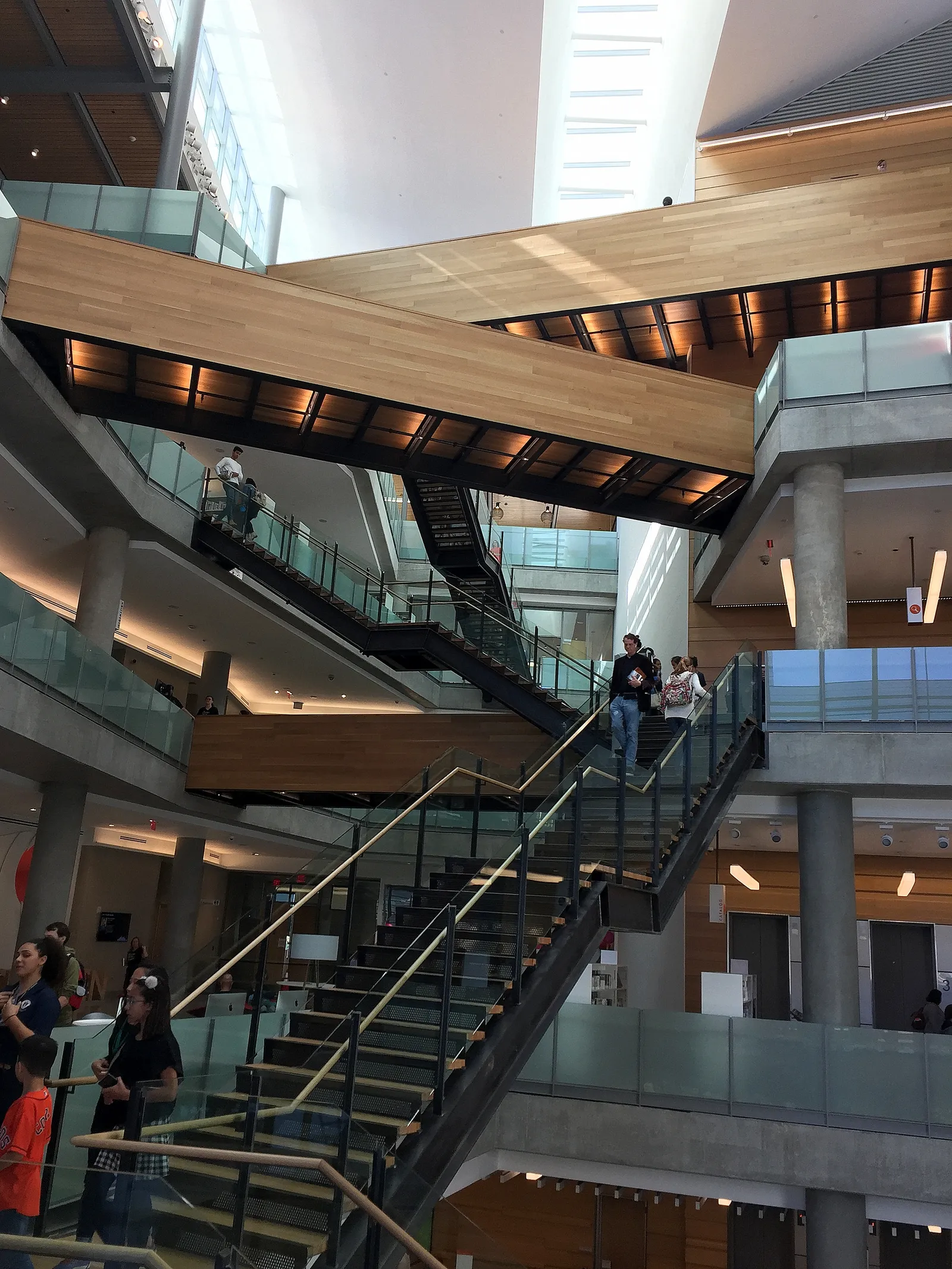
The roof is the other half of it: a planted garden of native beds and shaded seating, six floors up, looking back at Lady Bird Lake and the towers. None of it costs anything, there is no ticket desk, and it closes at 8pm Monday to Thursday, 5pm Friday and Saturday, and 5pm on Sunday after a noon opening.
This particular wait cuts two ways. Someone off the Texas Eagle is carrying a week of luggage and has hours to fill; someone waiting for it has already checked out of a hotel and has nowhere to put anything. Neither is served by a waiting room with a dozen seats in it.
If the gap is long enough to want landmarks rather than a quiet hour by the water, the Congress Avenue route starts six blocks east at the Texas Capitol and runs downhill to the bat bridge, which is the more conventional version of this afternoon.
Frequently asked questions
What should I do during a layover near Austin Amtrak Station in Austin?
Head for the water, which is about ten minutes south of the depot on North Lamar. The old Seaholm power plant still carries CITY OF AUSTIN POWER PLANT in metal letters across its front and is now a district of shops, offices and a restaurant built into the boiler hall. Beside it, Austin Central Library opened in 2017 with six floors around an open atrium and a planted roof garden, all free and open until 8pm early in the week. From there the Ann and Roy Butler Hike-and-Bike Trail runs along the lake in both directions. Two hours covers the three of them without hurrying.
How often do trains run from Austin's Amtrak station?
Once a day in each direction. The Texas Eagle runs Chicago to San Antonio through Dallas and Austin, calling here around 9am northbound and about 5pm southbound, with a through connection on to Los Angeles from San Antonio on three days a week via the Sunset Limited. That single daily departure is what makes a wait here different from a wait at a commuter station: miss it and the next one is tomorrow, and long-distance trains arriving late are normal rather than exceptional.
Is there anywhere to sit at Austin's Amtrak depot?
A little. The brick depot was built in 1947 for the Missouri Pacific and has a small waiting room, a ticket office and a restroom, which covers a short wait and not much more. That is the practical argument for walking the ten minutes south instead: the library has seating on six floors, free wifi and a roof terrace, and the Seaholm district has coffee shops and a supermarket, none of which the station platform offers.
How do you get from the train station to the airport?
Not directly. There is no rail link to Austin-Bergstrom International Airport (AUS) from anywhere, and the airport bus does not call at this depot. Walk or ride five minutes east into the middle of downtown and pick up Route 20, which runs every fifteen to thirty minutes, seven days a week, takes about 35 minutes for the ride and costs $1.25, with a $2.50 daily cap on local fares. Allow for the airport's own request of two and a half hours before a domestic flight, three before an international one, on top of that.