Deira Gold Souk and the Old Souks, Dubai
Part of the full Dubai From DXB: Burj Khalifa and the Old Creek
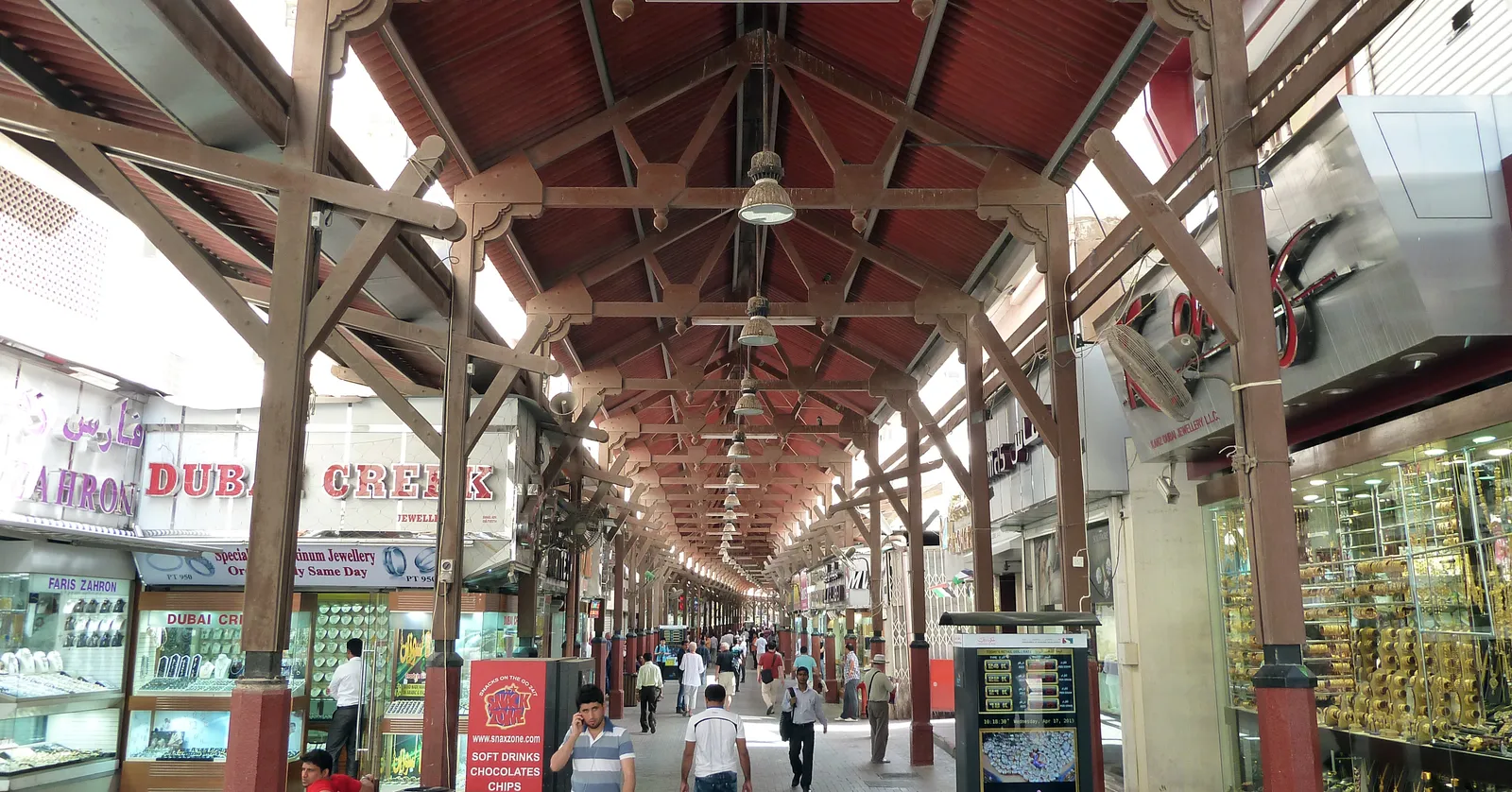
Dubai’s old market district in Deira costs nothing to walk: the Spice Souk’s open tubs of saffron and frankincense, the oud and bakhoor of the Perfume Souk, the covered lanes of more than 380 gold retailers, and wooden cargo dhows loading by hand at the creek wharf.
Saffron, frankincense and oud in Deira’s Spice Souk
The Spice Souk fills a few lanes on the Deira bank of Dubai Creek, a short walk from the Deira Old Souk abra station, and its shops keep their stock in open tubs and sacks out front: saffron, cardamom, dried black limes, rose petals, lumps of frankincense and myrrh, and bags of the scented wood chips called bakhoor that are burned to perfume a room.
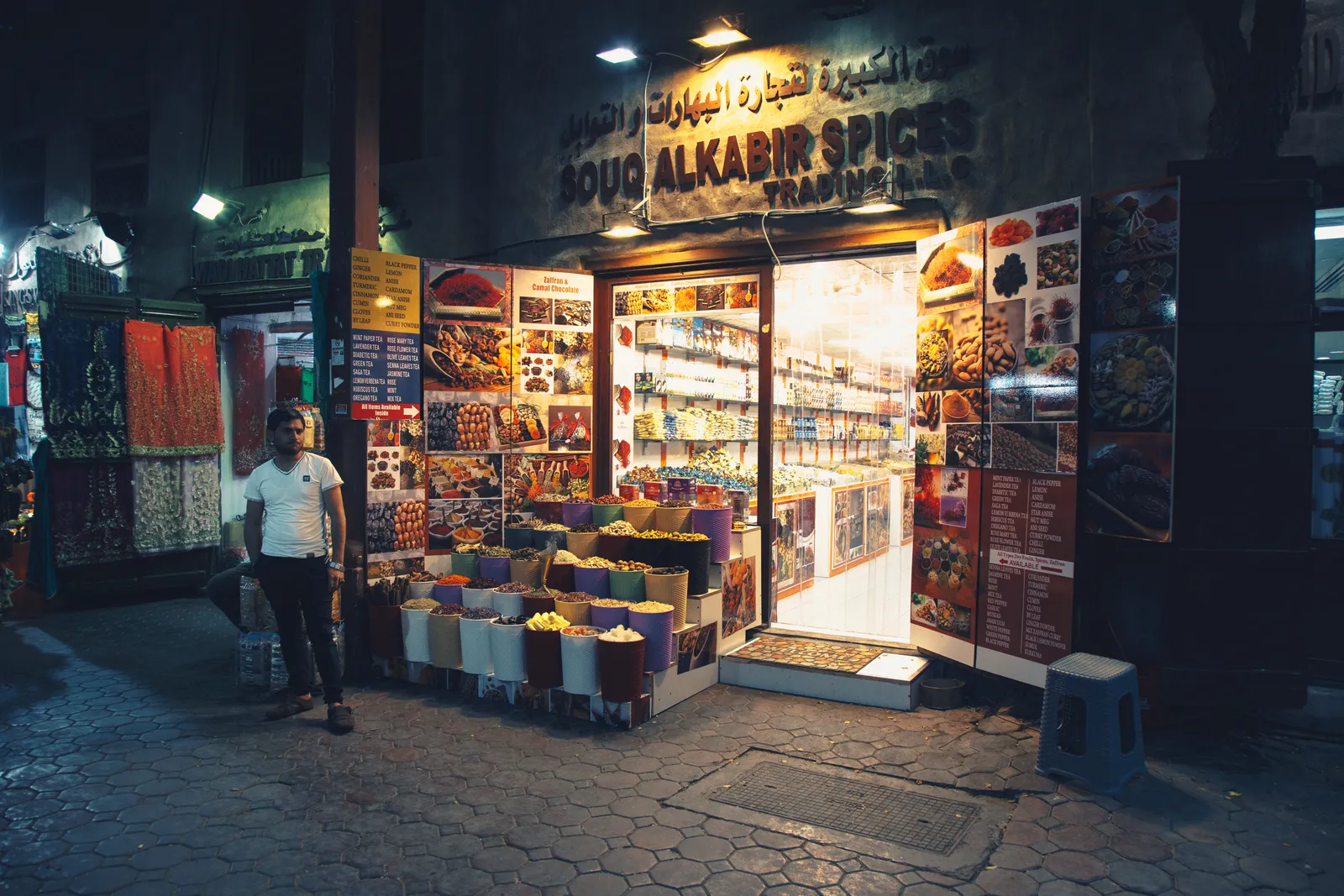
The Perfume Souk runs along Sikkat Al Khail, the street beside it, where the shops sell oud, the resinous wood behind many Gulf perfumes, alongside attar oils and blends made up to order. For someone who wants to know what they are smelling and eating rather than just walking past it, a guided Emirati food walk takes in the spice lanes, crosses the creek by abra and finishes over dinner.
How the Deira Gold Souk prices its gold
The Gold Souk gathers more than 380 retailers in the Al Ras quarter, most of them jewellers, set along lanes roofed in timber. Walking it is free, and so is looking: the windows are stacked with bangles, chains and bridal sets. For years the Kanz jewellery shop here has displayed the Najmat Taiba, a ring of almost 64 kilograms recognised by Guinness World Records as the largest gold ring, though it has also been lent out to exhibitions, so it is not guaranteed to be in the window on the day.
Buying works to a fixed formula: the weight in grams at the day’s gold rate, which every legitimate shop charges alike, plus a making charge for the workmanship and 5 per cent VAT. Only the making charge is open to negotiation, and jewellers expect it to be. The lanes between the souks are mostly open to the sky, and with many shops shut from 1pm to 4pm the middle of the day here means more time outdoors in the heat, which is harder going with a suitcase to pull.
Cargo dhows loading by hand on the Deira wharf
The dhow wharf runs for close to two kilometres along the Deira bank of Dubai Creek, from the Al Ras end towards Al Maktoum Bridge. The wooden cargo dhows tie up several deep, and crews load them by hand with whatever is going out that week, electronics, textiles, car parts and household goods, bound for Iran, Oman, India, Somalia and other ports around the Gulf and the Indian Ocean. There is no fee and no barrier, just the quay, and in the morning and late afternoon it is at its busiest.
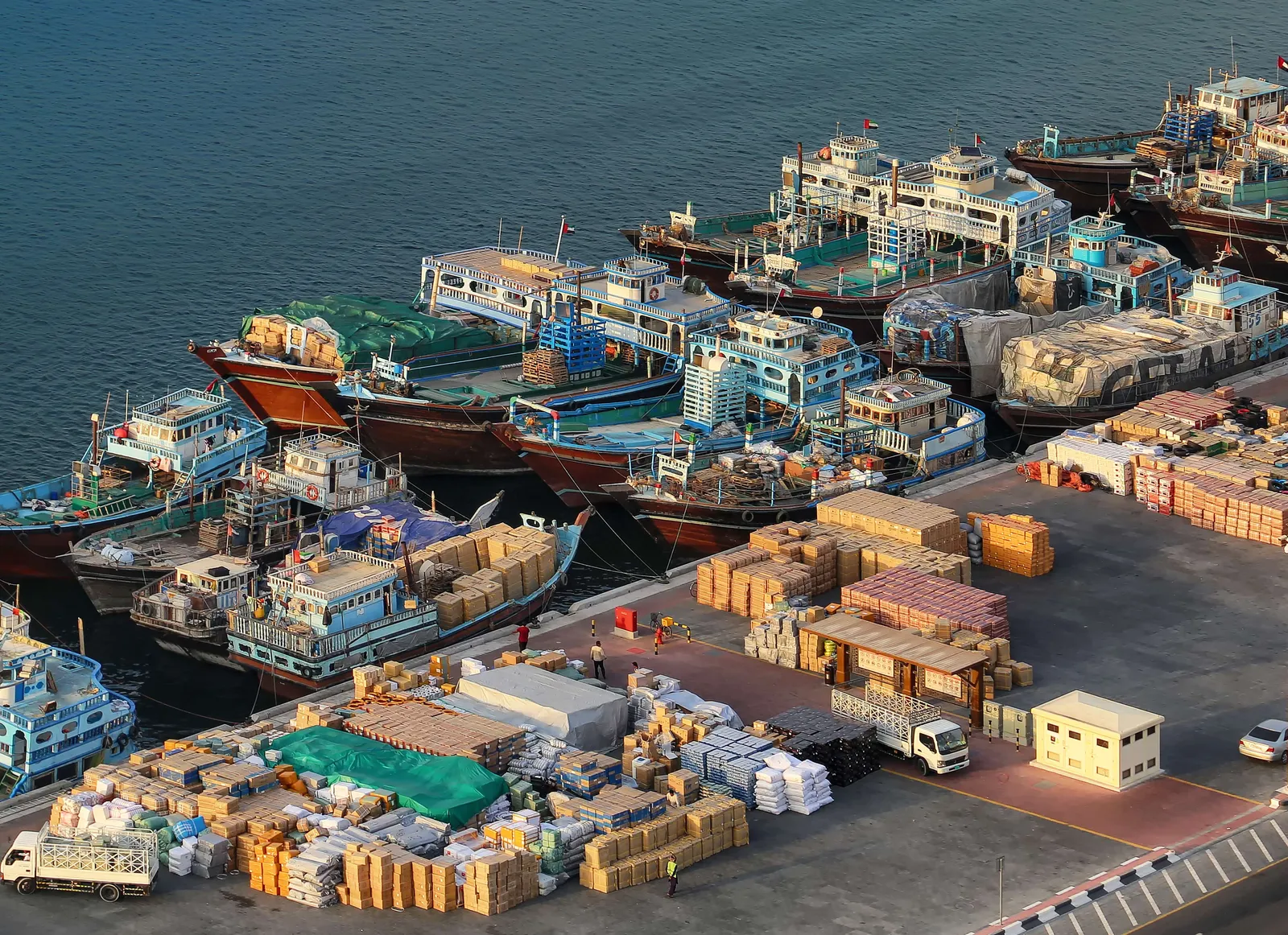
It is a working port rather than a heritage display, so keep clear of the loading, and ask before photographing the crews.
Al Ras station and a change at Union for the airport
Al Ras station on the Green Line is a few minutes’ walk from the Gold Souk. Three stops take you to Union, where you change to the Red Line; from there it is four stops and about nine minutes to Airport Terminal 1 at Dubai International Airport (DXB), and one stop more to Terminal 3, for a few dirhams on a Silver nol card. Door to door it comes to around half an hour. Deira is the part of Dubai closest to the airport, so a taxi is a short ride too, and the direct option if you are flying from Terminal 2, which has no metro station. Allow 90 minutes at the airport on top.
For the heritage houses on the other bank, the one-dirham abra runs from the Deira Old Souk station across to Bur Dubai and the Al Fahidi and Al Shindagha side of the creek; the full Dubai itinerary adds that crossing and the Downtown towers to a shorter look at these souks. With hands free, the spice lanes are a place to stop, smell and ask, rather than a corridor to get a suitcase through.
Frequently asked questions
What should I do during a layover near the Gold Souk in Dubai?
Walk the three old markets of Deira that sit side by side: the Spice Souk, the Perfume Souk on Sikkat Al Khail and the covered lanes of the Gold Souk, then finish at the dhow wharf along the creek, where cargo boats are loaded by hand. All of it is free to walk; a guided food walk through the spice lanes is the part worth booking ahead. Three to five hours covers it, as long as you plan around the shops that close from 1pm to 4pm.
Can you bargain in the Deira Gold Souk?
On part of the price. Gold jewellery is sold by weight at the day's gold rate, which is the same in every legitimate shop and not open to haggling, plus a making charge for the workmanship and 5 per cent VAT. The making charge, which runs from a few per cent on plain chains to well over 20 per cent on intricate pieces, is where jewellers expect to negotiate.
Is the Deira souk district bearable in summer heat?
Only at the right hour. The spice and perfume lanes are open to the sky between the buildings, only parts of the Gold Souk are roofed, and from June to September daytime temperatures run into the 40s. Many shops also close from 1pm to 4pm, which leaves the middle of the day with the most heat and the least to do. Arrive at 10am when the shops open, or after 4pm when they reopen and the evening cools; the lanes stay open until 10pm.
Can you walk along the Deira dhow wharf?
Yes. The wharf runs for close to two kilometres along the Deira bank of Dubai Creek, with no fee and no barrier, and the wooden cargo dhows moored there are loaded by hand with goods bound for Iran, Oman, India and other ports. It is busiest in the morning and late afternoon. It is a working port, so keep clear of the loading and ask before photographing the crews.