Al Fahidi to Al Shindagha, Old Dubai
Part of the full Dubai From DXB: Burj Khalifa and the Old Creek
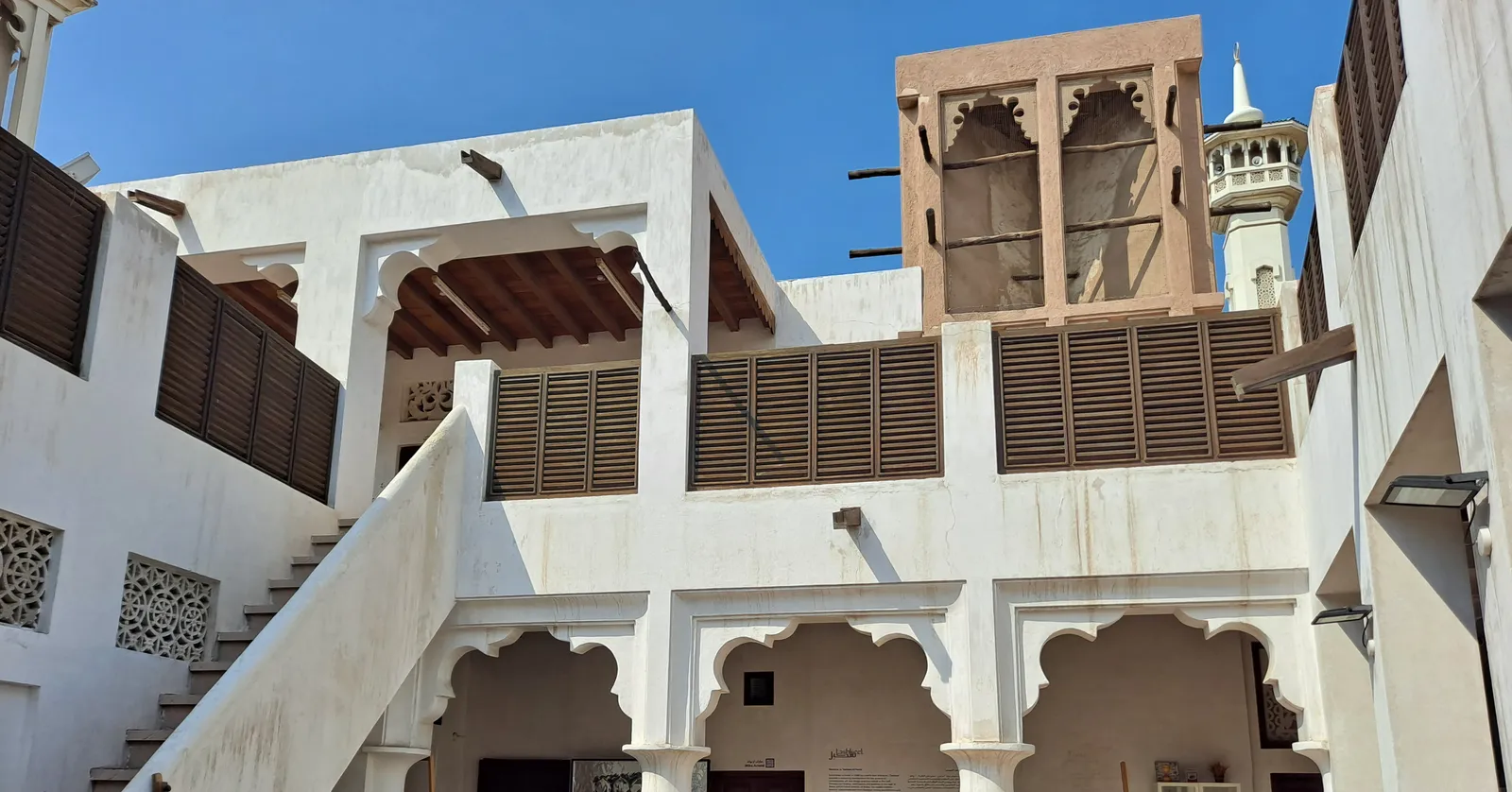
Old Dubai’s Bur Dubai bank runs from the wind-tower lanes of the Al Fahidi Historical Neighbourhood to the 21 restored houses of Al Shindagha Museum at the mouth of the creek, with a hosted Emirati meal, the carved-roof Textile Souk and the Al Seef waterfront along the way.
Al Shindagha Museum and the 1896 house of Dubai’s rulers
Al Shindagha is the spit of land at the mouth of Dubai Creek on the Bur Dubai side, where the ruling Al Maktoum family lived from the 1890s. Sheikh Saeed Al Maktoum House, built in 1896 and home to Sheikh Saeed bin Maktoum, ruler of Dubai from 1912 to 1958, is the centrepiece of Al Shindagha Museum, which opened in 2019 across 21 restored coral-and-gypsum houses. The houses each take a different part of the story; the Perfume House, in the former home of Sheikha Sheikha bint Saeed Al Maktoum, is given over entirely to the region’s scents and the trade in them.
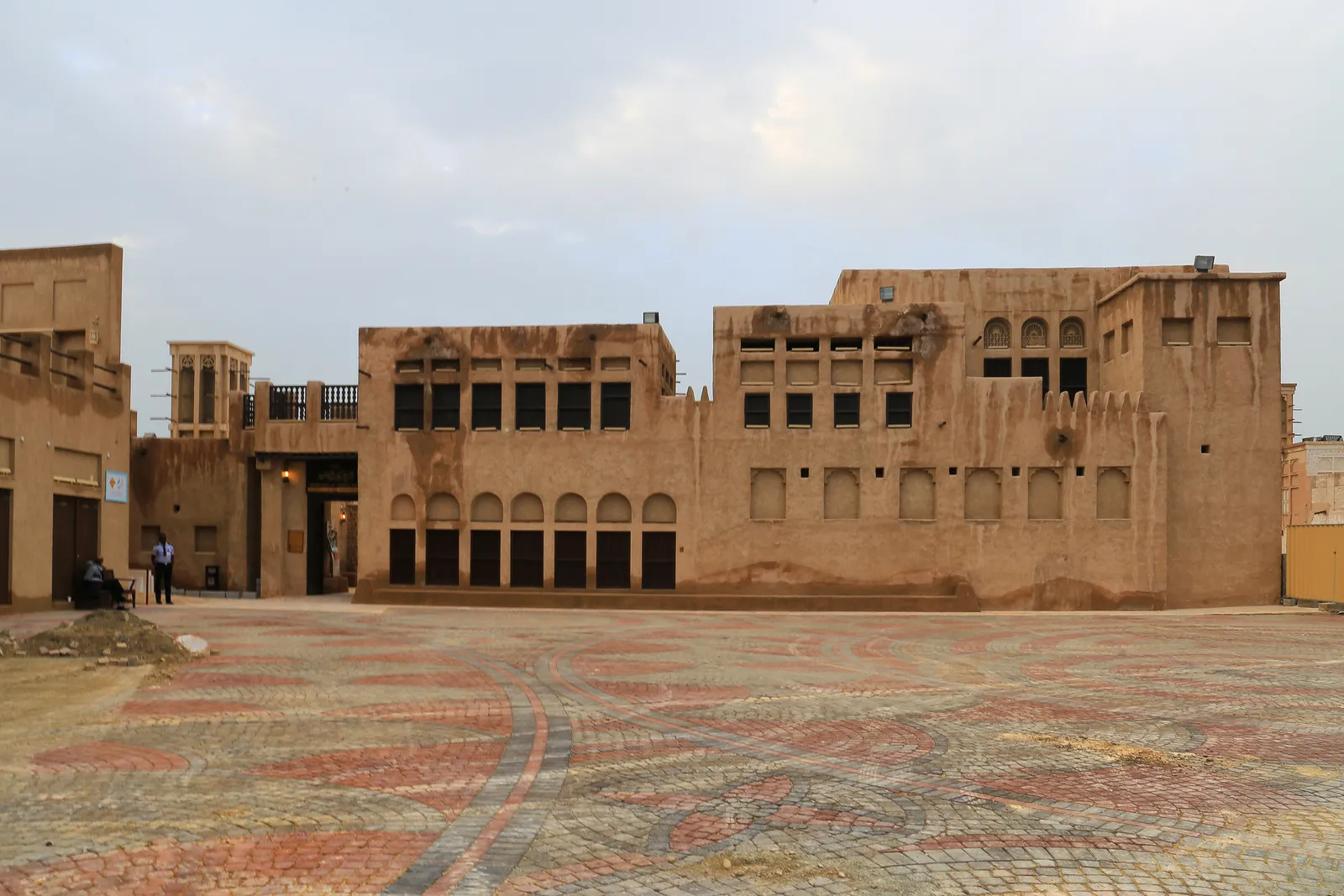
One ticket covers every house: AED 50 for adults and AED 20 for students, from 10am to 8pm with last entry at 7pm, and an entry ticket bought online means one less thing to sort out on arrival. The museum bills itself as Dubai’s largest heritage museum, and most of it is indoors and air-conditioned.
An Emirati meal at the Sheikh Mohammed Centre for Cultural Understanding
The Sheikh Mohammed Centre for Cultural Understanding occupies a restored wind-tower house on Al Musallah Street in Al Fahidi, and it serves traditional Emirati food at fixed sittings, with Emirati hosts at the table explaining the dishes and taking whatever questions guests bring about the country, its customs and its religion.
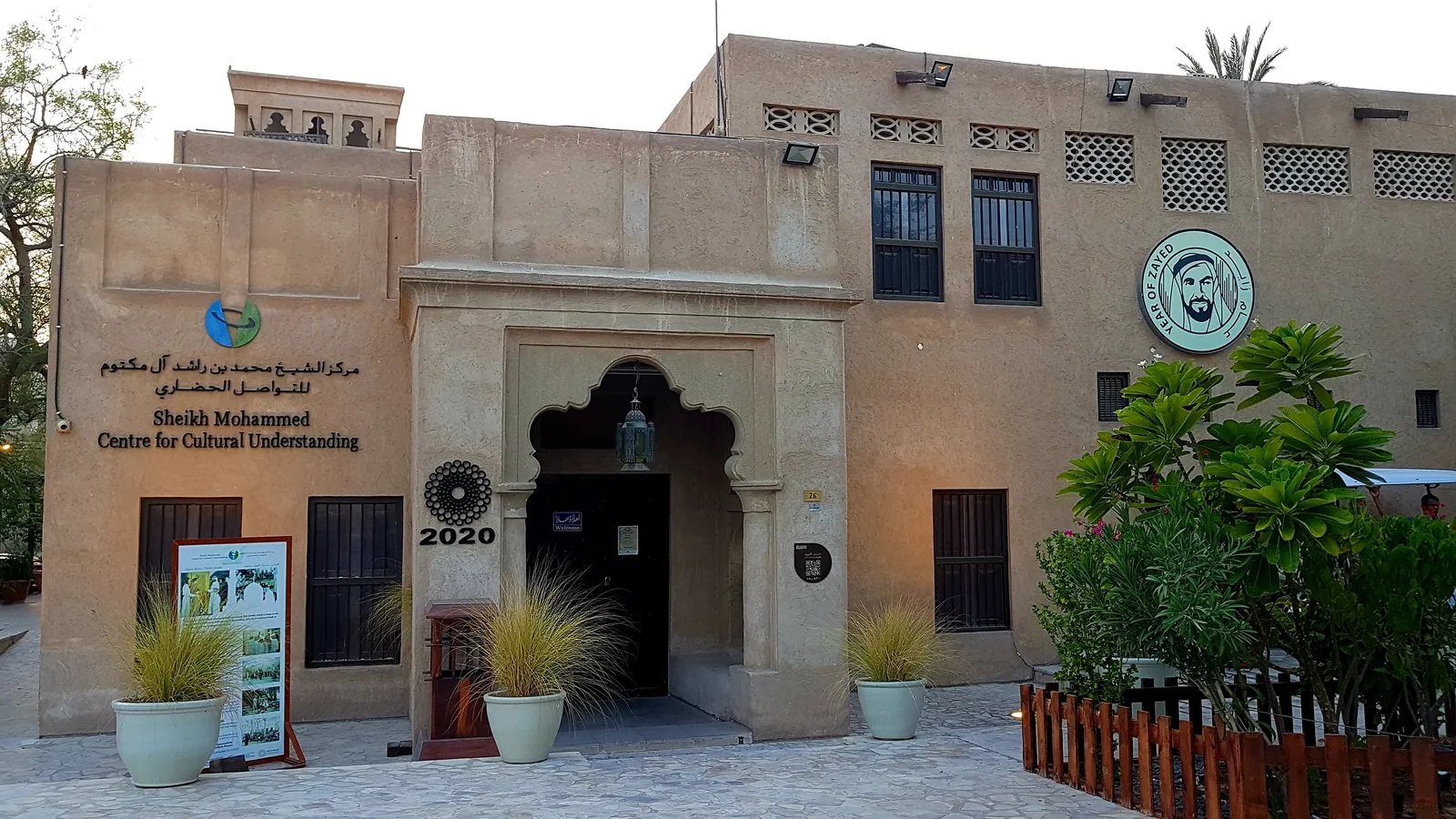
It is not a walk-in restaurant. Lunch runs Monday to Thursday at 1pm for AED 145, breakfast on Monday and Wednesday at 9am and a weekend brunch Friday to Sunday at 10.30am are both AED 130, and every sitting is booked directly with the centre in advance.
The carved wooden roof over Bur Dubai’s Textile Souk
The Textile Souk lines a covered lane on the Bur Dubai bank beside the abra station, under a wooden roof held up on carved pillars and hung with lanterns. The shops sell silk, cotton and velvet by the metre, pashminas and scarves, and a share of souvenirs; walking the arcade costs nothing, and it is shaded end to end.
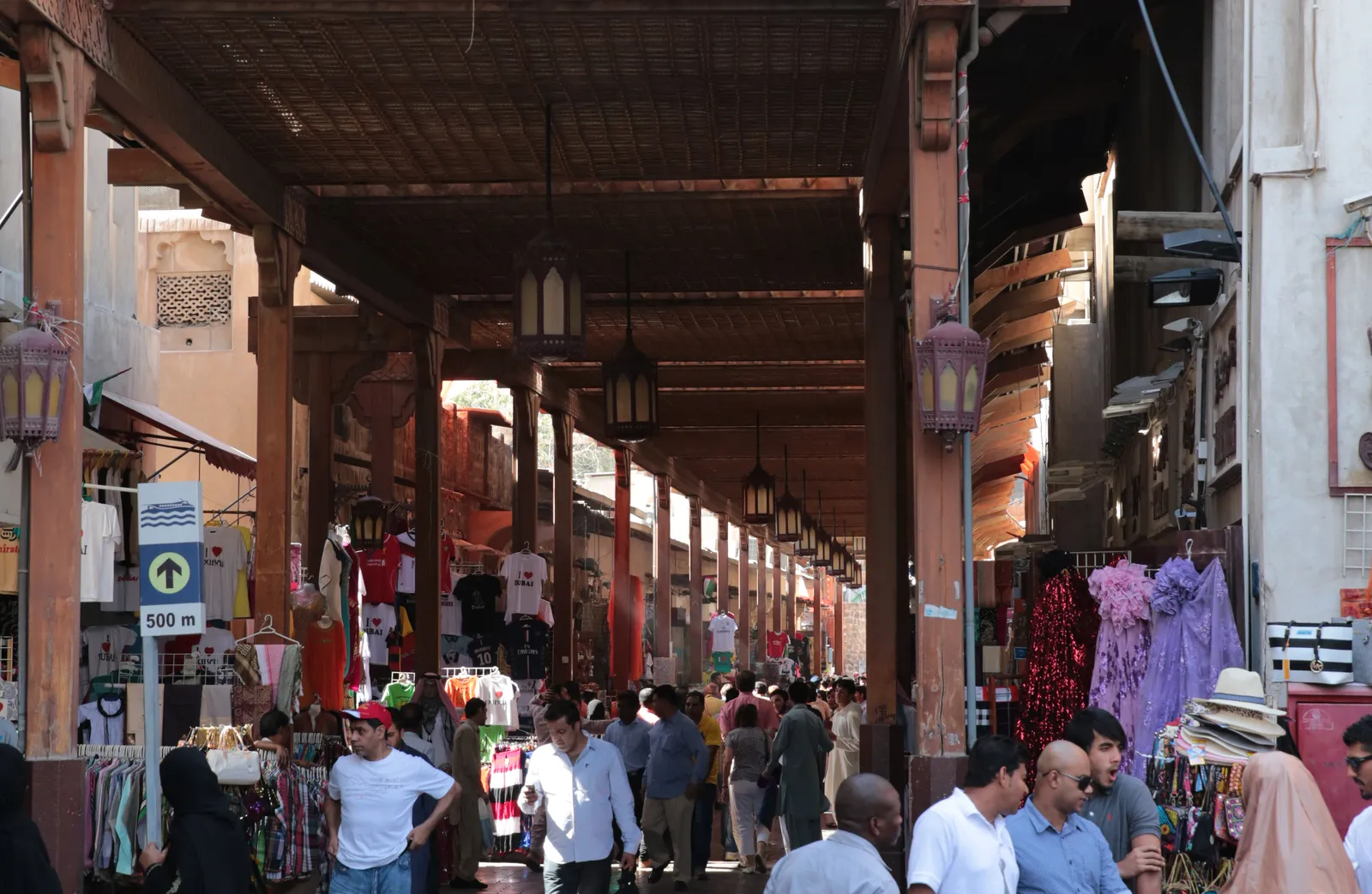
The lanes between here and the heritage houses are narrow, the stone paving is uneven in places and several of the restored houses have steps at the door, which is where a rolling suitcase slows down most.
Al Seef’s rebuilt creekfront
Al Seef runs along the Bur Dubai bank of Dubai Creek beside the Al Fahidi district, a waterfront strip built new in the manner of the old town: wind towers, arcades and plastered facades over shops and cafes, with a wide promenade along the water. It is a reconstruction rather than a survival, but it is flat, open to anyone, and the creek traffic of abras and dhows passes right in front of it.
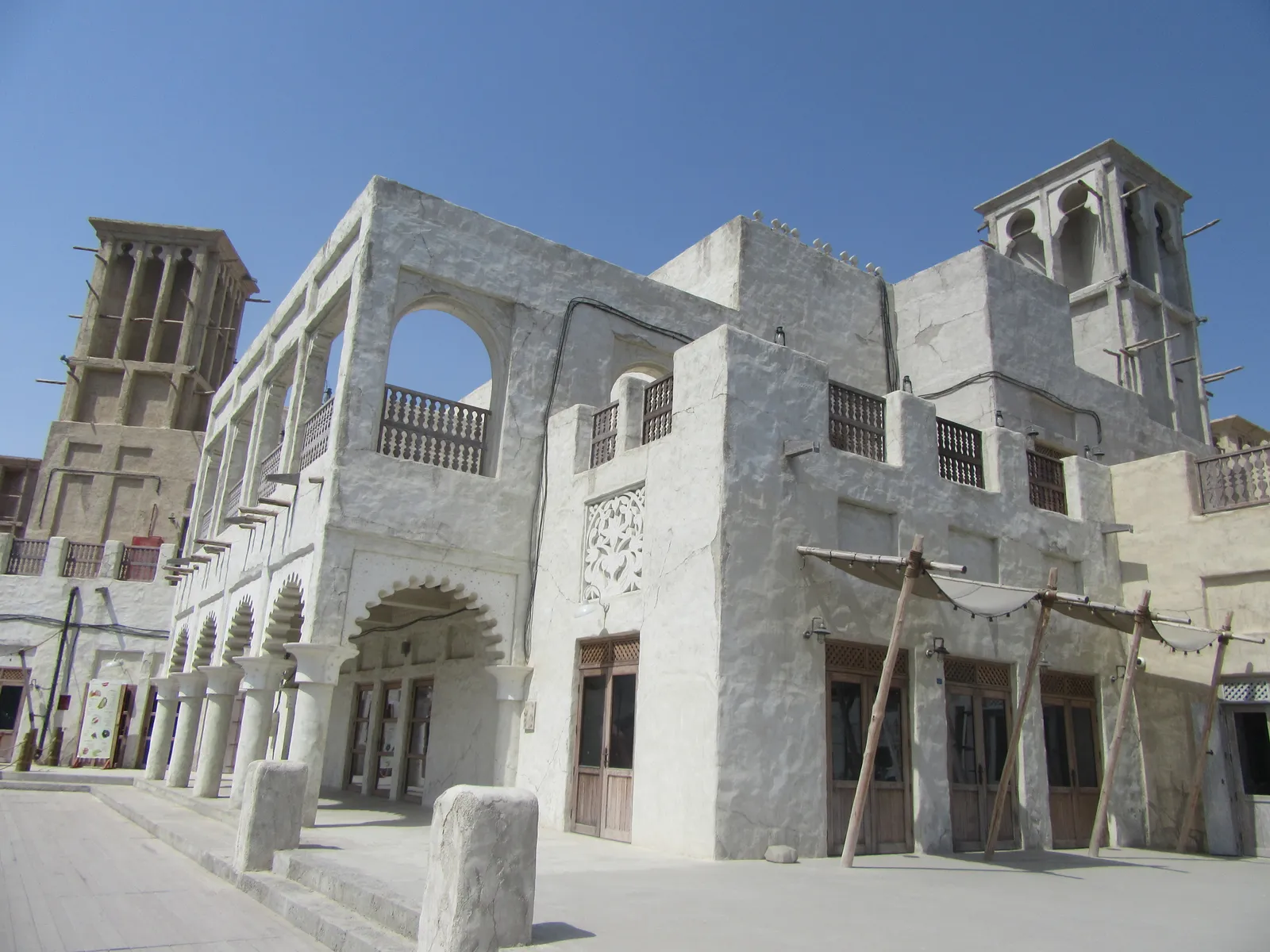
In the cooler months it is the pleasant place to end the afternoon; between June and September it is better left until after sunset.
BurJuman metro station, the change for the airport
Al Fahidi station, on the Green Line at the edge of the district, is one stop from BurJuman, where the Green Line meets the Red Line. From BurJuman the Red Line reaches Airport Terminal 1 at Dubai International Airport (DXB) in roughly 15 minutes, and Terminal 3 one stop after, for a few dirhams on a Silver nol card; count on around 40 minutes door to door once the walk and the change are added. Terminal 2 has no station, so from there a taxi is the way back. Leave 90 minutes at the airport on top of the ride.
The full Dubai itinerary crosses the creek by abra to the Deira souks and runs out to Downtown for the tower and the fountain, where this route stays on one bank and goes deeper into it. Without a bag to steer through the lanes, the Bur Dubai side is a slow, shaded walk from one house to the next.
Frequently asked questions
What should I do during a layover near Al Fahidi Historical Neighbourhood in Dubai?
Spend the time on the Bur Dubai bank of the creek. Al Shindagha Museum, spread over 21 restored houses including the 1896 home of Dubai's ruling family, is the main ticketed stop, and the Sheikh Mohammed Centre for Cultural Understanding serves a hosted Emirati meal in a wind-tower house nearby, which has to be booked ahead. Between them, the carved-roof Textile Souk and the Al Seef creekfront are free to walk. Four to five hours covers it; the meal is the part to drop if its time slot doesn't fit your day.
Is Al Fahidi manageable with elderly parents or a wheelchair?
Partly. Ramps have been added through the district and the step-free route starts from the old fort's entrance, but the lanes are narrow and the stone paving is uneven in places, and some of the restored houses have steps at the door. Al Shindagha's museum houses are more even underfoot, and the Al Seef creekfront is a wide, flat promenade, so those two are the easier half of this area.
Do I need to book the Emirati meal at the Sheikh Mohammed Centre for Cultural Understanding?
Yes. The centre runs its meals at fixed times rather than as a walk-in restaurant: breakfast on Monday and Wednesday at 9am for AED 130, brunch Friday to Sunday at 10.30am for AED 130, and lunch Monday to Thursday at 1pm for AED 145, all booked through the centre in advance. With a flight that leaves the evening, the lunch slot is the one that fits most easily.
Is Al Shindagha Museum open in the evening?
Until 8pm. The museum opens at 10am daily and closes at 8pm, with last entry at 7pm, so an evening flight still leaves time for it after lunch; during Ramadan the hours shorten to 9am to 5pm, with last entry at 4pm. One AED 50 adult ticket covers every house on the site, and most of them are indoors and air-conditioned, which makes it the part of the Bur Dubai bank to save for the hottest hours.