Abu Dhabi Layover Near the Grand Mosque
Part of the full Abu Dhabi's Grand Mosque on an AUH Layover
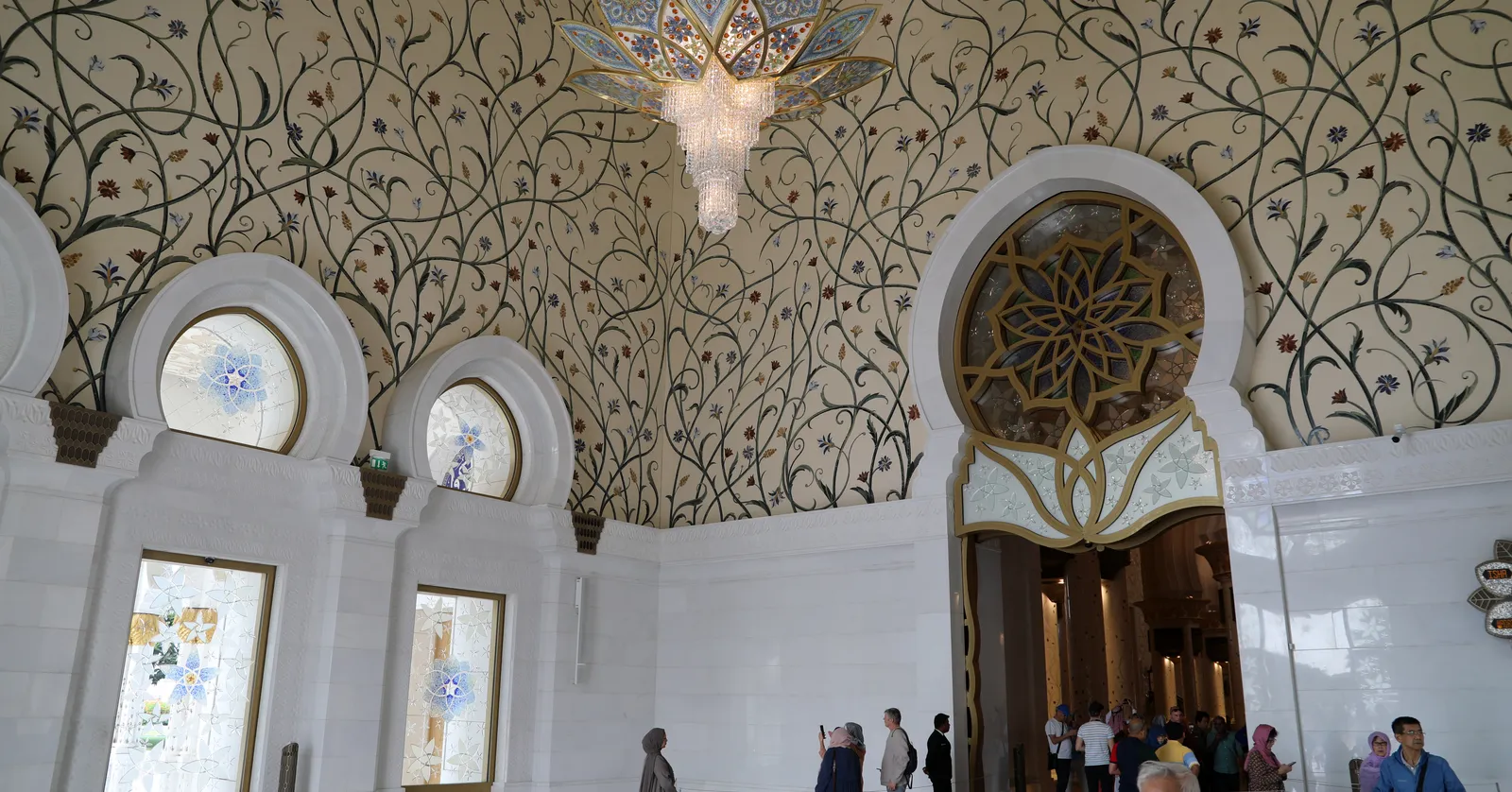
Sheikh Zayed Grand Mosque in Abu Dhabi costs nothing to enter, the memorial of 31 leaning slabs facing it across a footbridge costs nothing either, and an 18th-century coral watchtower stands out in the channel a few minutes east of both.
Sheikh Zayed Grand Mosque’s carpet and chandeliers
Everything inside the prayer hall is built around one object. The carpet covers 5,627 square metres in a single piece, knotted by hand by somewhere around 1,200 weavers in Mashhad in Iran to a design by the artist Ali Khaliqi, and it runs away between the inlaid marble columns without a seam anywhere in it.
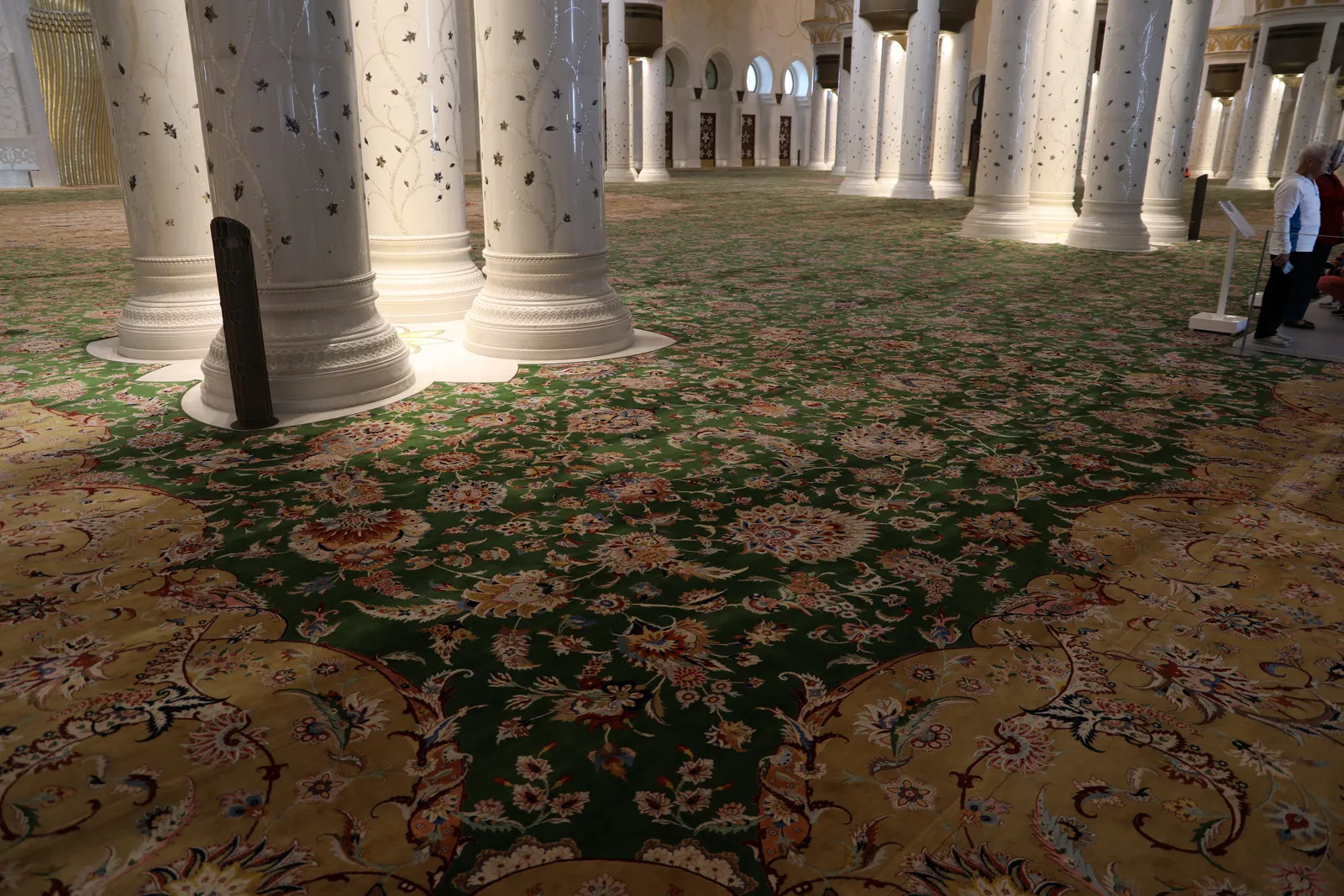
Above it hang seven chandeliers from Faustig of Munich, set with Swarovski crystal, the biggest 10 metres across and 15 tall. Entry costs nothing and free walk-in tours run in Arabic and English through the day, which is worth knowing before you pay for anything; if you would rather have a guide to yourself and a fixed start time, that can be arranged in advance. Register for an access pass on the mosque’s own site either way.
The approach is where a suitcase becomes a problem: it is open marble and paving from the car parks to the entrance, with no shade over any of it and more distance than the view from the road suggests.
The 31 leaning slabs of the Wahat Al Karama memorial
Idris Khan put 31 tall slabs on a plaza directly opposite the mosque and left them propped against one another, clad in aluminium and inscribed with the UAE’s national pledge and with poems written by its leaders. It reads as one leaning mass from a distance and as separate panels close up, and the memorial opened on Commemoration Day, 30 November 2016.
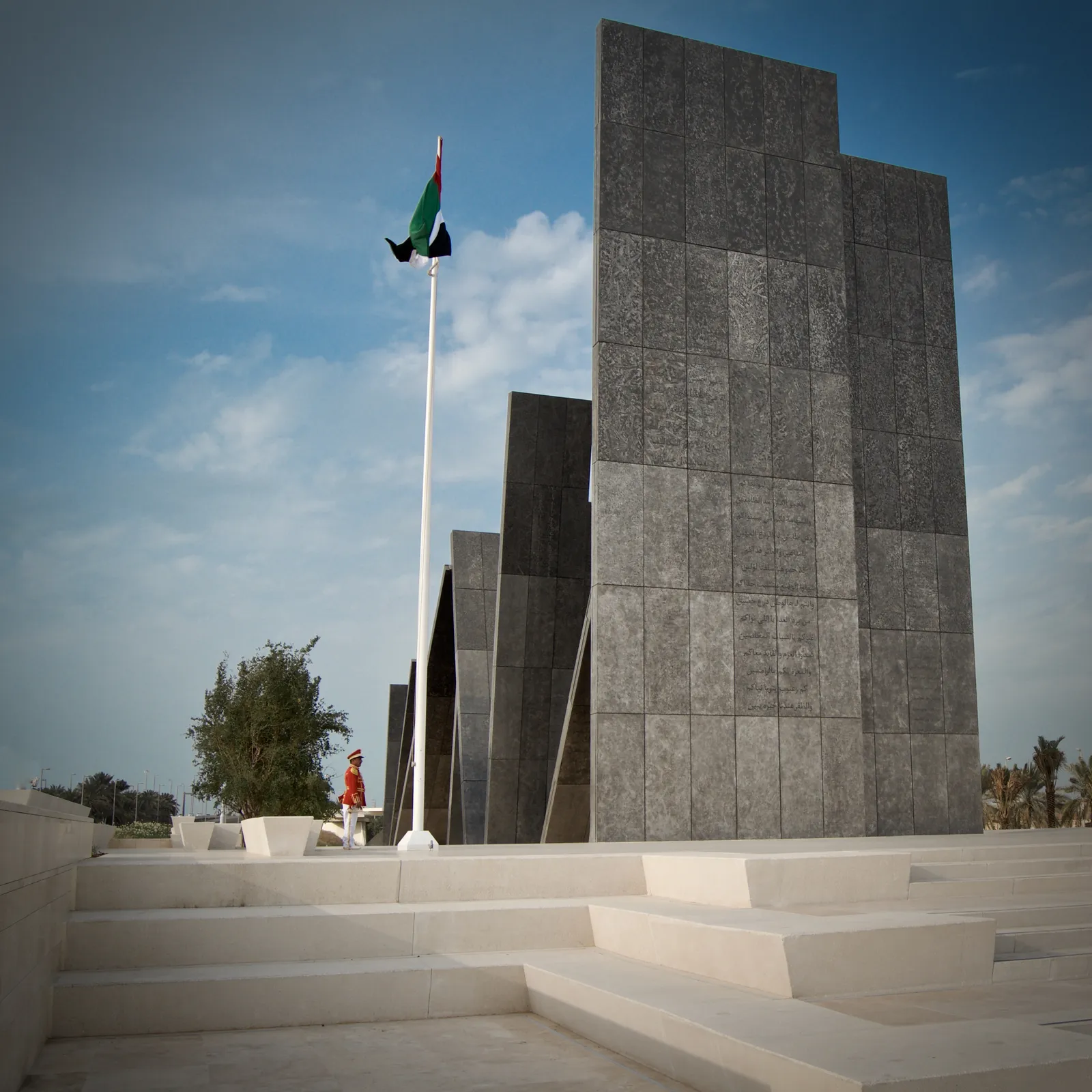
The site runs to 46,000 square metres and holds two more things: a pavilion of honour carrying the names of the country’s war dead, and a plaza laid out around a shallow pool. None of it is ticketed, there is no dress code, and twenty minutes is enough. Most people who come for the mosque never cross over, which is the main reason it stays quiet.
Al Maqta’a watchtower on its islet in the channel
Until the 1950s there was no road onto Abu Dhabi island. Everyone arriving crossed the shallow channel at Maqta on foot at low tide or by boat, and a round coral-stone tower put up in the late 1700s by Sheikh Shakhbut bin Diyab watched the crossing. The tower is still standing in the water on its own spit of rock, floodlit at night and unreachable: the islet has no access, so it is a thing you look at from the bank.
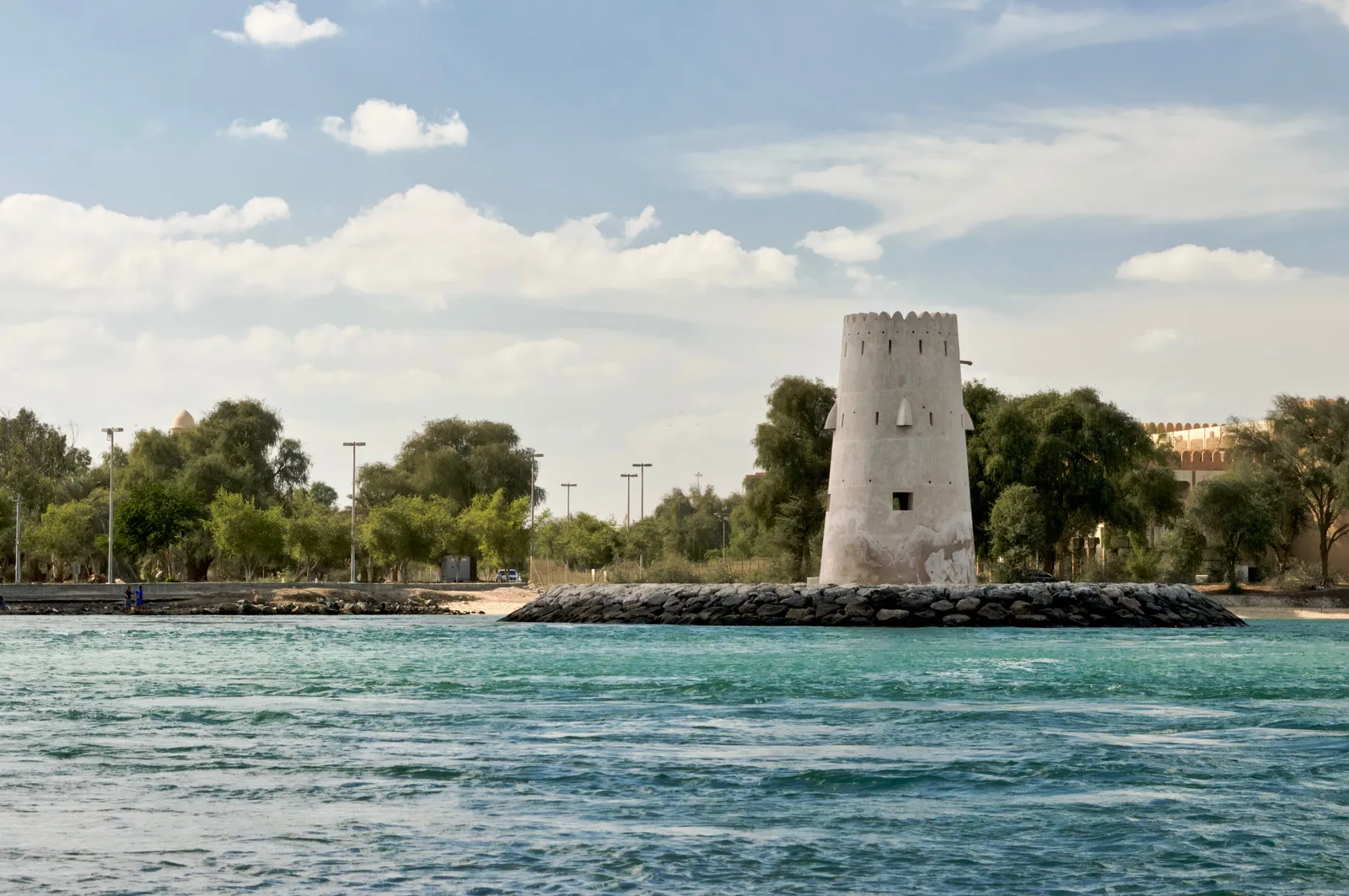
On the mainland side is the building that replaced it. A police post went up beside the first causeway in the 1950s and became the customs house that checked everyone and everything entering the island until the country unified in 1971. It is now Al Maqta’a Museum, free to walk into, open 9am to 5pm Saturday to Thursday and 2pm to 8pm on Friday, and what it actually holds is Abu Dhabi Police vehicles and uniforms from the decades either side of 1971, which is a stranger and better exhibit than the address suggests.
The mosque sits closer to the airport than the city does
Zayed International Airport (AUH) is about 20 kilometres from the mosque and around 30 from the Corniche, so this cluster is the cheaper and faster half of a short layover: a metered taxi runs roughly AED 50 to 70 each way and takes 20 to 25 minutes in normal traffic. The A1 and A2 buses do not help here, since both run past to the city centre rather than stopping usefully at the mosque, and both need a Hafilat card bought before boarding.
The mosque’s own hours are the thing to plan around rather than the traffic. Visiting runs 9am to 8.30pm Saturday to Thursday, with a Friday break between 11.30am and 2.30pm for prayers, and guided night tours carry on through the small hours to nine the following morning for anyone whose flight goes at an unsociable time. If the gap is long enough to cross the water instead, the museums and the seafront in the wider Abu Dhabi itinerary need five hours rather than three, and Terminal A’s own surroundings are the fallback if it is shorter.
Frequently asked questions
What should I do during a layover near Sheikh Zayed Grand Mosque in Abu Dhabi?
Treat the mosque and the memorial across from it as one stop and the old crossing at Maqta as a second. Inside the mosque the draws are the 5,627-square-metre hand-knotted carpet in the main prayer hall and the seven Swarovski-set chandeliers over it, the largest 10 metres across. Wahat Al Karama, opposite, is 31 leaning slabs on a plaza, reached by a footbridge or a free half-hourly shuttle. Two to four hours covers all three, and the watchtower at Maqta is the one to drop if the clock tightens, since you can only look at it from the bank anyway.
What do I have to wear to get into Sheikh Zayed Grand Mosque?
Long, loose clothing covering the ankles and wrists for everyone, and a headscarf for women. Sleeveless or transparent tops are turned away, as are shorts. If you arrive dressed for a flight rather than for a mosque, abayas and headscarves are lent at the entrance at no charge, so it is an inconvenience rather than a wasted trip. Food and drink, water included, are not allowed inside, because of what they would do to the marble and the carpet. Personal photography is permitted only at the designated photo stops.
Is the walk from the car park manageable with elderly parents?
It is longer and more exposed than it looks from the road, and there is no shade on the approach or across the courtyard. The mosque runs club cars between the parking areas and the point where tours start, and its security staff will lend a wheelchair on request at no cost, both of which are worth asking for rather than attempting the walk in summer. Wahat Al Karama across the way is flat and its own plaza is short, but the same lack of shade applies there.
Can I see Wahat Al Karama and the mosque on the same stop?
Yes, and you do not need a taxi between them. A pedestrian bridge joins the two, and the Department of Culture and Tourism runs a free shuttle bus between their car parks every half hour from 10am to 7.15pm. The memorial itself takes about twenty minutes to walk around. It has no dress code and no entry fee, so it works as a decompression stop either before or after the mosque's security line.