Singapore Little India Layover: Serangoon Road
Part of the full Singapore in One Day: The Bay on Foot
Little India in Singapore keeps a rainbow-painted 1900 villa on Kerbau Road, an 1881 Kali temple on Serangoon Road and Tekka Centre’s hawker hall and wet market within about ten minutes of each other.
The Indian Heritage Centre on Campbell Lane
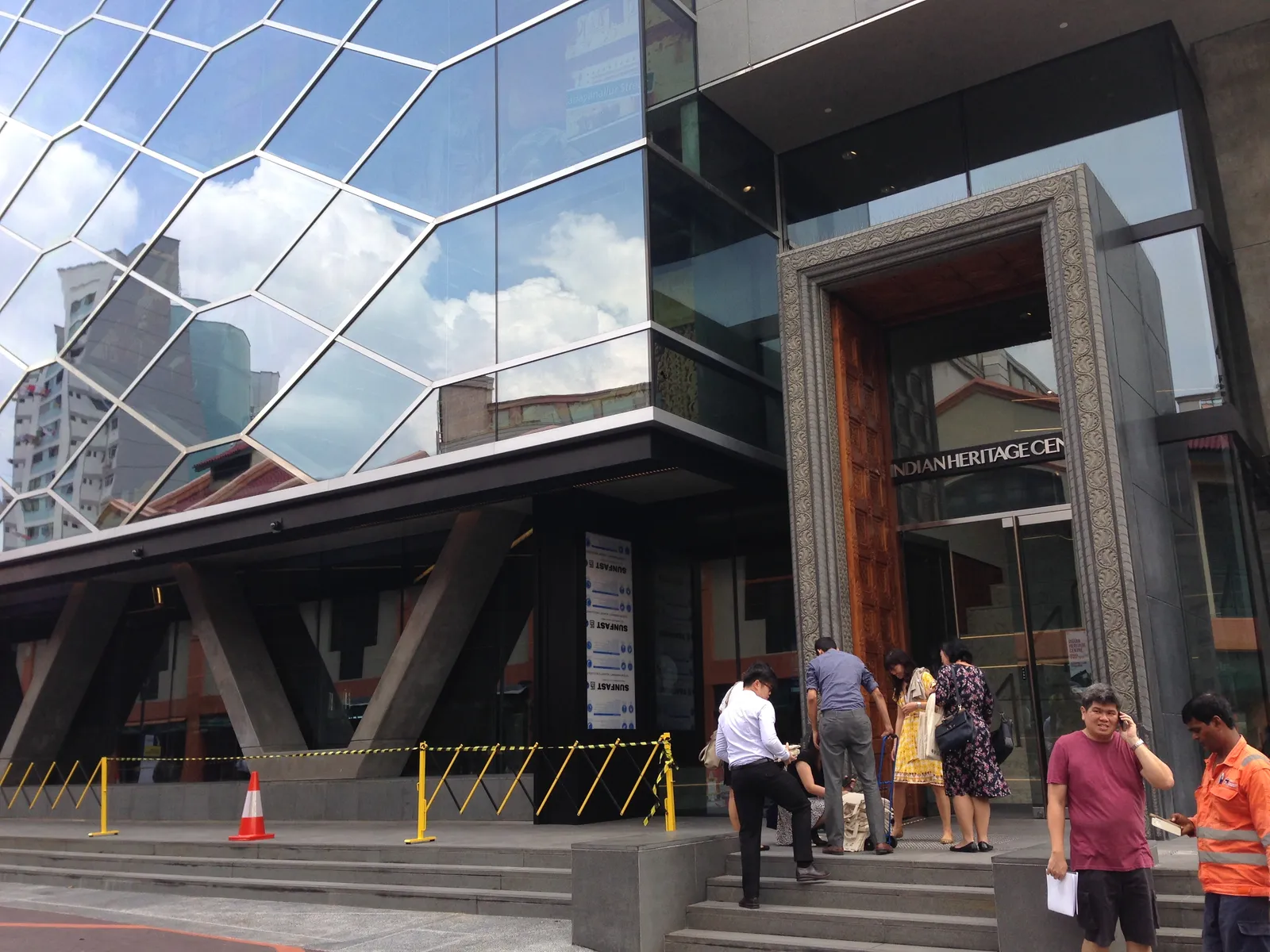
Campbell Lane is a short street of shophouses running off Serangoon Road, and the building at the far end of it does not look like the rest: a faceted glass and steel front folded over the pavement. What is inside is the first museum in Southeast Asia built around the Indian communities of the region, tracing the trade and migration links between the subcontinent and this part of the world across several floors of galleries. Overseas adults pay S$5, students S$4, and anyone over 60 gets in free; it is shut on Mondays and closes at seven midweek, eight on Fridays and Saturdays, four on Sundays. Museum admission is sold ahead through a tours and activities platform.
The rest of Campbell Lane is worth the five minutes it takes to walk. Several shopfronts along it are given over to garland makers, sitting with baskets of jasmine and marigold and stringing them by the metre for temple offerings; Jothi Store, the long-established one on the corner, is said locally to have begun as a flower business barely wider than the covered walkway it stood in. The flowers are what the street smells of from early morning.
The House of Tan Teng Niah, the last Chinese villa in Little India
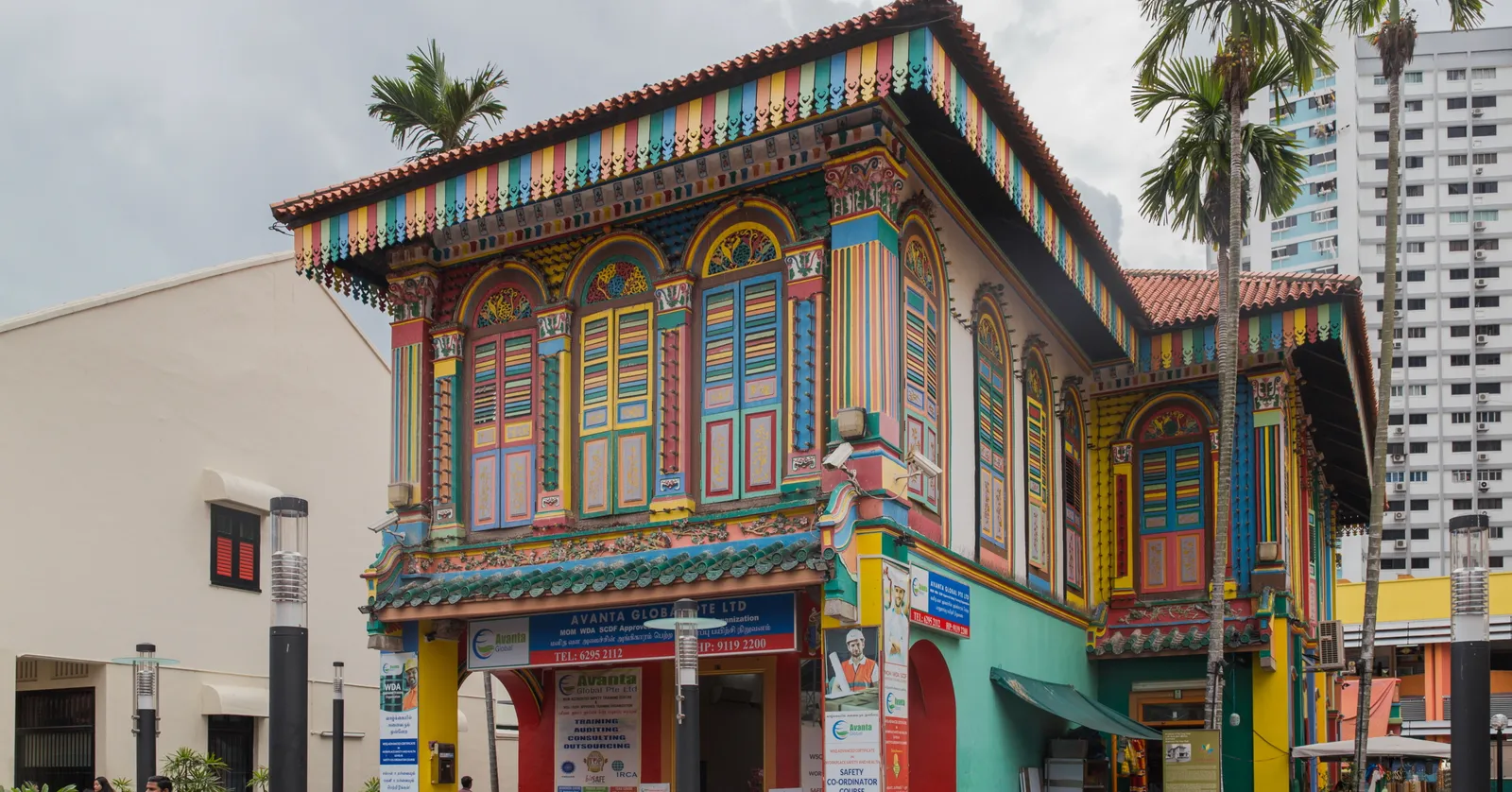
Kerbau Road runs one block north of Serangoon Road, and halfway along it stands a two-storey house with Chinese eaves, carved timber and a half-height swing door at the entrance, painted in bands of green, yellow, red, blue and purple. It went up in 1900 for Tan Teng Niah, a businessman who ran candy and rubber works in the area, and is generally said to have been built for his wife. Little India was an industrial quarter then, full of merchant houses like it; every other one has been cleared. The colours are recent, a restoration decision from the 1980s onwards, the house having originally been plain white.
It is three minutes on foot from the station’s Kerbau Road exit, and there is no gate and no ticket: the building is a working set of small businesses on the ground floor and the outside is the point. Serangoon Road is the part that costs time: kerbs, shophouse thresholds and traffic crossings turn a ten-minute walk into twenty behind a wheeled suitcase.
The Kali temple Bengali labourers built on Serangoon Road
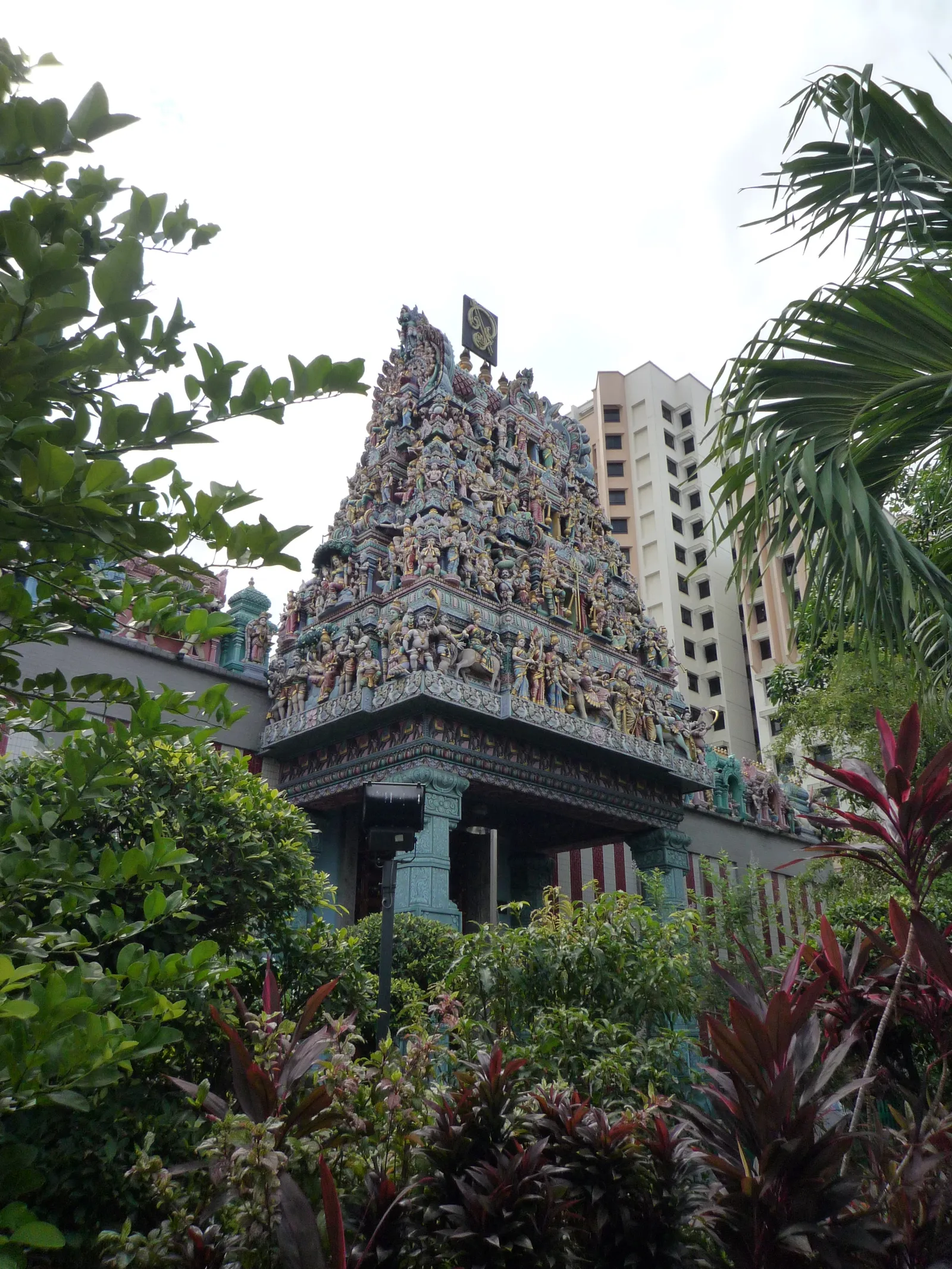
Number 141 Serangoon Road holds a temple to Kali behind a gopuram stacked with painted figures. The shrine on the site goes back to 1855 and the building to 1881, put up by Bengali labourers working in the district, though what they built follows the South Indian Tamil style rather than anything from Bengal. Inside, the main image shows Kali in the fierce form the temple is named for, with Parvati elsewhere in the calmer family scenes. During the Japanese occupation the temple took people in during the air raids, sheltering and feeding twenty or so a night.
Entry is free. The hours are the catch: roughly 05:30 to noon, then shut until four, then open again to nine, so an early afternoon arrival finds the doors closed. Shoulders and knees covered, shoes off at the entrance.
Tekka Centre’s hawker hall, wet market and sari floor
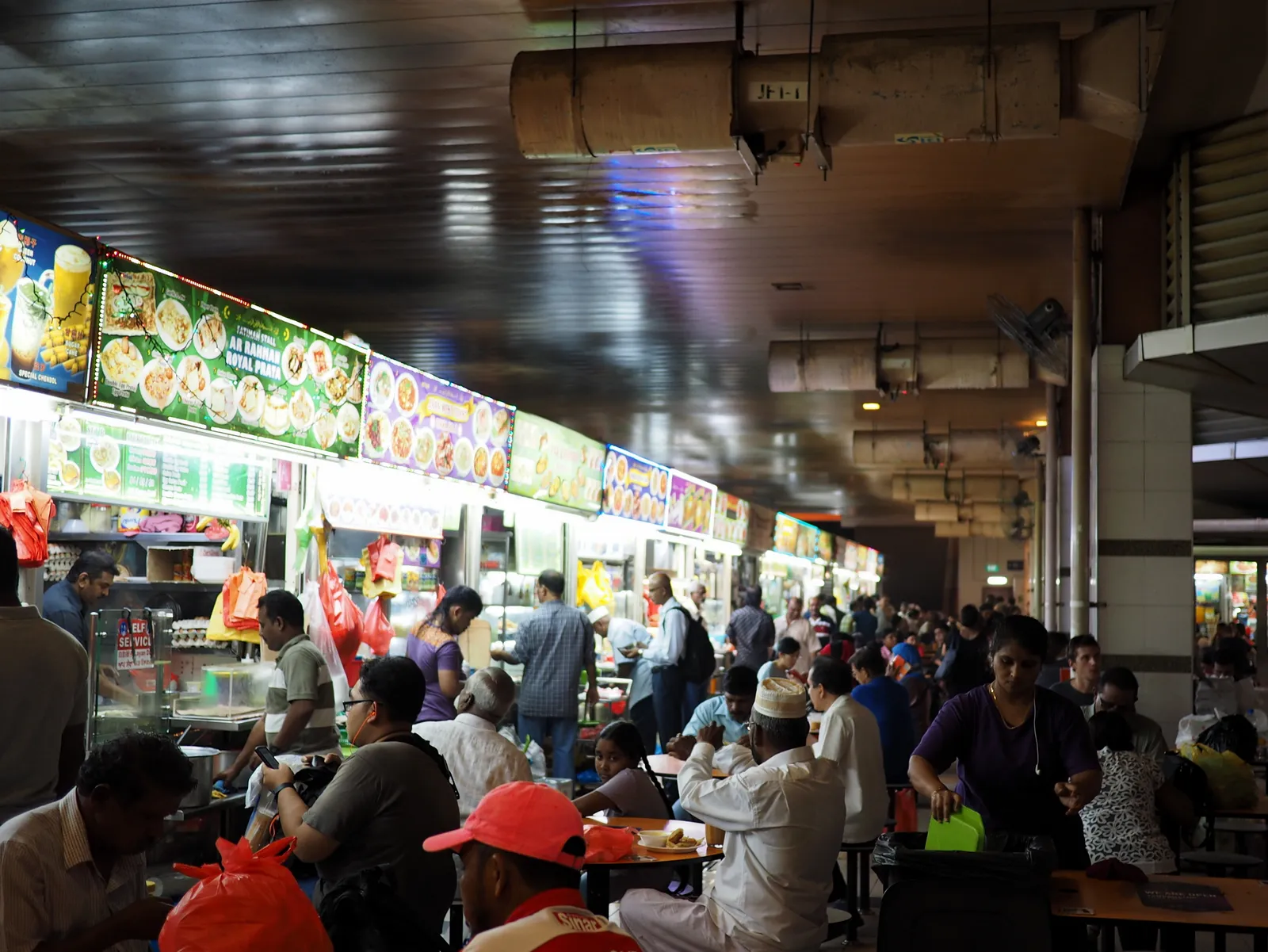
The corner of Serangoon Road and Bukit Timah Road is filled by one building doing three jobs at once. The ground floor is split between a hawker hall, where the biryani and murtabak counters run all day, and a wet market selling mutton, fish and vegetables you will not find in a supermarket here. Upstairs is a floor of textile shops, saris and cloth by the metre, and the whole thing is free to walk through.
If you would rather have someone explain what is on the counters, a guided walk through a tours and activities platform covers this hall, the spice shops and the temple, with a garland-making stop built in.
Two changes on the way to the airport, not one
Little India sits on the Downtown Line and the North East Line, and neither goes east far enough on its own. The working route is two stops on the Downtown Line to Bugis, the signed walkway across to the East West Line platforms, eight stops east to Tanah Merah, and then the cross-platform shuttle to Singapore Changi Airport (SIN): about 45 to 50 minutes with both changes counted. That is a change more than the Marina Bay route needs, so this is not the corner of Singapore to leave until the last minute. The last airport-bound train departs Tanah Merah at 23:50, ahead of the last eastbound East West Line train arriving there, so a late flight wants an earlier start than the timetable makes obvious, and a bag already collected before you set off.
Frequently asked questions
What should I do during a layover near Little India station in Singapore?
Four things sit within about ten minutes of the station, and three of them cost nothing. The House of Tan Teng Niah on Kerbau Road is a 1900 Chinese villa repainted in bands of green, yellow, red and blue, and the last of its kind left in the district. Sri Veeramakaliamman on Serangoon Road is a Kali temple built by Bengali labourers in 1881, free to enter but shut in the middle of the day. Tekka Centre puts a hawker hall, a wet market and a floor of sari shops under one roof. The Indian Heritage Centre on Campbell Lane is the ticketed one at S$5 for overseas visitors, and it is closed on Mondays, so check the day before building a plan around it.
What is open in Little India late at night?
Mustafa Centre on Syed Alwi Road, which went back to trading 24 hours a day in September 2024 and has stayed that way, six floors of everything from gold chains to electronics to groceries at three in the morning. The eating houses along Race Course Road and Serangoon Road run late too. What does not is Sri Veeramakaliamman, which shuts at nine, or Tekka Centre, whose hawker stalls mostly wind down through the evening, or the Indian Heritage Centre, which closes at seven midweek and four on Sundays.
Why is Sri Veeramakaliamman closed when I get there?
It keeps split hours, roughly 05:30 to noon and then 16:00 to 21:00, with the doors shut through the hottest part of the afternoon. That is normal for Hindu temples in Singapore and it catches out anyone arriving off a midday flight. Shoulders and knees need covering and shoes come off at the entrance either way.
How do I get from Little India to Changi Airport?
It is two changes rather than one, and about 45 to 50 minutes. Take the Downtown Line two stops from Little India to Bugis, follow the signed link to the East West Line platforms, ride eight stops east to Tanah Merah, then cross the platform to the shuttle for Singapore Changi Airport (SIN). The last airport-bound train out of Tanah Merah goes at 23:50, and it leaves before the last eastbound East West Line train arrives there, so an evening flight wants a bigger margin than the map suggests.