Singapore Botanic Gardens Layover: Orchids
Part of the full Singapore in One Day: The Bay on Foot
Singapore’s Botanic Gardens begin at the station exit, cover 82 hectares of lawns, rainforest and a hillside of orchids, and are free to walk from five in the morning until midnight.
The National Orchid Garden’s thousand species on the hillside
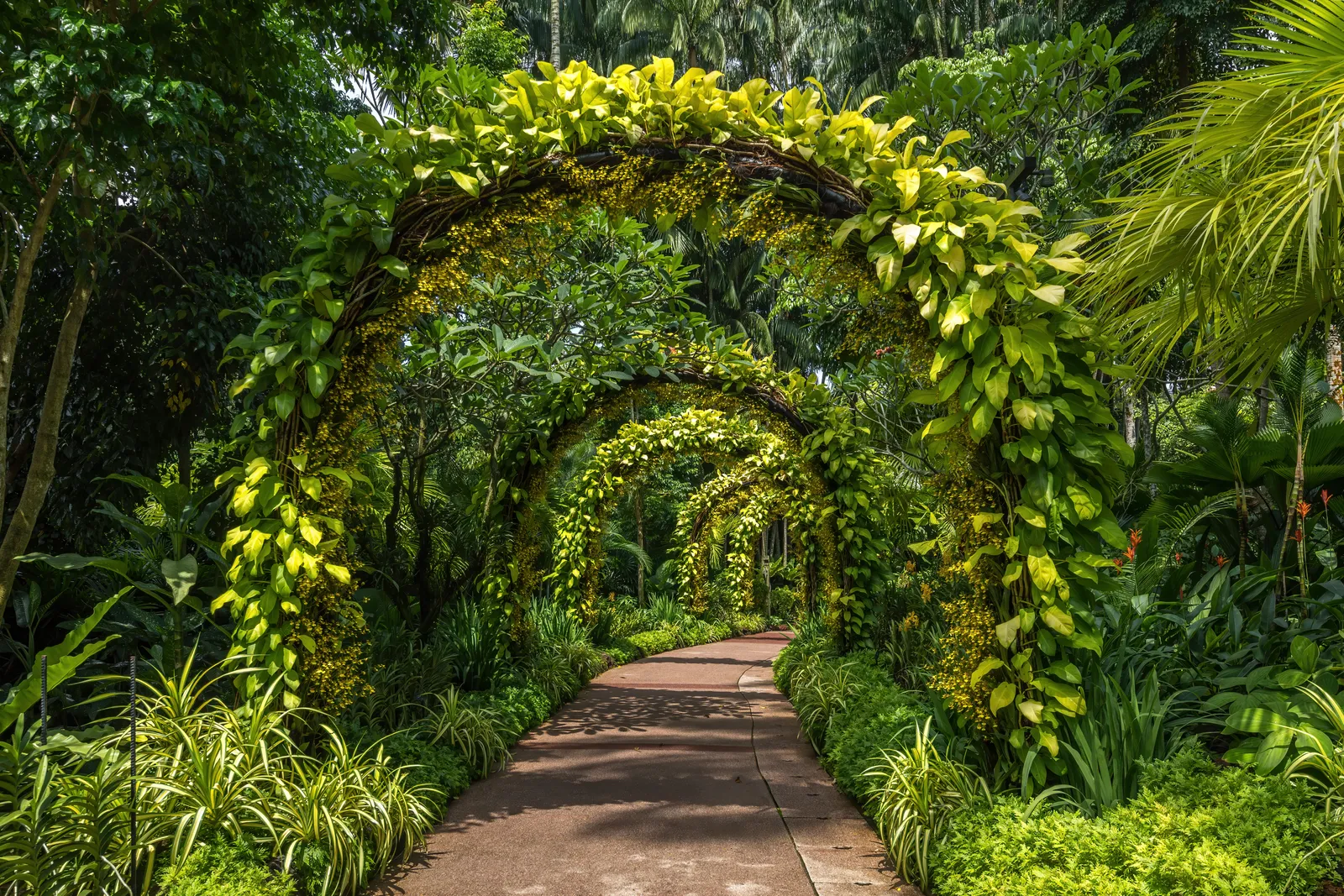
The one gated piece of the gardens sits on a slope near the Tanglin end, and it holds roughly 1,000 orchid species and 2,000 hybrids, which the national parks board calls the largest display of tropical orchids anywhere. It is arranged over a series of terraces and cooled houses, with arched walkways of climbing foliage between them, and a section given over to orchids named after visiting heads of state and the occasional singer. Entry is S$15 for an overseas adult, S$5 for residents, S$3 for students and seniors, and free for children under 12; hours are 08:30 to 19:00 with last tickets at 18:00. Orchid garden entry is sold ahead through a tours and activities platform.
The gates open at five in the morning and shut at midnight
Two and a half kilometres separate Tanglin Gate at one end of the grounds from Bukit Timah Gate at the other, the land rolls rather than sitting flat, and a fair share of the paths between them are gravel, boardwalk or mown grass rather than pavement. What those opening times buy is a nineteen-hour window no museum or ticketed attraction in the city comes near, so this is the stop that works for a landing at dawn or an evening with time to fill. A wheeled suitcase spends the whole of it being carried or dragged.
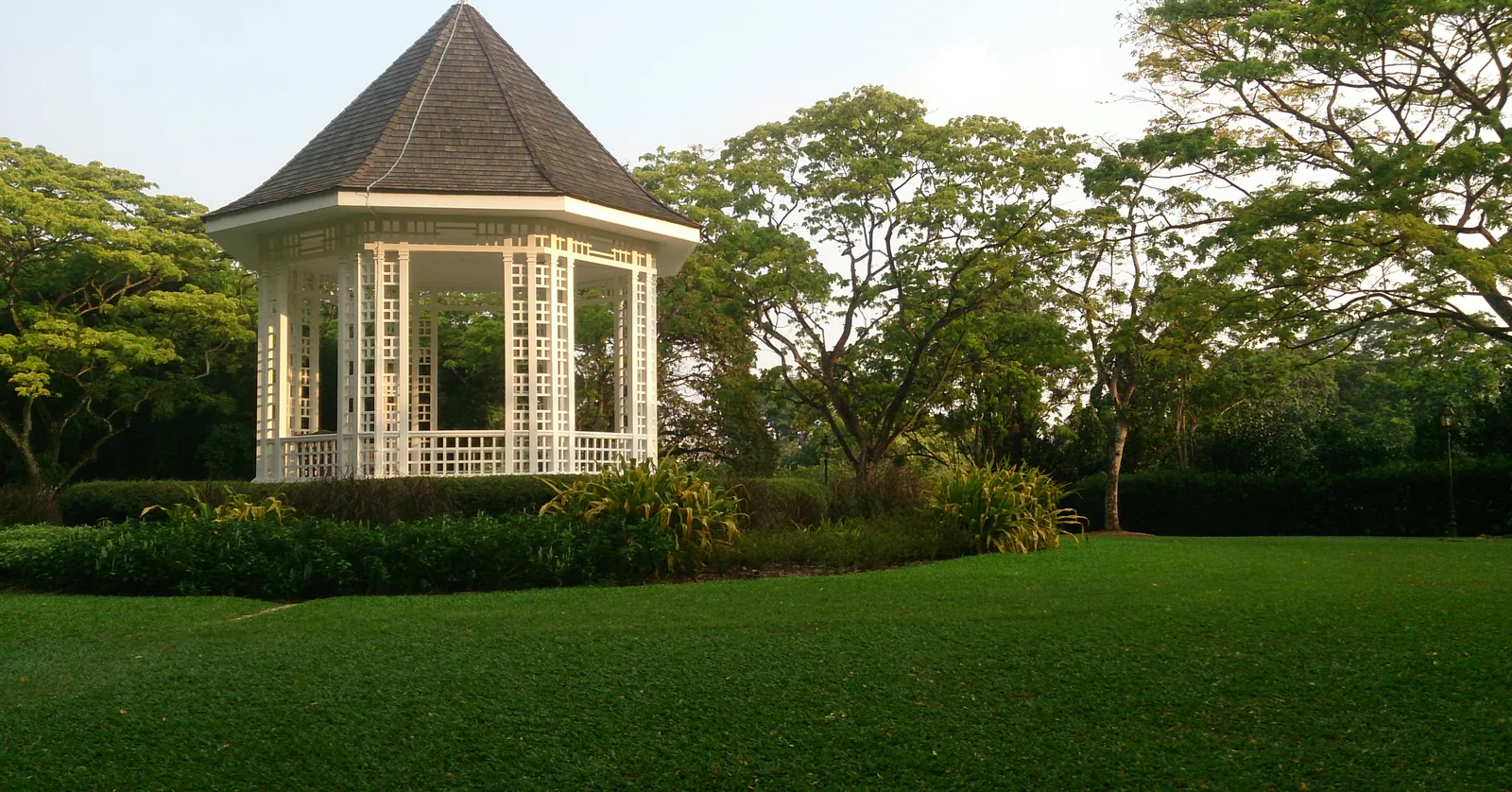
The Bandstand, a white gazebo on a rise in the middle of the gardens
Everything outside the orchid gate is free, and the octagonal white latticework pavilion standing on its own mown hillock is the image most people carry away from the place. The gardens around it were added to the UNESCO World Heritage list in 2015, the only tropical botanic garden ever inscribed, and what earned it was not the planting so much as the science: this is where the region’s rubber industry was worked out. Eleven of 22 rubber seedlings shipped from Kew in 1877 were sown here, and Henry Ridley, who became director in 1888, developed the herringbone tapping method that let a tree be bled repeatedly without killing it, then spent years pressing seeds on any planter who would take them. A guided garden walk from a tours and activities platform covers that history if you would rather have it explained than read it off plaques.
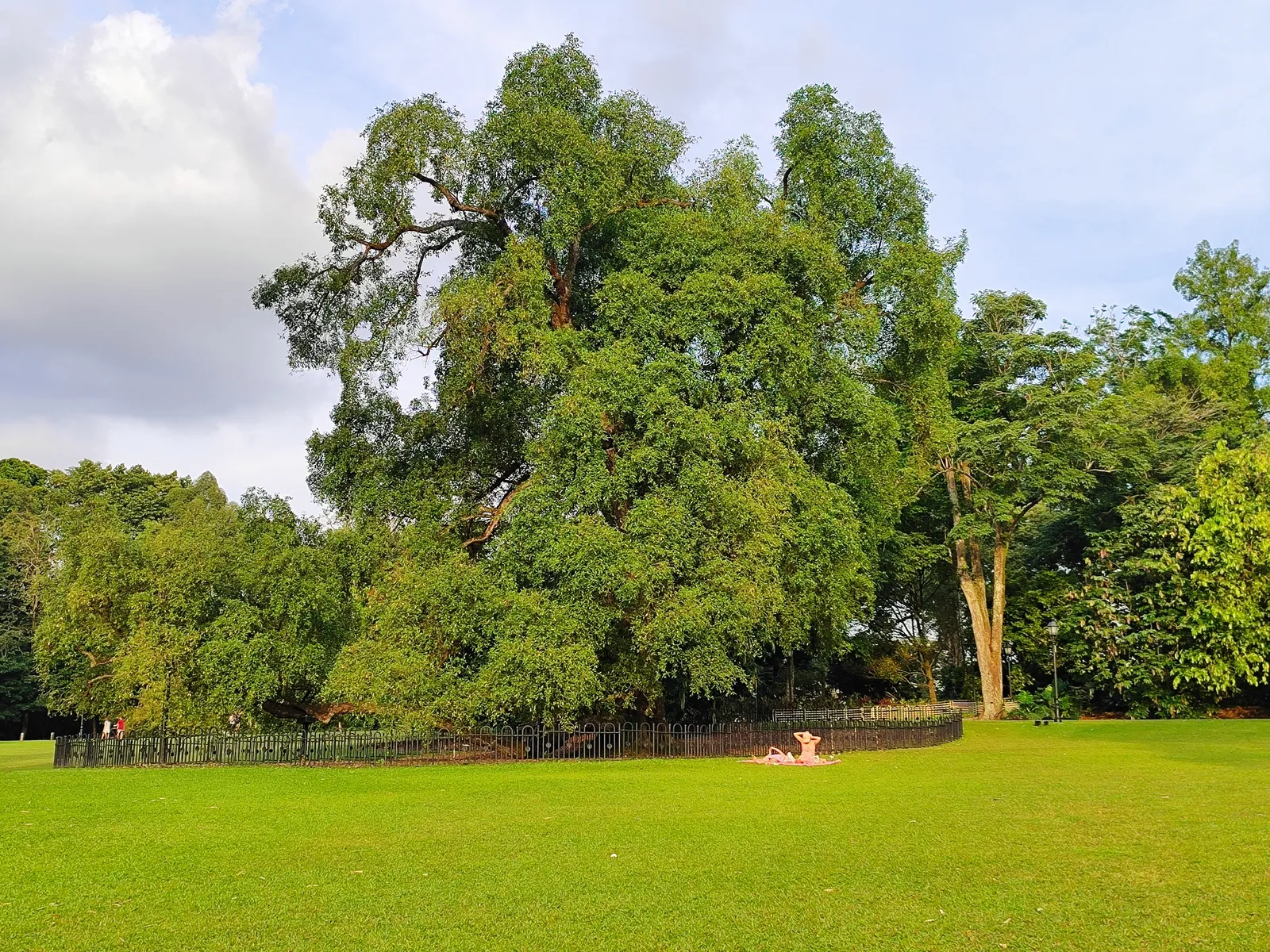
The tembusu tree from the back of the five-dollar note
On Lawn E stands a tembusu that has been growing here for more than 170 years: about 20 metres tall, six metres around, and famous for one thick horizontal limb that grew out sideways low over the grass. Generations of Singaporeans were photographed sitting on that branch, which is why it is fenced now. The tree is on the reverse of the country’s five-dollar note, so an appreciable share of the population has been carrying a picture of it around for years without particularly noticing.
Deeper in, six hectares of the gardens are not planted at all. That patch is primary rainforest, older than the gardens laid out around it in 1859 and older than the colonial town, with a boardwalk cut through it and some of the trees pre-dating anything modern on the island.
The slowest run to the airport of any central district
Botanic Gardens station is on the Circle Line and the Downtown Line, and the airport branch is at the wrong end of both. One route is the Circle Line east to Paya Lebar, the East West Line on to Tanah Merah, then the cross-platform shuttle in; the other is the Circle Line to MacPherson, the Downtown Line straight to Expo, and the same branch from there. Either is roughly an hour of actual riding and closer to an hour and a quarter once the two changes and the waits are counted, against the 40 minutes the Marina Bay walk needs from City Hall. Set off earlier than the map suggests, remember the last airport-bound train leaves Tanah Merah at 23:50 and goes before the final eastbound East West Line train arrives, and collect a stored bag on the way east rather than after.
Frequently asked questions
What should I do during a layover near Botanic Gardens station in Singapore?
Walk into the gardens, which start at the station exit and cost nothing. Eighty-two hectares of them were put on the UNESCO World Heritage list in 2015, the only tropical botanic garden ever to make it. The National Orchid Garden inside is the single ticketed piece, S$15 for an overseas adult, and holds around 1,000 orchid species and 2,000 hybrids. Elsewhere it is free the whole way: the Bandstand on its lawn, the tembusu tree that ended up on the back of the five-dollar note, and six hectares of rainforest that was here before the gardens were. Three to four hours is comfortable, and the gates are open from 05:00 to midnight.
Is anything here open early in the morning or late at night?
The gardens themselves are, from 05:00 to midnight every day, a nineteen-hour window that no museum or ticketed attraction in the city comes near, so they suit free hours that fall at an awkward time. What is not open all that while is the National Orchid Garden, which runs 08:30 to 19:00 with last tickets at 18:00, or the visitor-centre shops and cafes. At six in the morning the paths belong to joggers and to the birds, and it is the coolest the place gets.
How much walking does this involve?
More than it looks on a map, and not all of it on pavement. The gardens run about two and a half kilometres end to end from Tanglin Gate to Bukit Timah Gate, the ground rolls rather than being flat, and a good deal of the network is gravel, boardwalk or mown grass. A wheeled suitcase does not enjoy any of that. The main spine between the Botanic Gardens station entrance and the orchid garden is sealed and step-free, so a shorter version is possible.
How long does it take to get from the Botanic Gardens to Changi Airport?
About an hour of riding and more like an hour and a quarter once changes and waits are counted, which makes this the slowest of Singapore's central districts to leave. One way is the Circle Line east to Paya Lebar, the East West Line on to Tanah Merah, then the cross-platform shuttle to Singapore Changi Airport (SIN). The other runs the Circle Line to MacPherson and the Downtown Line straight through to Expo, changing there for the same airport branch. Either way, leave earlier from here than you would from anywhere in the middle of the city, and note the last airport-bound train out of Tanah Merah goes at 23:50.