Tennoji Station Layover: Osaka's 593 Temple
Part of the full Osaka Layover Guide: Dotonbori From KIX
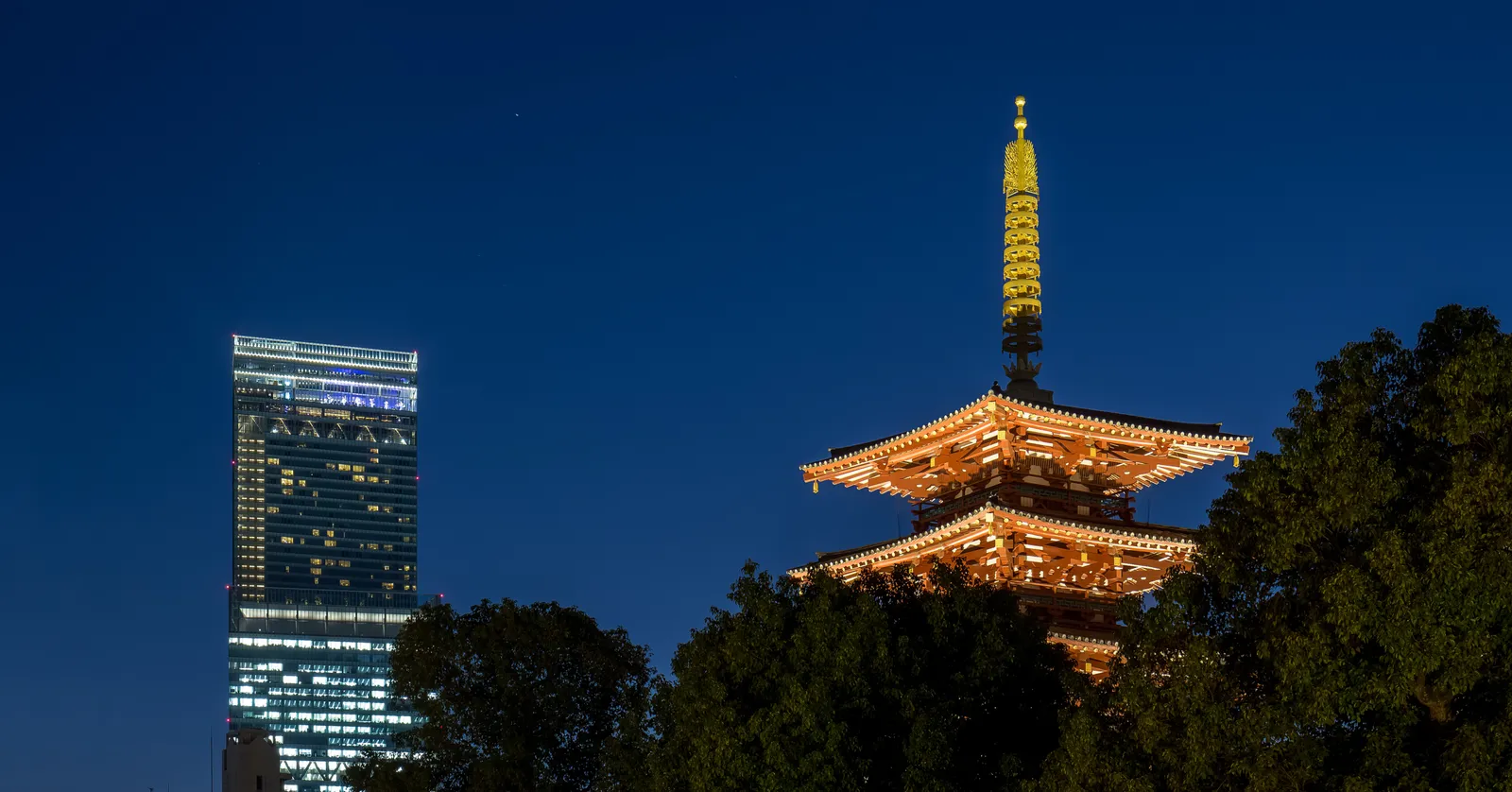
An observatory on the 60th floor of Japan’s tallest building and a temple founded in 593 sit about ten minutes apart at Osaka’s Tennoji station, and the temple’s outer grounds cost nothing to walk into.
Harukas 300 occupies the top three floors of Japan’s tallest building
Abeno Harukas reaches 300 metres and stands directly over the station, which means the observatory is reachable without stepping outside. The deck runs across floors 58, 59 and 60: a glass-walled circuit at the top, an open-air courtyard cut into the middle of the building below it, and a cafe on 58 with the same view through the window. Admission is ¥2,200 at the counter or ¥1,980 booked online by the previous day, and it stays open until 10pm with last entry at 9:30, which makes it the stop that still works when a flight moves.
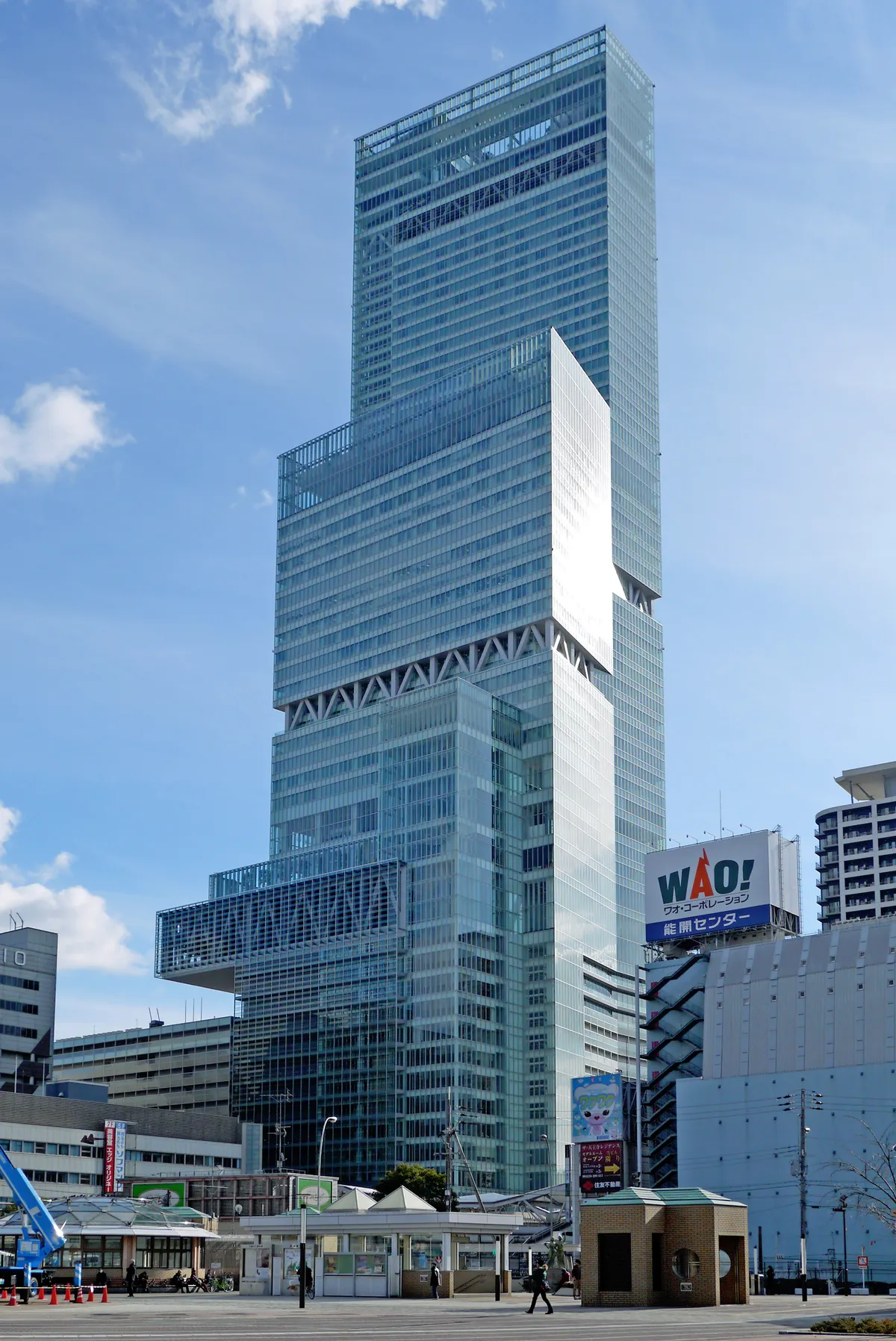
Deck tickets go through a tours and activities platform, which is the version that carries the advance price rather than the counter one.
Shitennoji was the first Buddhist temple the Japanese state built
Prince Shotoku founded Shitennoji in 593, which makes the institution older than anything currently standing on the site; the current structures are 20th-century concrete reconstructions of a layout that has been rebuilt after fire and war more times than anyone counts. What survives from earlier is the stone torii at the west entrance, put up in 1294 and the oldest gate of its kind in the country, and it stands in the free part of the grounds.
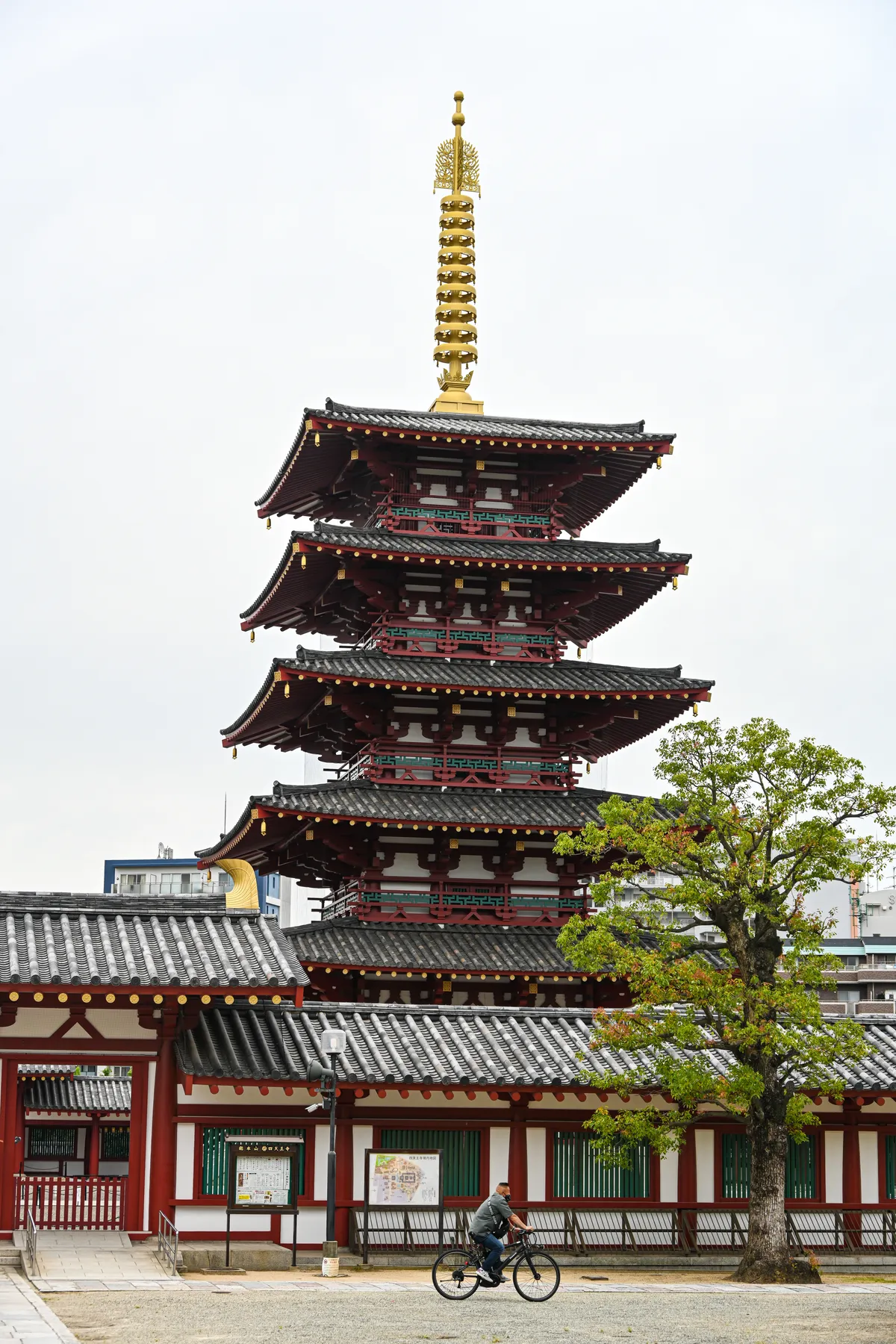
The ¥300 inner precinct is what you pay for: a walled courtyard holding the five-storey pagoda, which can be climbed, and the main hall with Prince Shotoku enshrined in it as a figure of Kannon. Gates open at 8:30am and close at 4:30pm between April and September, 4pm the rest of the year. The courtyard floor is loose pebbles, which a wheeled bag will not cross.
Ten minutes west, behind Tennoji Park, there is a second walled thing worth the detour if the temple has shut for the day. Keitakuen was the Sumitomo family’s private garden, laid out in the Taisho era by Ogawa Jihei, the gardener behind the grounds at Heian Shrine and Murin-an in Kyoto, and handed to the city in 1926 along with the house that stood in it. It is a circuit around one pond, twenty minutes at a slow walk, planted densely enough that the tower two streets away turns up only in the reflection.
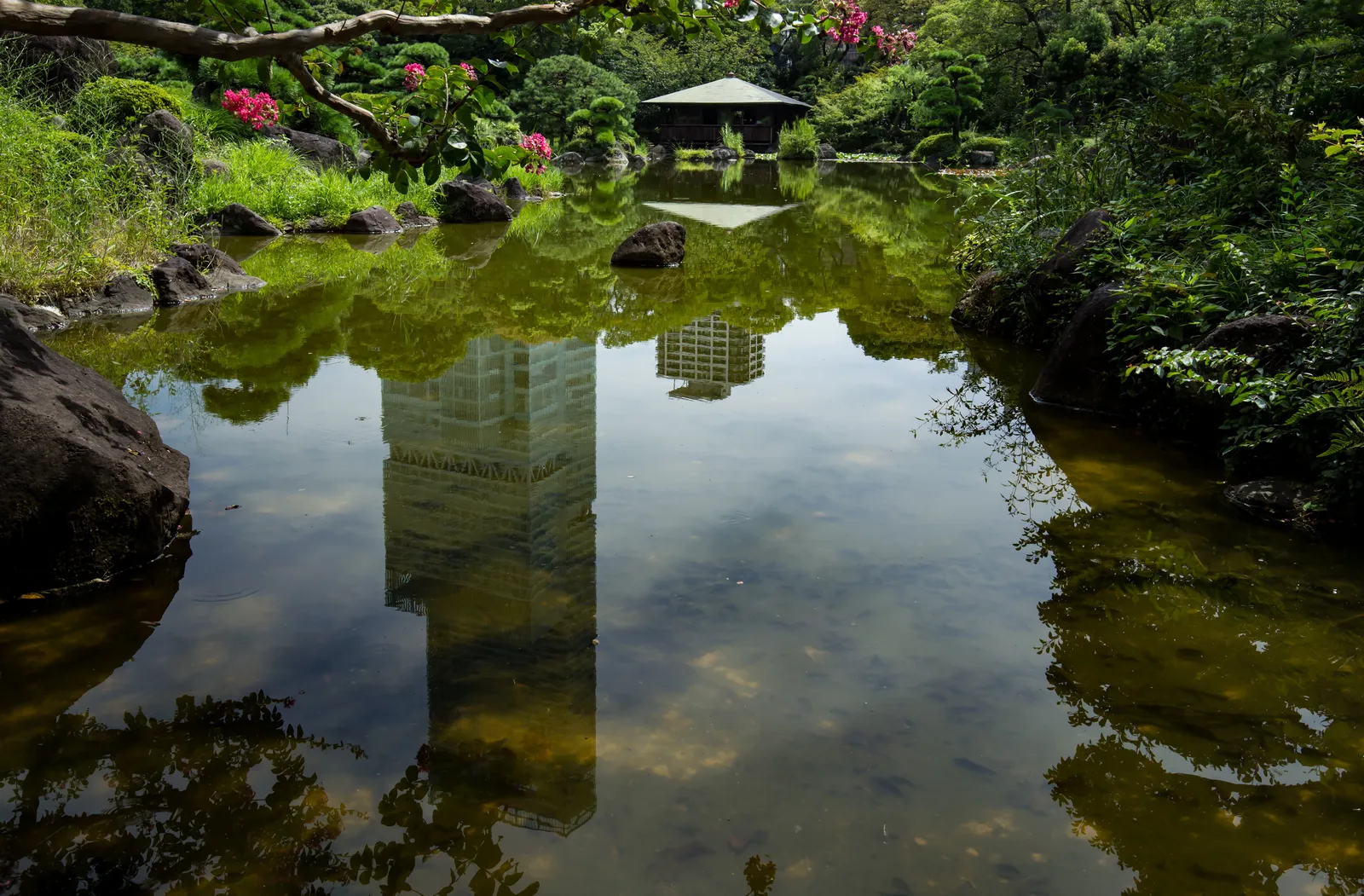
Entry there is a token fee of a few hundred yen and it closes on Mondays, which is the catch on this side of the station: the temple shuts in the late afternoon, the garden takes Mondays off, and the tower does neither.
Both airport trains leave from the same platforms here
The Haruka limited express covers the run to Kansai International Airport (KIX) in about 30 minutes for ¥1,820 in a non-reserved seat, roughly twice an hour. The Kansai Airport Rapid does the same trip for ¥1,060 and takes around 50 minutes, stopping all the way down the line and splitting at Hineno, so check which half of the train you are sitting in. Most of the city makes you pick a station to match the train; this one does not.
North of here the ground drops away towards the canal, and the Osaka layover guide picks up there with a different kind of afternoon: street level, food, and nothing that closes at 4pm.
Frequently asked questions
What should I do during a layover near Tennoji Station in Osaka?
Two stops, ten minutes apart, in whichever order the weather suggests. Harukas 300 is the observatory on the 58th to 60th floors of Japan's tallest building, directly above the station, ¥2,200 at the counter and open until 10pm. Shitennoji, founded in 593, is about fifteen minutes north on foot: the outer grounds cost nothing and the inner precinct with the five-storey pagoda is ¥300, but it shuts at 4:30pm in summer and 4pm in winter, so it is the one to do first. Keitakuen, the pond garden behind Tennoji Park, fills a spare forty minutes and closes on Mondays.
How much of Shitennoji can you see without paying?
Most of the ground, and none of the best part. The outer precinct is open and free, including the 1294 stone torii at the west entrance, which is the oldest gate of its kind in Japan. The pebbled inner courtyard holding the five-storey pagoda and the main hall is ¥300, the Gokuraku-jodo garden behind it another ¥300, and the treasure house ¥500. Hours are 8:30am to 4:30pm from April to September and 8:30am to 4pm from October to March, which is earlier than almost anything else on this side of the city.
What happens at Shitennoji on the 21st and 22nd of the month?
An antique and flea market takes over the grounds, and it is worth planning around if your dates land on it. Around 300 stalls trade from 8:30am until sundown across the outer precinct, selling old kimono and obi, ceramics, Buddhist altar goods, furniture and street food. The dates are not arbitrary: the 21st is the monthly memorial day for Kobo Daishi and the 22nd is the anniversary of Prince Shotoku's death. It is free to walk through, since it sits in the part of the temple that never charges.
Can you climb the pagoda at Shitennoji?
Yes, and the ¥300 inner-precinct ticket covers it. The five-storey pagoda is open to go up rather than only to look at, and it is stairs the whole way with no lift. The main hall facing it across the courtyard holds Prince Shotoku enshrined as a figure of Kannon. Both stand inside the walled inner precinct, whose floor is loose pebbles, and both shut when it does: 4:30pm between April and September, 4pm from October to March, with the outer grounds staying open and free either way.