Osaka Station Layover: Umeda's Red Wheel
Part of the full Osaka Layover Guide: Dotonbori From KIX
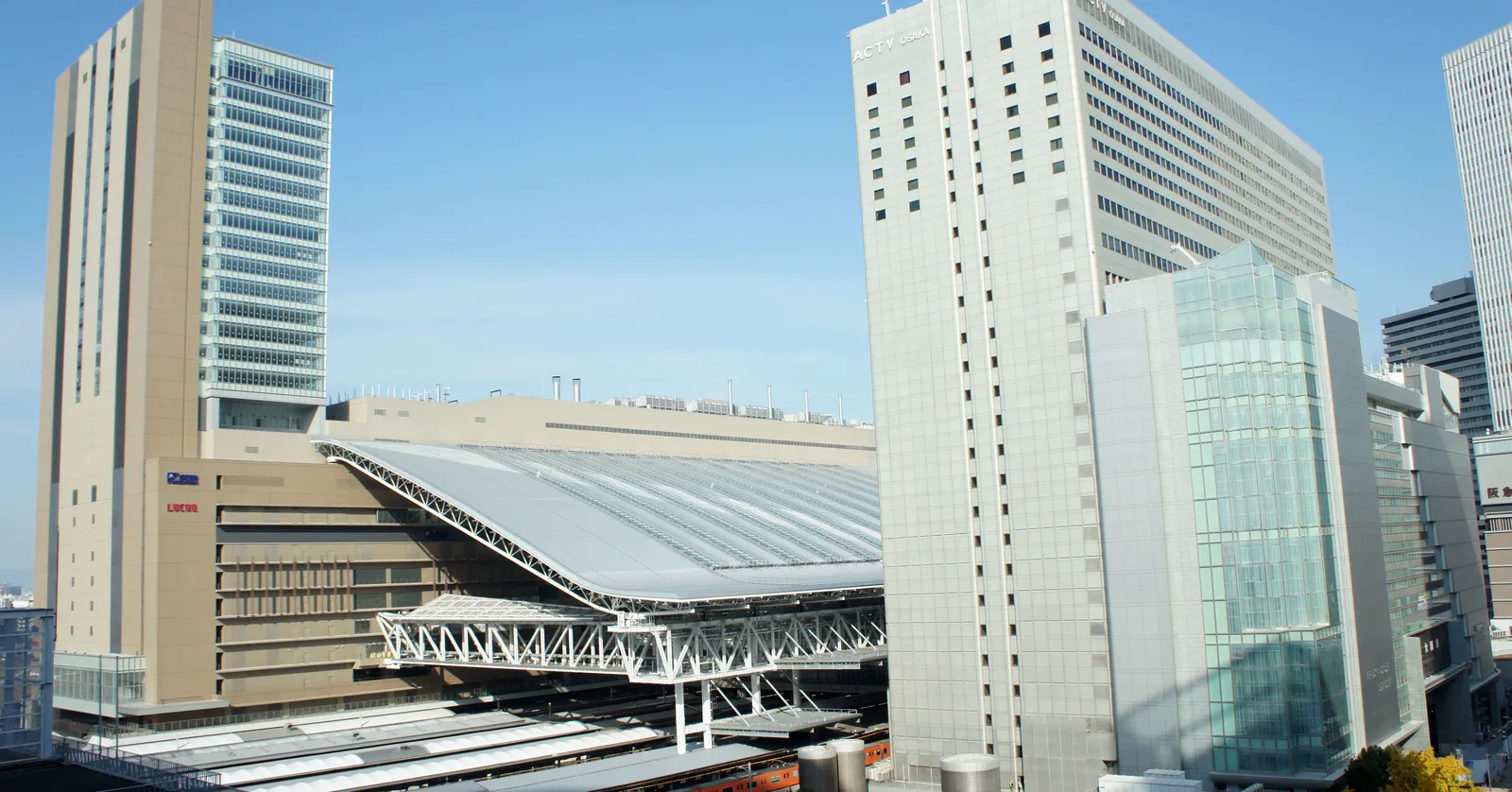
Umeda’s red Ferris wheel turns 106 metres above Osaka Station on the roof of a shopping building, and ten minutes southeast a shrine holds the grove where a 1703 love suicide became Japan’s best-known puppet play.
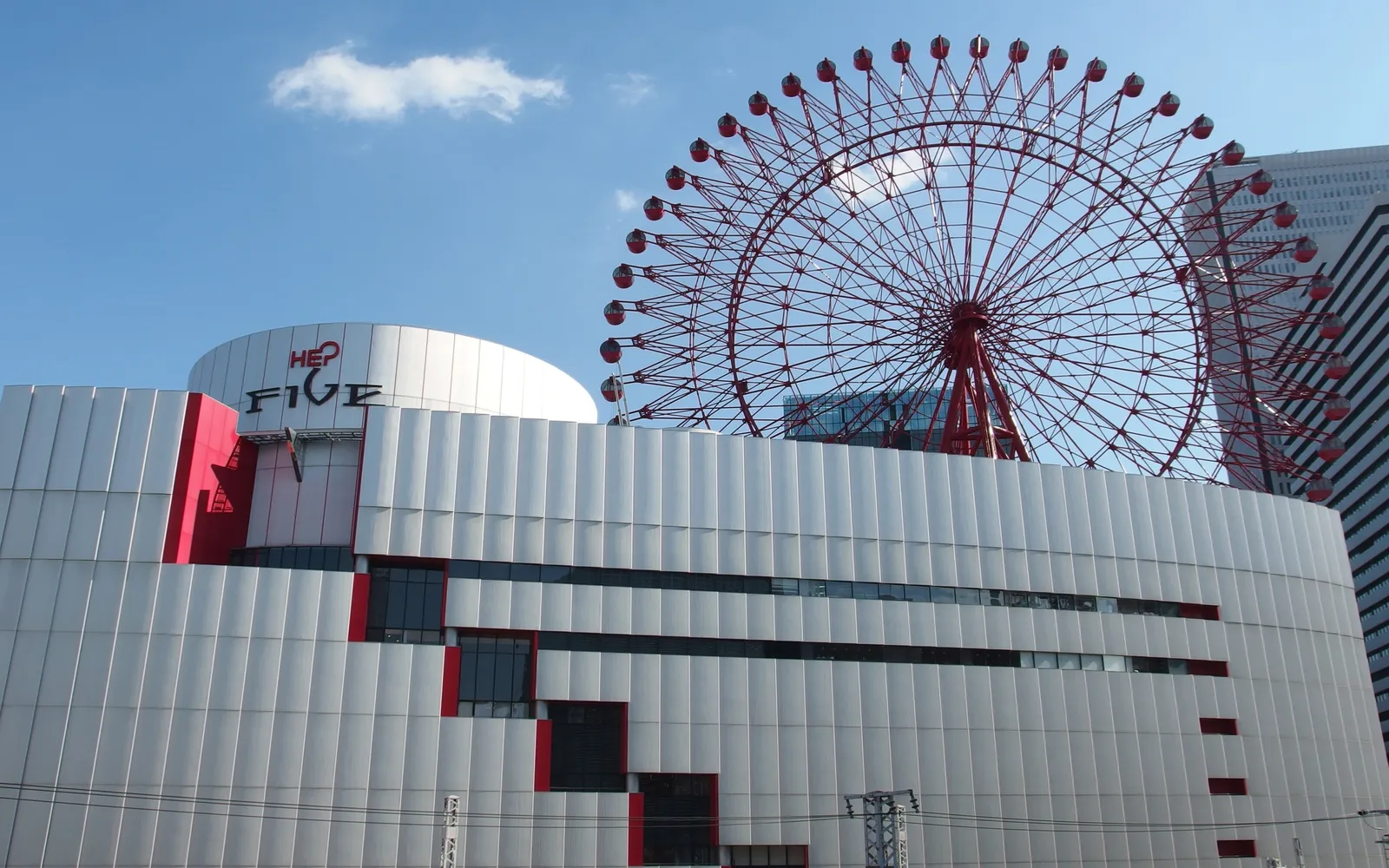
A red Ferris wheel is mounted on the roof of HEP FIVE
The wheel is 75 metres across and its top sits 106 metres above the street, which is high for something bolted to a shop rather than built on its own legs. Boarding is on the seventh floor, inside the building, and the gondolas, 52 of them, carry four people each through a turn of about 15 minutes. A ride is ¥1,000, and the wheel loads from 11am until 10:45pm, so it is one of the few things here that outlasts an afternoon going wrong. Tickets go through a tours and activities platform.
Tsuyunoten Shrine stands where a 1703 double suicide happened
On 7 April 1703 a shop clerk named Tokubei and a courtesan named Ohatsu, from the Dojima quarter a few streets away, died together in the wooded ground behind this shrine. Chikamatsu Monzaemon wrote it up within weeks as a puppet play, Sonezaki Shinju, and it set the pattern for the domestic tragedies that followed it on the bunraku stage. The shrine has been called Ohatsu Tenjin, after the woman, ever since.
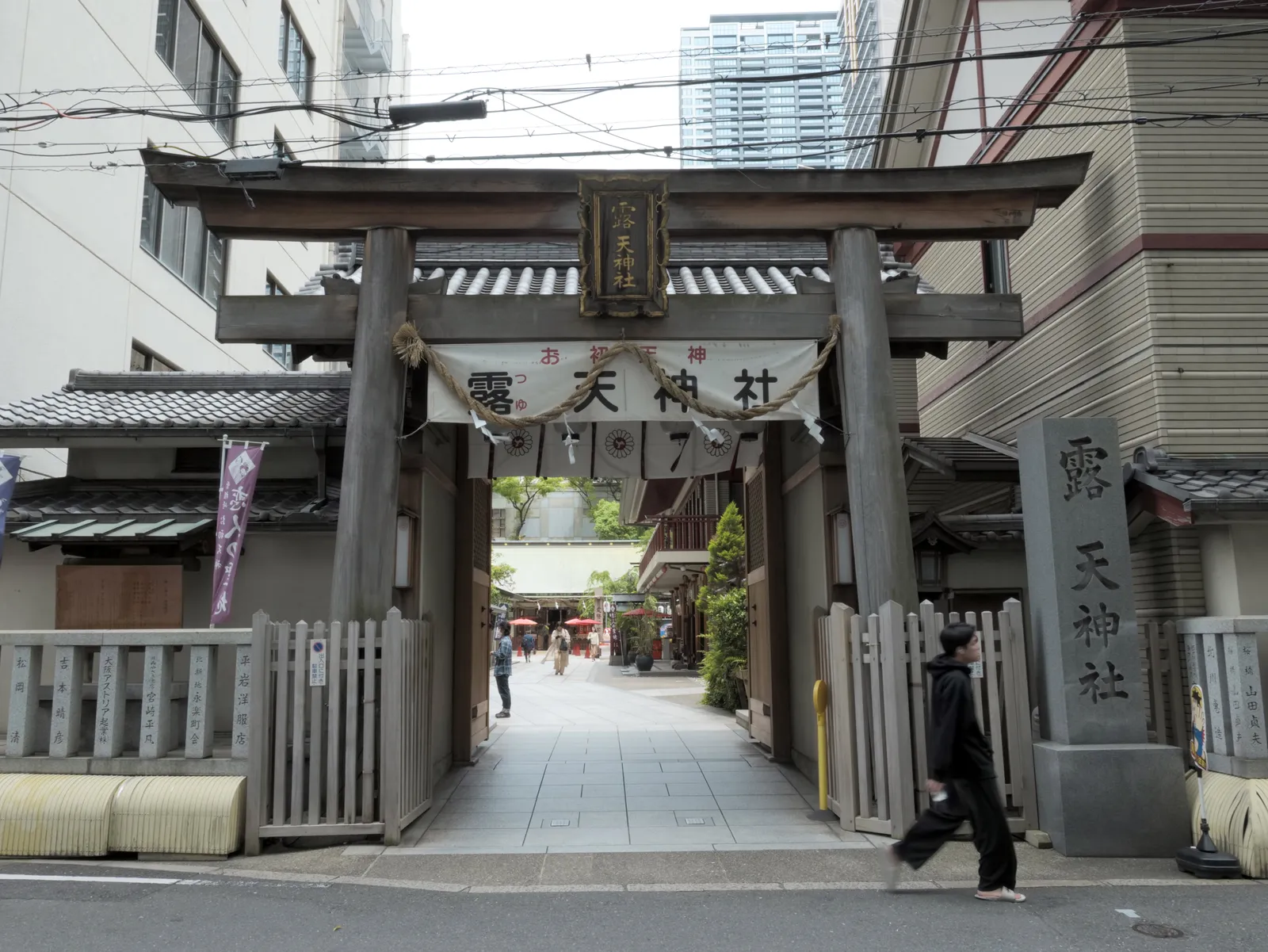
What is there now is a small precinct hemmed in on four sides by office blocks and reached down a covered shopping lane, free to walk into and open at any hour. People still come to it about relationships, which is a direct line back to the play. It is ten minutes southeast of the station on foot, and the lane leading to it is lined with bars that fill up long before the shrine empties.
Umeda’s underground is five linked malls, not a passage
Whity Umeda alone holds about 180 shops across five connected halls, named for its white walls, and something close to 300,000 people pass through on an ordinary day; Diamor Osaka adds roughly 90 more shops next door, laid out to look like an Italian street. Locals call the whole warren the Umeda dungeon, and the joke is only half a joke: the walk between two stations here is a walk through retail, at shopping pace, in a crowd, and a wheeled bag turns that into a slow sequence of apologies.
The Haruka now leaves from platforms under the north side
Until March 2023 the airport limited express did not call at Osaka Station at all: you went out to Shin-Osaka or down to Tennoji to catch it, and the new underground platforms ended that. The run to Kansai International Airport (KIX) is about 45 to 50 minutes, roughly twice an hour, ¥2,380 in a non-reserved seat or ¥2,910 reserved. The cheaper Kansai Airport Rapid leaves from the surface platforms instead, takes around 70 minutes and costs about ¥1,200, and it splits at Hineno, so the carriage matters. Getting from the wheel down to either of them is fifteen minutes through that underground, not five.
A wheel, a shrine and a mall inside ten minutes of one concourse is a thinner afternoon than the canal district further south offers, and the Osaka layover guide is the version to read when the gap is long enough to go and find it.
Frequently asked questions
What should I do during a layover near Osaka Station in Osaka?
Stay above ground and keep it to two things. The red Ferris wheel on the roof of HEP FIVE is five minutes from the concourse, ¥1,000, and a full turn takes about 15 minutes, so it fits almost any gap. Tsuyunoten Shrine is ten minutes southeast on foot, costs nothing, has no closing time, and is the grove where the 1703 love suicide behind Japan's best-known puppet play took place. Between them that is about ninety minutes, and anything left over goes on the underground malls, which is where you will end up anyway walking back to the platform.
Why do Umeda's stations all have different names?
Because five operators built into the same square kilometre and none of them agreed on a name. The JR station is Osaka; Hankyu and Hanshin each run an Osaka-umeda; the subway has Umeda on one line, Higashi-Umeda on another and Nishi-Umeda on a third, and there is a separate JR station called Kitashinchi a few minutes south. They are all walkable from one another underground, mostly through the shopping malls rather than dedicated passages, which is why directions here are given in shop names rather than exits.
Is the Ferris wheel worth it if the Floating Garden Observatory is already on the list?
Probably not both, and they are not the same experience. The wheel is 106 metres at its highest point, enclosed, seats four, and commits you to about 15 minutes for ¥1,000 whether the view holds your attention or not. The rooftop ring at the Umeda Sky Building is 173 metres, open to the air, ¥2,000, and you stay as long as you like; the main Osaka guide covers that one and it is nine minutes' walk northwest of the station. If you want a view, take the higher one. If you want fifteen minutes off your feet with a view attached, take the wheel.
How do I get from Osaka Station to Kansai Airport?
From the underground platforms on the north side, which opened in March 2023 and are the reason this is now a direct trip at all. The Haruka limited express runs from there to Kansai International Airport (KIX) in about 45 to 50 minutes, roughly twice an hour, ¥2,380 in a non-reserved seat and ¥2,910 for an ordinary reserved one. The slower option is the Kansai Airport Rapid from the surface platforms, around 70 minutes and about ¥1,200, with a carriage split at Hineno that is easy to get wrong: make sure you are in the half of the train labelled for the airport.