Vyšehrad Layover: Prague's Other Fortress
Part of the full Prague Layover: PRG to Old Town in 40 Minutes
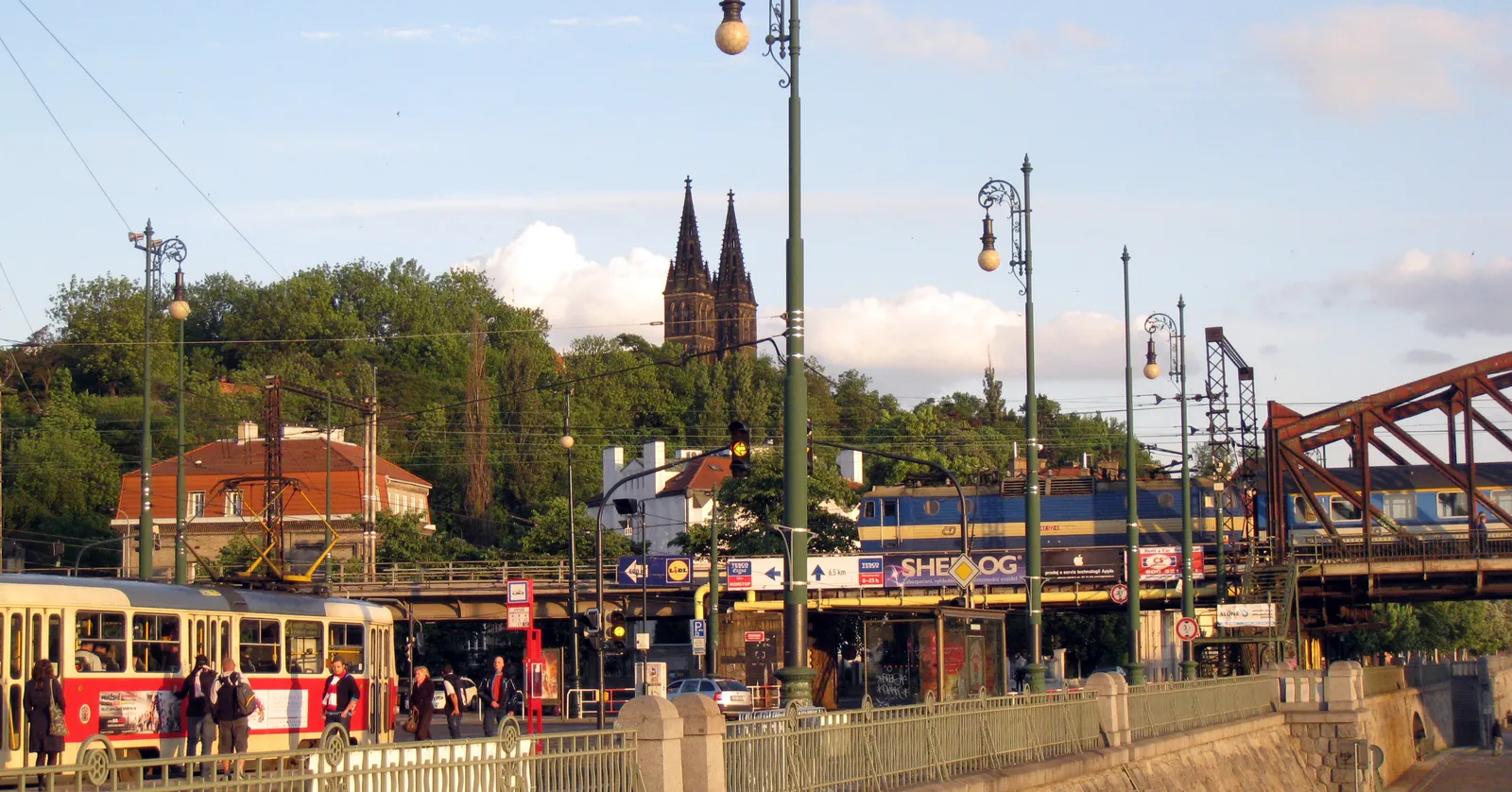
Vyšehrad is the fortress on the rock two metro stops south of the centre, and its ramparts, lawns and cemetery are free and open at any hour, which makes it the version of Prague you can walk around without queueing for anything.
Get off at Vyšehrad, not down by the river
This matters more than it sounds, because the two approaches are completely different walks.
Metro line C to Vyšehrad is the one to take. The station sits on the deck of the Nusle Bridge, forty metres above the valley floor, at the same height as the fortress itself. From the platform to the fortress gate is about nine minutes on flat ground. No hill, no steps.
The alternative is a tram to Výtoň or Albertov, down at river level, and then up. That is a proper climb, and it is how most people arrive without meaning to.
The ramparts are free, and they never close
There is no ticket for Vyšehrad. The grounds, the walls, the lawns and the paths are open ground with no gate on them, at any hour of any day.
What you came for is the southern and western walls. The rock drops straight to the Vltava, and from the ramparts you get the river, the railway bridge, the roofs of Podolí downstream and the castle ridge away to the north. It is the reverse of the view everyone else in Prague is looking at.
The circuit is longer than it looks from the metro. This is a fortified plateau, not a building, and two hours goes quickly on it.
That is also the practical catch: it is a long loop of open ground with very little shade and nowhere obvious to set a case down while you take in a view, so this is a walk to do with your hands empty.
Who is buried at Slavín
Inside the walls, beside the twin-spired Basilica of St Peter and Paul, is Vyšehrad Cemetery, and it is not an ordinary graveyard. Over 600 notable Czechs are buried here, and the tombs were commissioned as art rather than as headstones.
At the centre is Slavín, a neo-Renaissance mausoleum finished in 1894 to a design by Antonín Wiehl, holding around fifty figures from Czech cultural life under one roof.
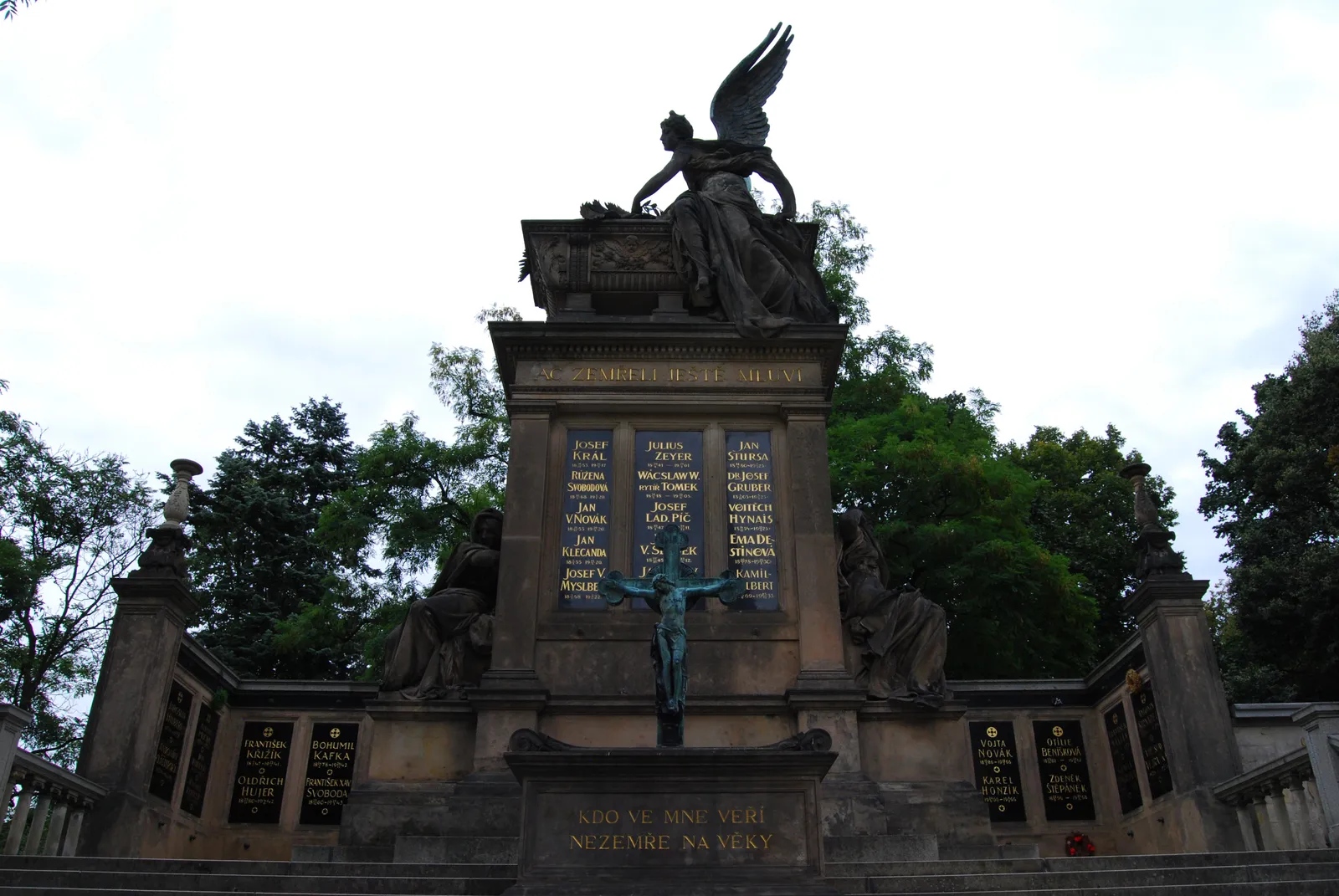
Around it, individually: Antonín Dvořák, Bedřich Smetana, Alfons Mucha, Karel Čapek, who gave the world the word robot. Entry is free. The gates follow the season, 8am to 7pm from May to September and as early as 5pm in midwinter, which is the one thing here that can be shut when you arrive.
The basilica itself costs around 130 CZK to go inside. The exterior, and the two black spires that are the thing you see from the river, cost nothing.
The cannonball in the rotunda wall
If you have half an hour spare after the walls and the cemetery, spend it on the smallest building on the site.
The Rotunda of St Martin is a plain round stone drum with a conical roof, put up in the second half of the eleventh century, and it is among the oldest buildings still standing anywhere in Prague. It is usually locked, and it does not matter, because the thing to see is on the outside.
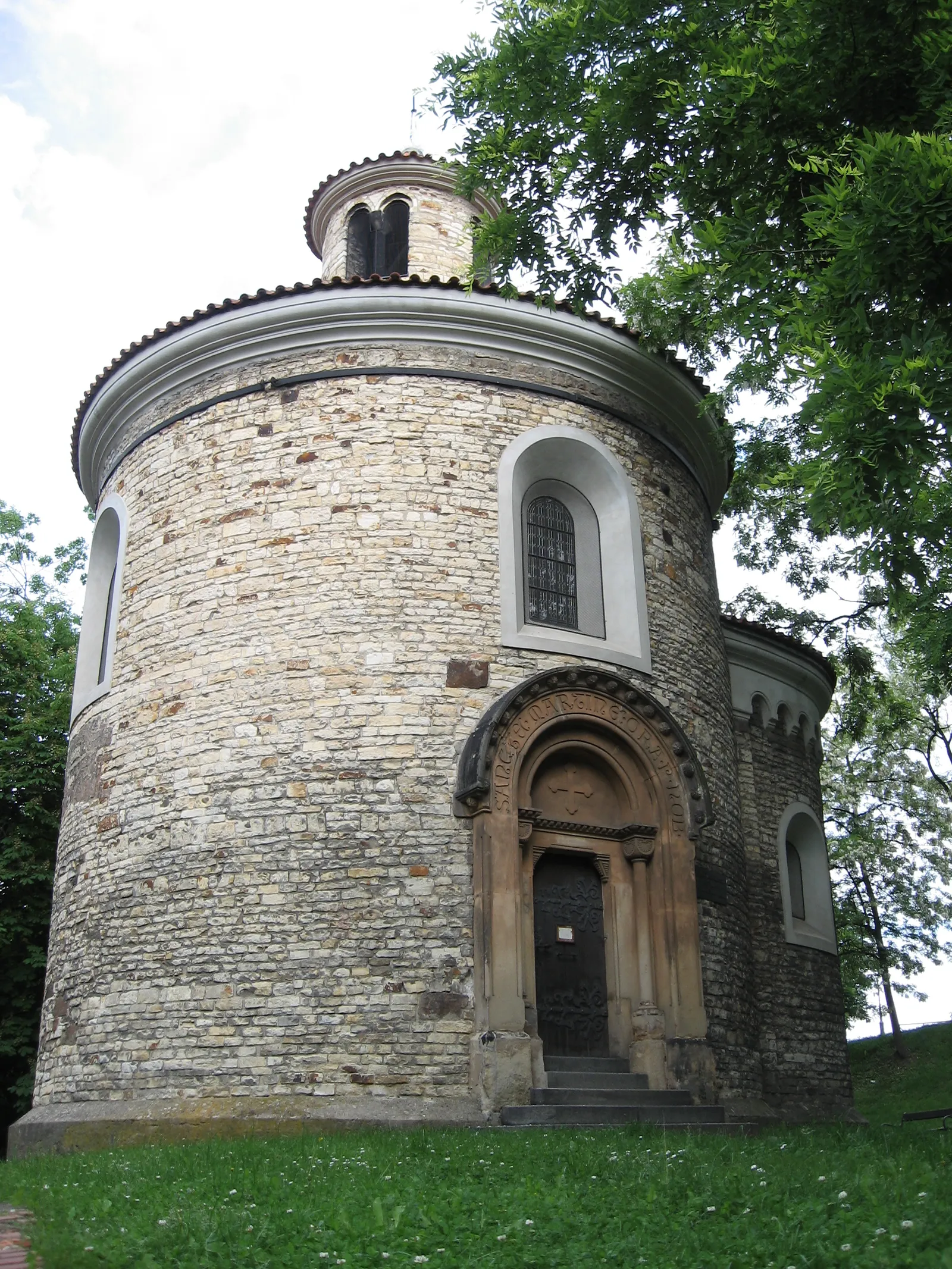
Walled into the façade, to the right of one of the windows, is a cannonball. It has been left there since the Prussians bombarded Prague in 1757, and nobody has taken it out in the two and a half centuries since. It takes ten seconds to find once you know it is there, and essentially nobody looking at the rotunda knows it is there.
Working back from a flight, allow about three hours from Vyšehrad to the gate: line C toward the centre, change at Muzeum onto line A, out to Nádraží Veleslavín and trolleybus 59 to the terminals. Collect the bag on the way through, and you will have spent an afternoon in Prague without standing in a single queue.
Frequently asked questions
How long does the walk round Vyšehrad actually take?
About two hours covers the ramparts circuit, the cemetery and the views, at a pace that does not feel rushed. Add the basilica interior and somewhere to sit and you are at half a day. The grounds are bigger than they look from the metro: this is a fortified plateau with lawns and long stretches of wall, not a single building you walk around.
Which way in avoids a climb?
The metro. Vyšehrad station on line C sits on the deck of the Nusle Bridge, at the same height as the fortress, so the nine or ten minute walk from the station to the gate is effectively level. Every other approach involves the hill: the trams at Výtoň and Albertov leave you down by the river and you climb from there. That makes this one of the few major sights in Prague reachable without a gradient, which is worth knowing if you are travelling with someone who would rather not do stairs.
When does the cemetery close?
It shifts through the year: 8am to 7pm from May to September, to 6pm in March, April and October, and to 5pm from November to February. The rest of Vyšehrad does not close at all, so on a winter afternoon you can still walk the walls and see the basilica from outside after the cemetery gates have shut. If Slavín is the reason you came, check the month before you plan the trip.
Is Vyšehrad a better use of a layover than the Old Town?
Only if you have seen the Old Town, or specifically want quiet. Vyšehrad is the version of Prague with room to walk and no crowd, but it is one site rather than a run of them, and it is thirty-five minutes from the airport bus route rather than twenty. On a first visit with four or five free hours, the Old Town route from Staroměstská gives you more of the city. On a second visit, or on a hot day when the centre is unbearable, this is the better call.