Prague Layover Near Florenc Bus Terminal
Part of the full Prague Layover: PRG to Old Town in 40 Minutes
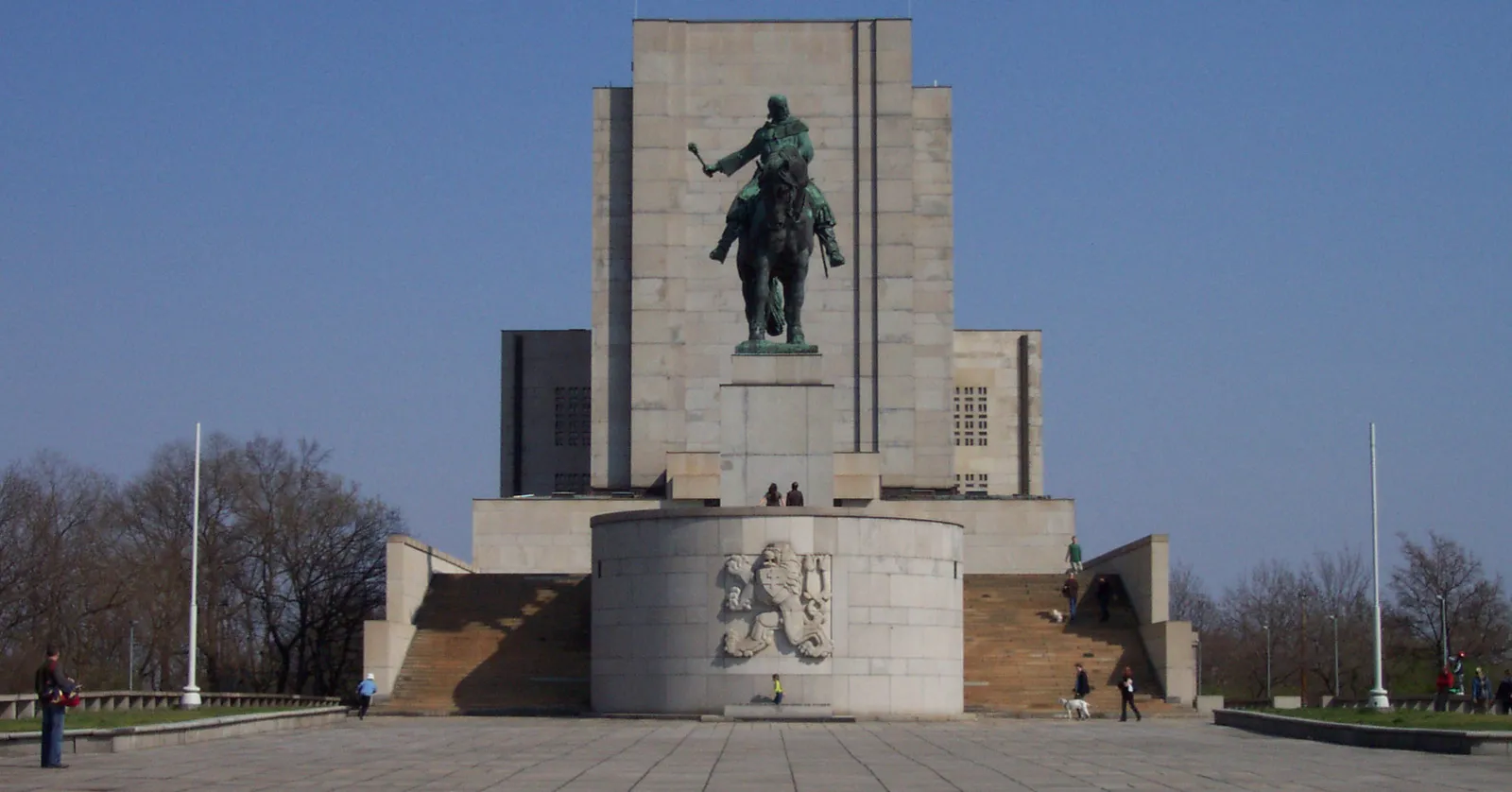
Florenc is Prague’s international coach terminal, and the useful thing about it is that Vítkov Hill starts more or less across the road: half an hour of walking gets you to a 16-tonne bronze horseman, a free national memorial and a view over the whole city, without going near the Old Town.
Karlín starts at the terminal door
Florenc handles around ten million passengers a year and it is where the coaches from Berlin, Vienna, Budapest and Kraków put people down. It sits on metro lines B and C, and it opens at 5.30am.
Immediately east of it is Karlín, and Karlín is not a sight. It is a flat nineteenth-century grid that took the worst of the August 2002 flood, was rebuilt through the decade that followed, and has since become the part of Prague people actually want to eat in. Bakeries, bistros, wine bars, coffee places, mostly along Sokolovská and the streets off it. There are no queues and no souvenir shops.
If the weather has turned, this is the half of the day that still works: Karlín is indoors and Vítkov is a bare hill with no shelter on it.
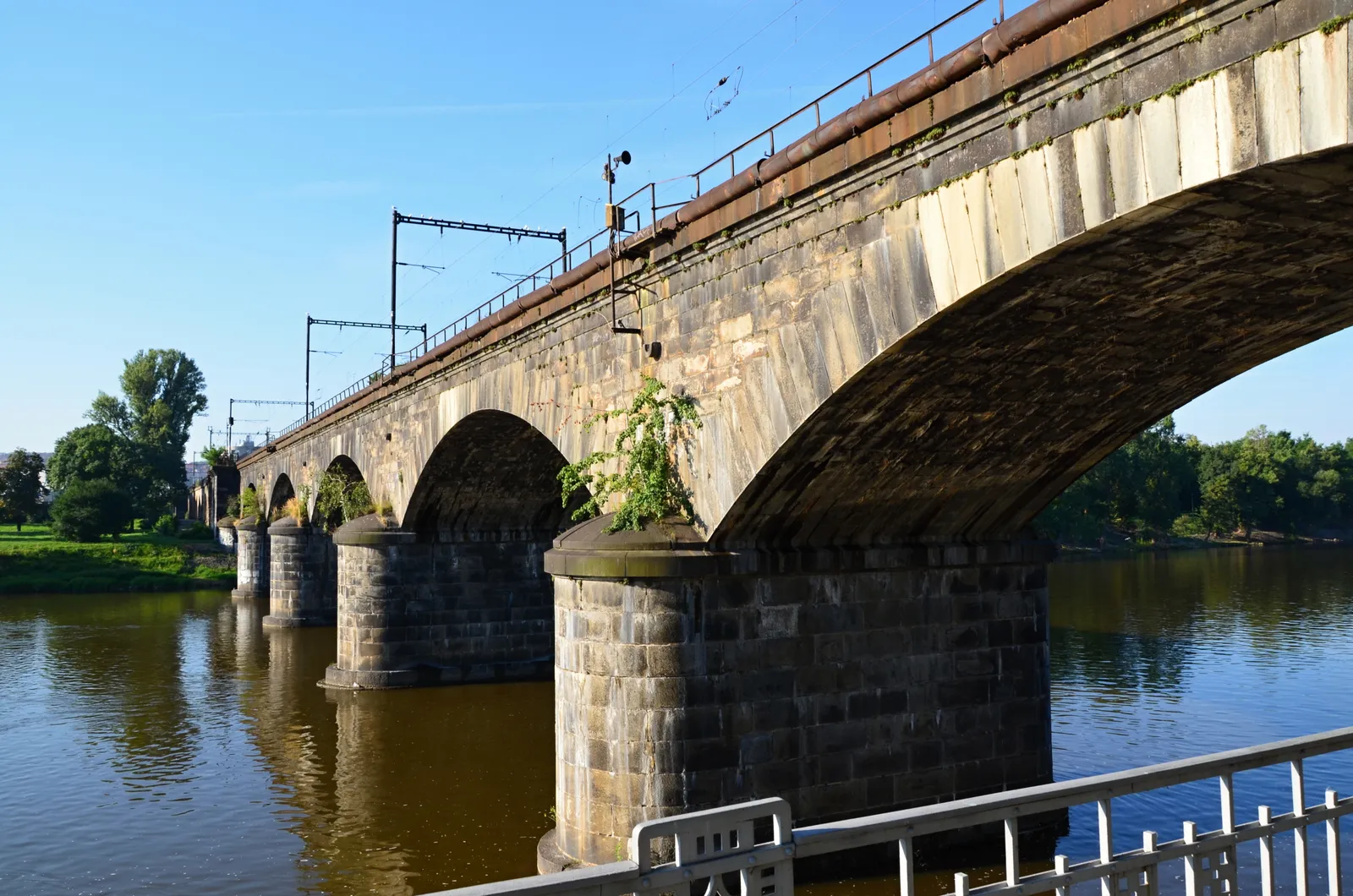
Along the district’s northern edge runs the Negrelli Viaduct, and it is worth two minutes of your attention even if railway bridges are not your thing. Finished in 1850, it runs close to 1,100 metres on roughly a hundred stone arches, which makes it Prague’s oldest railway bridge and the second-oldest bridge of any kind still standing in the city. It was designed by Alois Negrelli, who went on to work on the plans for the Suez Canal. After a full reconstruction between 2017 and 2020 a number of the arches underneath were fitted out as cafes and galleries, so the bridge is now something you can stand inside rather than just under.
Fifteen minutes up Vítkov for the bronze giant
South and east of the terminal the ground rises into a long narrow ridge. That is Vítkov, and in 1420 it was where Jan Žižka’s Hussites beat a crusader army, which is why the hill has what it has on top of it.
Allow about fifteen minutes from Florenc to the foot of the hill and another fifteen up: paved paths through parkland, a steady gradient, no steps to speak of. The park has no gates and no closing time.
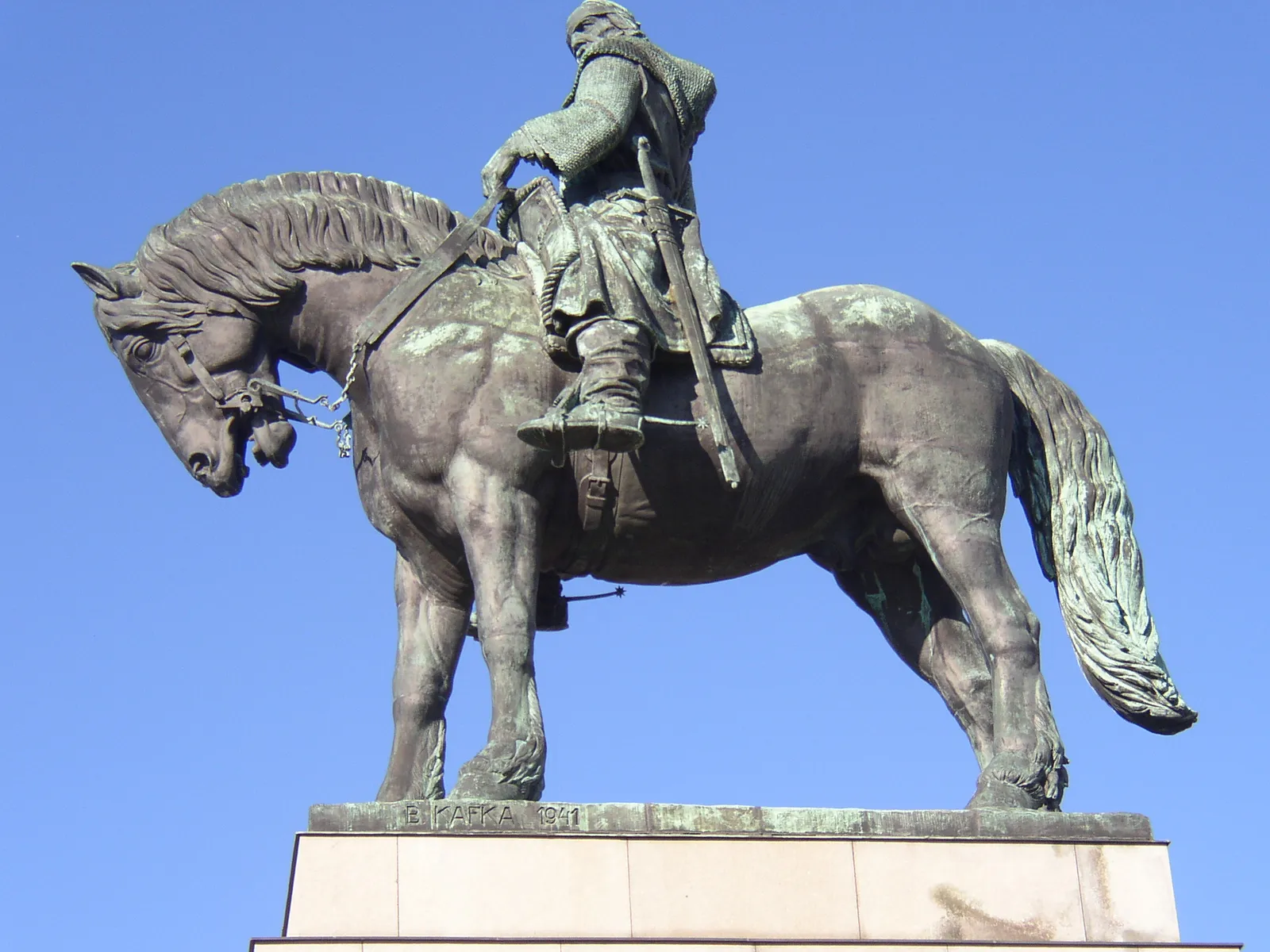
At the summit is the equestrian statue of Jan Žižka, and the scale of it is the point. It stands 9 metres high, the horse is 9.6 metres long, it weighs about 16.5 tonnes, and it was assembled on site from 39 separate bronze castings. Bohumil Kafka worked on it from 1931 until his death and it was not unveiled until 1950. It is routinely called the largest bronze equestrian statue in the world, though the Genghis Khan statue in Mongolia has a claim on that, so treat it as one of the largest rather than the largest.
Behind it, the National Memorial is free to walk into, Tuesday to Sunday, 10am to 6pm with last admission at 5.30. It holds the Tomb of the Unknown Soldier and a long, unsparing exhibition on twentieth-century Czechoslovakia. The view north and west from the terrace in front of it takes in Karlín, the river and the castle ridge beyond.
Coaches from Berlin or Kraków are five to eight hours sitting upright, and what comes out of the hold is a full-size case rather than a cabin bag, which is the thing you do not want on a thirty-minute uphill walk you have chosen to take.
Getting on from Florenc
For the airport, metro C one stop to Muzeum, change to line A, ride to Nádraží Veleslavín and pick up trolleybus 59 to the terminals: about 55 minutes on one 50 CZK ticket. If you would rather pay for simplicity, two stops on line C reaches Praha hlavní nádraží, where the Airport Express coach leaves from outside the door for 200 CZK.
Working back from a flight, two and a half to three hours from Florenc to the gate covers all of it.
If the gap is under two hours
Then Vítkov is out, because the climb and the walk back is most of two hours on its own, and you would be watching the clock the whole way up.
What fits instead is Karlín flat: walk east along Sokolovská, get something to eat, look at the viaduct arches, and be back at the terminal without having hurried. It is a smaller day than the hill, but it is the one that works.
The larger point about Florenc is that it is the only major arrival point in Prague where the thing worth seeing is uphill rather than downtown. Nobody arriving here thinks to look south at the ridge, and that is exactly why there is nobody on it.
Frequently asked questions
Is the National Memorial on Vítkov free, and when is it open?
Entry is free, and that is the part people get wrong: it looks like a paid national institution and is not. It opens Tuesday to Sunday, 10am to 6pm, with last admission at 5.30pm, and it is closed on Mondays. The hill and the park around it are open ground with no gates, so if you arrive on a Monday or after six you can still make the climb, see the statue and get the view; you just cannot go inside the building.
How do I get from Florenc out to the airport?
Metro line C one stop to Muzeum, change to line A, ride west to Nádraží Veleslavín and take trolleybus 59 to the terminals. That is roughly 55 minutes for a 50 CZK ninety-minute ticket. The alternative is to go two stops on line C to Praha hlavní nádraží and take the Airport Express coach from outside the station, which is 35 to 40 minutes but costs 200 CZK and does not accept transit tickets. Allow two and a half to three hours from Florenc to your gate.
What is there to do if I arrive before dawn?
Not much indoors, which is the honest answer for a terminal that takes overnight coaches. The bus station itself opens at 5.30am. Vítkov Hill is unfenced parkland and you can walk up it at any hour, though the memorial building will be shut and the path through the park is unlit in places. Karlín's bakeries and coffee places are the first things to open in this part of Prague, so the practical plan for a 5am arrival is to wait it out over breakfast and climb the hill once it is light.
Is Karlín worth staying in, or should I head for the Old Town?
It depends what you want from the gap. Karlín is a working residential and restaurant district that was gutted by the 2002 flood and rebuilt, so it is early-2000s architecture next to nineteenth-century blocks, with the city's densest run of bistros and bakeries and almost no tourists. It is not scenic in the way the centre is. If you came to see Prague rather than to eat well and sit down, the Old Town route from Staroměstská is four metro stops away and is the better use of a first visit.