Prague Layover Near Praha-Holešovice Station
Part of the full Prague Layover: PRG to Old Town in 40 Minutes
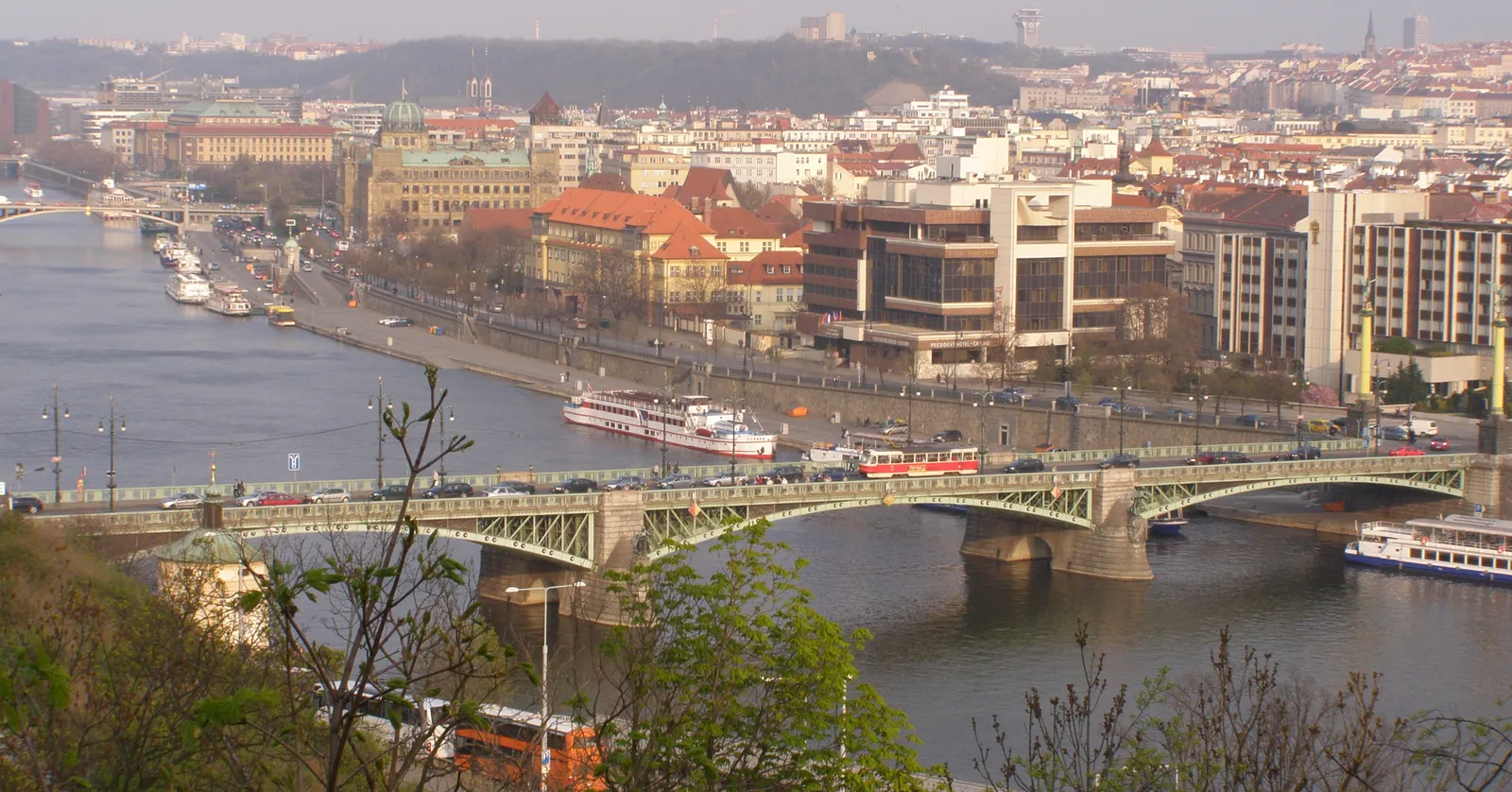
Praha-Holešovice is where the trains from Berlin and Dresden come in, and what it opens onto is not a historic centre but two large parks: Stromovka’s 95 hectares of former royal hunting ground, and the Letná bluff with a free terrace looking straight down the Vltava at the Old Town.
Two stops from Florenc, and a park at the door
Worth saying plainly, because people arriving here often assume they have been dropped somewhere inconvenient: you have not. This is Prague’s second railway station, the EuroCity services from Dresden, Berlin and Hamburg use it, and the metro is attached to it. Nádraží Holešovice on line C is two stops from Florenc, three from the main station and four from Muzeum, which is six to eight minutes of riding.
So the centre is close. The reason to stay out here instead is that the centre is not what is on the doorstep.
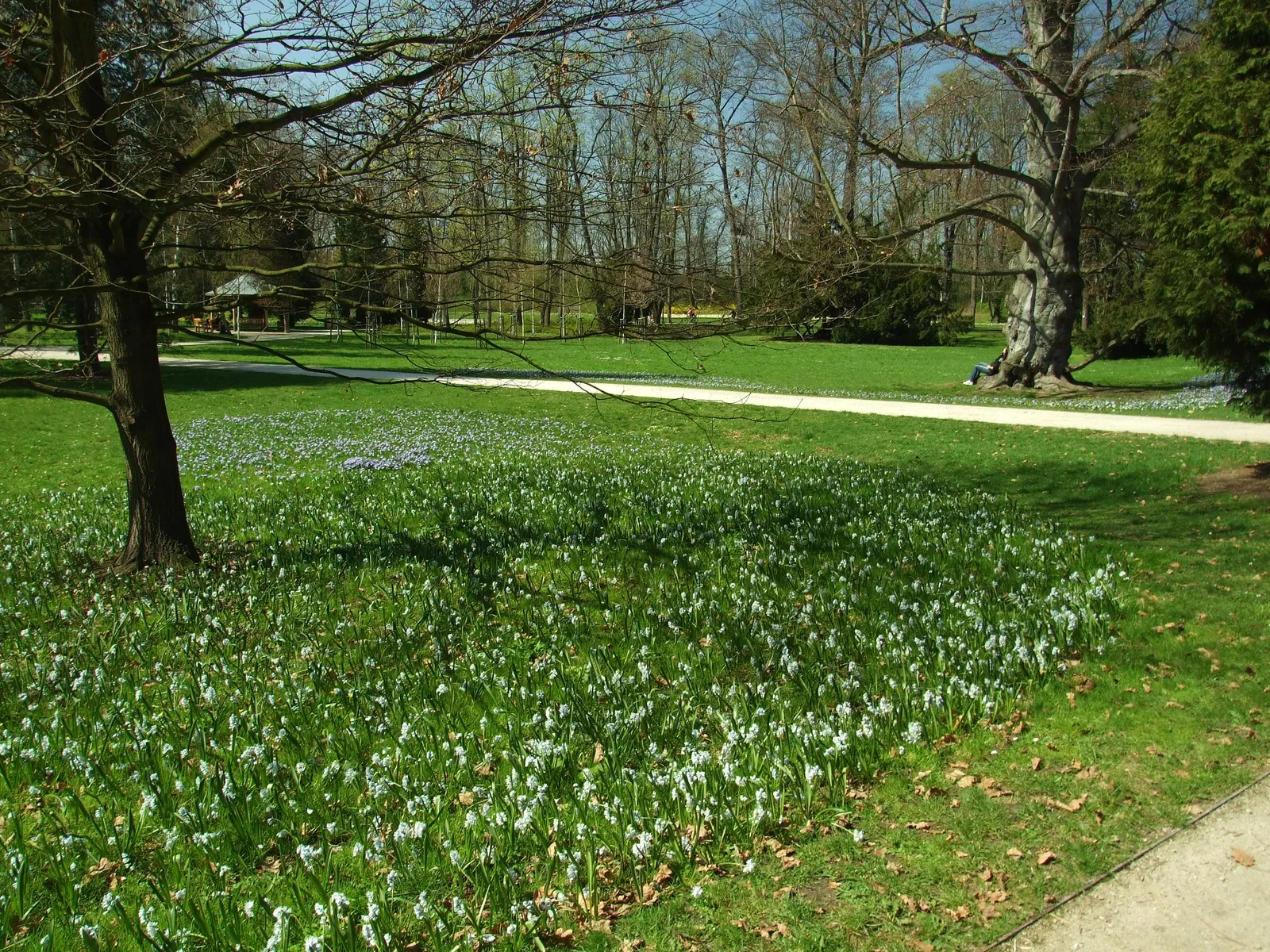
West of the station is Stromovka, about 95 hectares of it, laid out as a royal game reserve in the fifteenth century and turned into a public landscape park in the nineteenth. Mature specimen trees, wide lawns, ponds, long gravel paths, and enough space that on a weekday morning you can lose the sound of the city entirely. It has no gates, no ticket and no closing time.
There is one thing in it worth going out of your way for, and almost nobody does. Somewhere in the park stands a Renaissance stone portal, cut with the date 1583 and Rudolf II’s initials. Behind it runs a tunnel 1,102 metres long, driven under Letná hill between 1584 and 1593 by miners brought in from the silver workings at Kutná Hora, sunk through five shafts between 33 and 39 metres deep so that crews could work at twelve faces at once. Its entire purpose was to carry Vltava water into this park to keep the emperor’s fish ponds full. It is usually described as the most important piece of underground engineering in Prague, and it is a stone doorway in a park that people walk past on the way to the playground.
Onto the Letná bluff, and the terrace above Čechův Bridge
South and east of Stromovka the ground lifts into Letenské sady, a park strung along the top of the bluff for the better part of a kilometre, with the river below it the whole way.
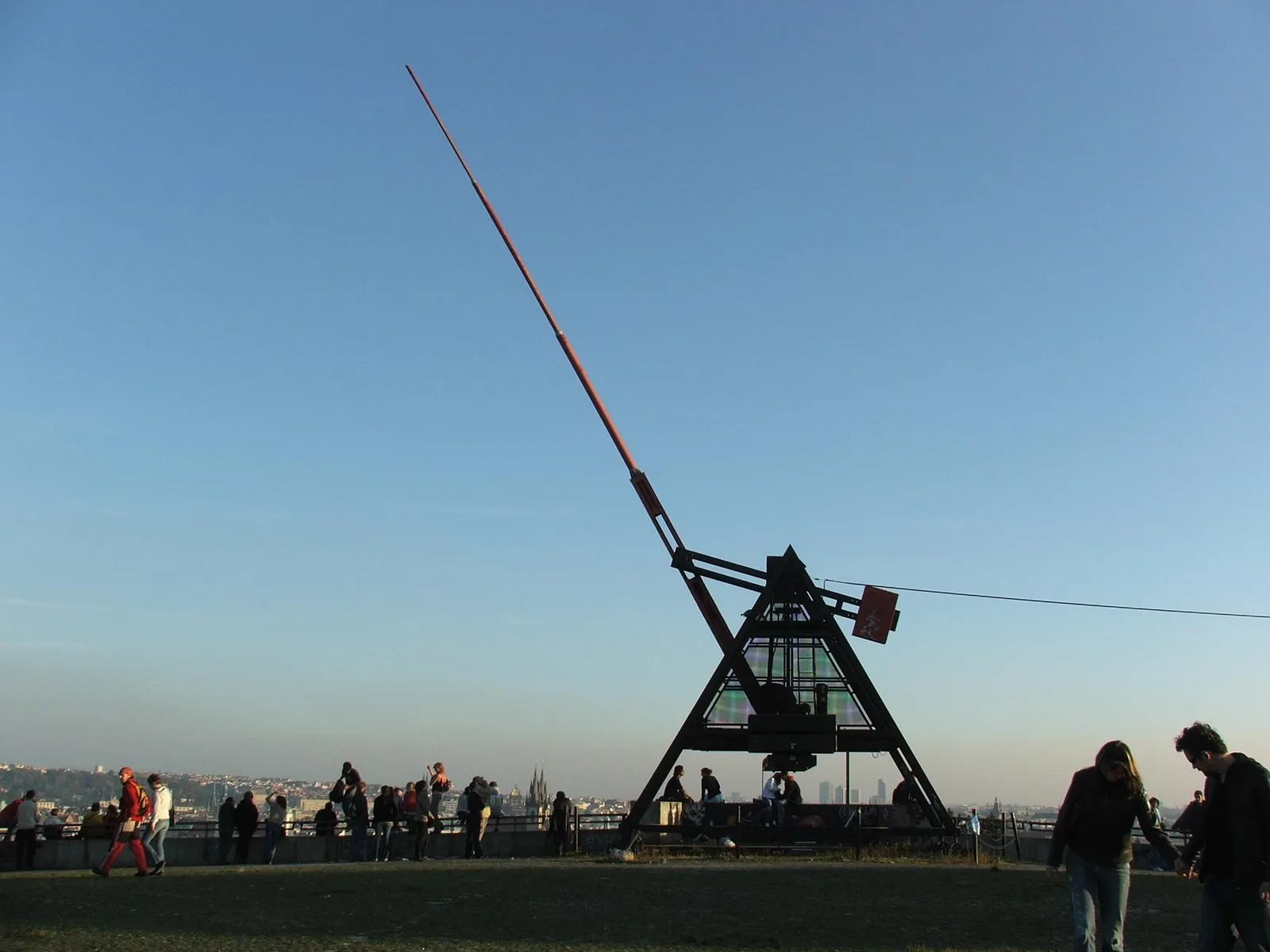
The point of it is the eastern end. There, on a broad stone terrace directly above Čechův Bridge, stands a giant metronome, its arm swinging over the parapet. The terrace is where the largest group statue in Europe, a monument to Stalin unveiled in 1955, stood until it was dynamited in 1962; the plinth stayed, and the metronome was put on it in 1991.
What you get from the parapet is the whole sweep of the Vltava with its bridges laid out in order and the Old Town on the far bank. It is free, it is never closed, and it is the view Praguers actually come to.
Just west along the bluff is the Letná beer garden, on the edge above the same drop, open from the first warm weeks of spring through to around October. Long trestle tables, plastic cups, and the same panorama.
That is the honest shape of this window: a bench, a view and a couple of kilometres of gravel, which is a good afternoon and a poor one to spend holding a suitcase.
Across the river, or later in the year
If the gap runs long, the option nobody expects from a railway station is the zoo. Buses from outside the station cross to Troja in about ten minutes, and that one bus ride reaches Prague Zoo, the Botanical Garden and the gardens of the Troja Palace. It is the only arrival point in the city where that is a sensible plan rather than a stretch, though the zoo will eat a whole afternoon rather than an hour of one.
The other thing worth knowing is when to come. Stromovka is a two-hundred-year-old landscape park full of mature specimen trees, which means autumn is the season it is genuinely at its best, and that is also when the beer garden is winding down. In October you trade the trestle tables for the trees, and it is a fair trade.
Allow about three hours from Letná to your gate: line C to Muzeum, line A west to Nádraží Veleslavín, then trolleybus 59 out to the terminals. Pick the bag up on the way through, and you will have spent the gap in the two biggest green spaces in Prague rather than in a station café.
Frequently asked questions
Why does my train stop at Holešovice instead of the main station?
Because it is on the northern approach. Praha-Holešovice is the city's second railway station, and the EuroCity services from Dresden, Berlin and Hamburg call here, some of them terminating rather than running on. It is not a mistake or an outlying suburb: the metro station Nádraží Holešovice on line C is right beside the platforms, and from there it is two stops to Florenc, three to the main station and four to Muzeum at the top of Wenceslas Square, six to eight minutes of riding.
Will the Letná beer garden be open?
It is seasonal. It opens with the first warm weather in spring, runs through to about October, and closes for the winter, with the exact dates moving each year according to how the weather goes. The important thing is that the beer garden is not the view: the terrace and the parapet it sits on are public park, open all year and free, so a January visit still gets you the Old Town, the river and the bridges laid out below. You just buy your coffee somewhere else.
Can I get to the zoo from here?
Yes, and it is the closest station to it. Buses from outside Nádraží Holešovice cross the river to Troja in about ten minutes, which puts Prague Zoo, the Botanical Garden and the Troja Palace gardens all within reach. That makes this the one arrival point in Prague where a zoo is a realistic layover plan rather than an ambitious one, though budget a full afternoon if you actually want to see it rather than glance at it.
Is it worth walking into the centre instead of taking the metro?
It is about three kilometres to the Old Town, so forty minutes at a normal pace, against six to eight minutes underground. The walk is genuinely pleasant if you route it over the Letná bluff and down through the park to Čechův Bridge rather than along the main roads, and it delivers you across the river from Old Town Square. If the centre is where you actually want to be, though, take the metro and follow the Old Town route from Staroměstská instead of spending forty minutes of a short window walking.