Montreal Layover Near the Berri Coach Station
Part of the full Montreal Layover Guide: Old Montreal From YUL
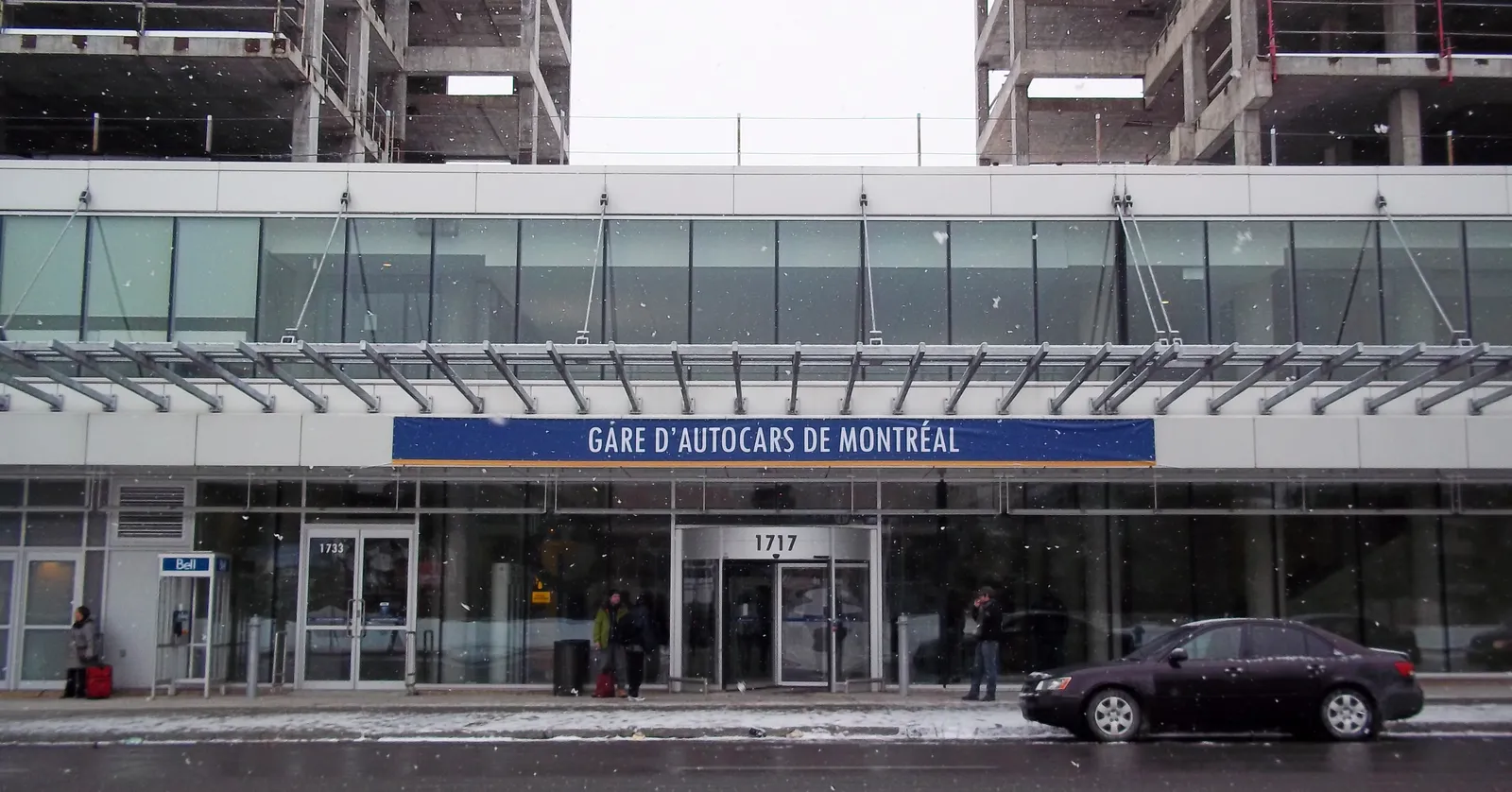
Montreal’s coach terminal on rue Berri sits on top of the only metro station where three lines meet, with Quebec’s national library free to walk into next door, a preserved 1850s church steeple inside the university block across the road, and the Village’s pedestrian stretch of rue Sainte-Catherine starting a block east.
The coach terminal on rue Berri is built over Berri-UQAM station
Close to 300 coach movements a day pass through 1717 rue Berri, which makes this the arrival point for most people who reach Montreal by road rather than by air. A bus station opened on the site in 1951; the building standing there now replaced it in 2011, with the waiting hall, the ticket counters and the metro entrance stacked into one block.
Underneath, Berri-UQAM has been running since 14 October 1966 and is the only place in the network where three lines cross, which is why it is both the largest station on the system and the busiest.
Quebec’s national library stands behind 6,000 green glass plates
Roughly six thousand frosted plates, each coated in a glacier-green ceramic meant to suggest northern Quebec light, wrap the Grande Bibliothèque at 475 boulevard De Maisonneuve Est. It opened on 30 April 2005 and pulled the province’s scattered collections into one building.
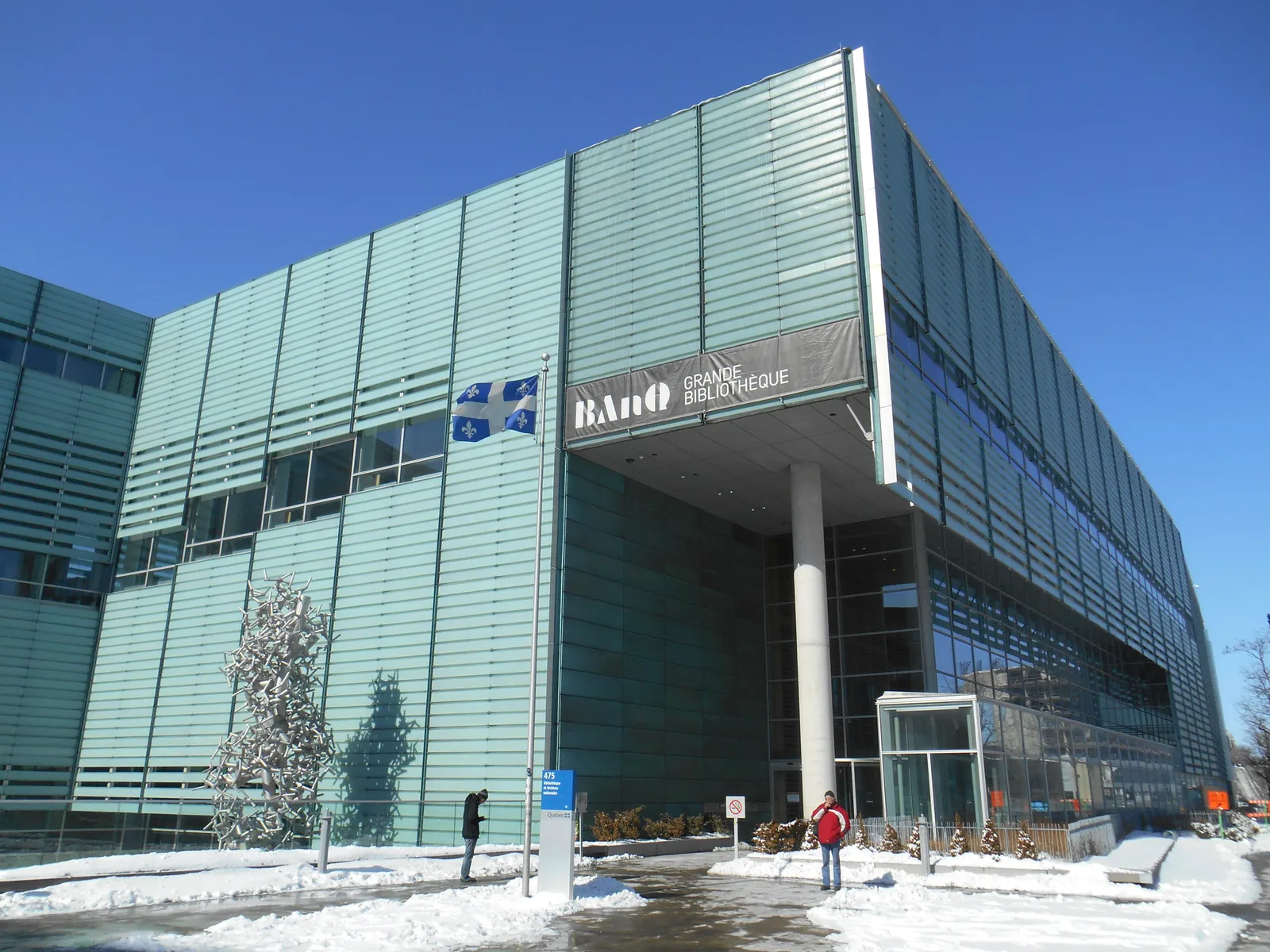
Inside there are six levels and 33,000 square metres, 2,520 seats, glass-sided lifts, exhibition halls and a children’s floor, holding a collection north of 3.5 million items. Nobody checks for a card at the door. For a traveller with two hours and a coat to take off, it is the most comfortable free room within walking distance of the terminal, and the only one that is genuinely warm in February. Its own entrance opens off the metro level below, where three lines converge and the transfer corridors narrow to a couple of people wide at the evening peak.
The Saint-Jacques steeple survives inside a university building
Fire and demolition took most of the old Saint-Jacques church, but the spire built between 1855 and 1857 and a section of the transept were classified as a historic monument in 1973, which meant they could not be cleared when the university started building on the site.
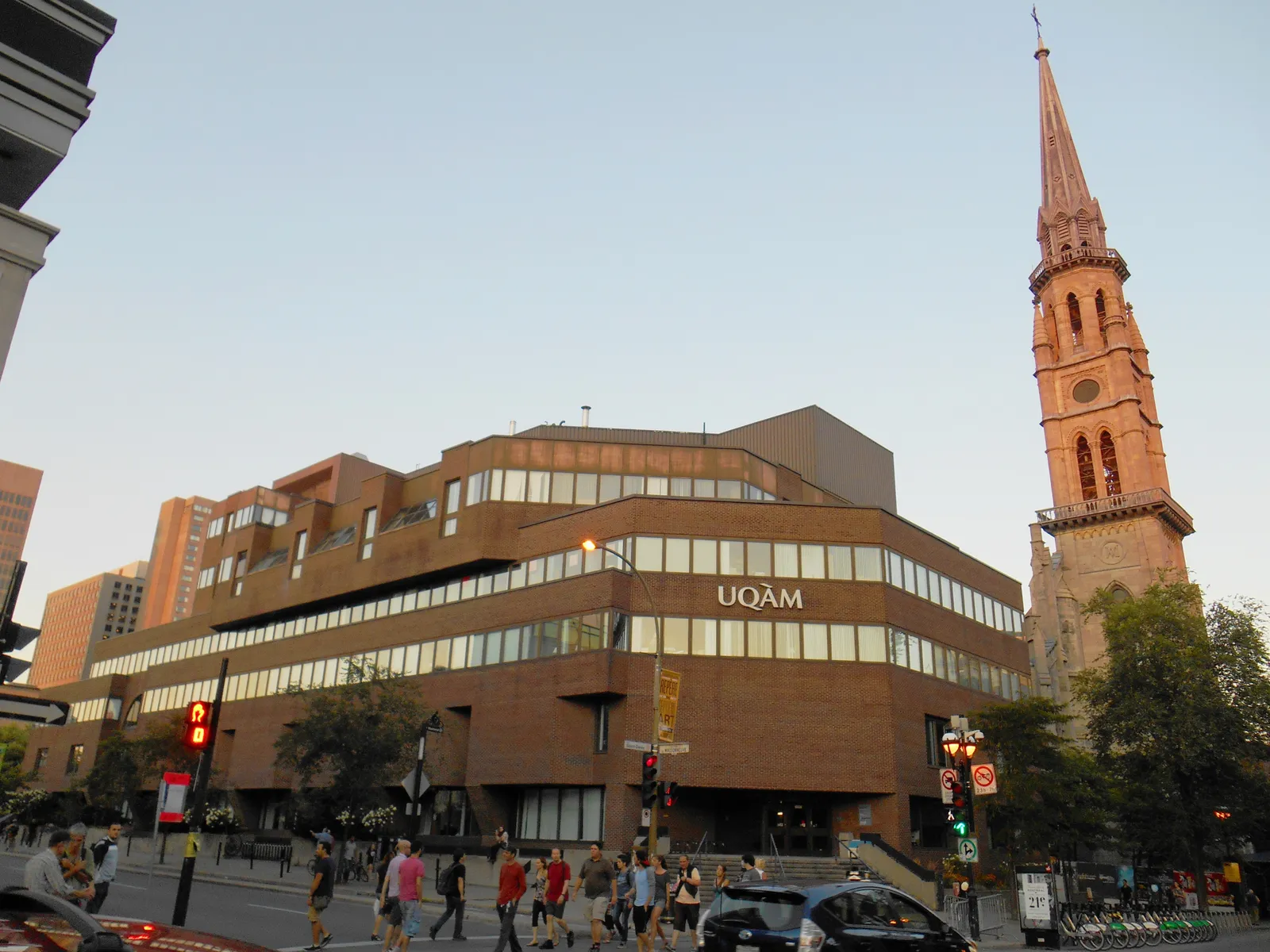
What went up from 1979 instead is the Judith-Jasmin pavilion, a low brick and glass block with the neo-Gothic spire rising straight out of one corner of it and the transept wall folded into the facade. Students walk to lectures through it. The effect from the pavement is a modern building that appears to have grown around a church rather than replaced one, and it costs nothing to stand and look at.
The airport bus turns round at the Berri terminal
Line 747 uses the terminal on rue Berri as its downtown end, so there is no connecting leg to build into the timing from here. It runs to Montréal-Trudeau International Airport (YUL) around the clock, every ten to twenty minutes, at CA$11.25, and that ticket doubles as a 24-hour pass on the rest of the bus and metro network. Pay on board and it has to be exact change in coins.
The full run makes eleven stops and takes 45 to 70 minutes of actual riding depending on traffic, which is the slowest of the routes out there, so add the wait and leave three clear hours before an international flight. One wrinkle worth knowing: since 26 January 2026 the downtown departure point has been a stop on René-Lévesque at Berri rather than the terminal building itself, because of construction on the block. If the wait stretches well past four hours, the Montreal layover guide is the version that gets you across to the old quarter and the waterfront, and the Gare Centrale version of this trip covers the other end of downtown.
Rue Sainte-Catherine Est closes to cars for the summer
A block east of the terminal the street turns into the Village’s main axis, and from late spring through September it is shut to traffic along that stretch, hung with strings of small coloured spheres and lined end to end with terraces. It has run this way for around two decades, and the city has committed to making the kilometre between Berri and Papineau permanently car-free by 2030.
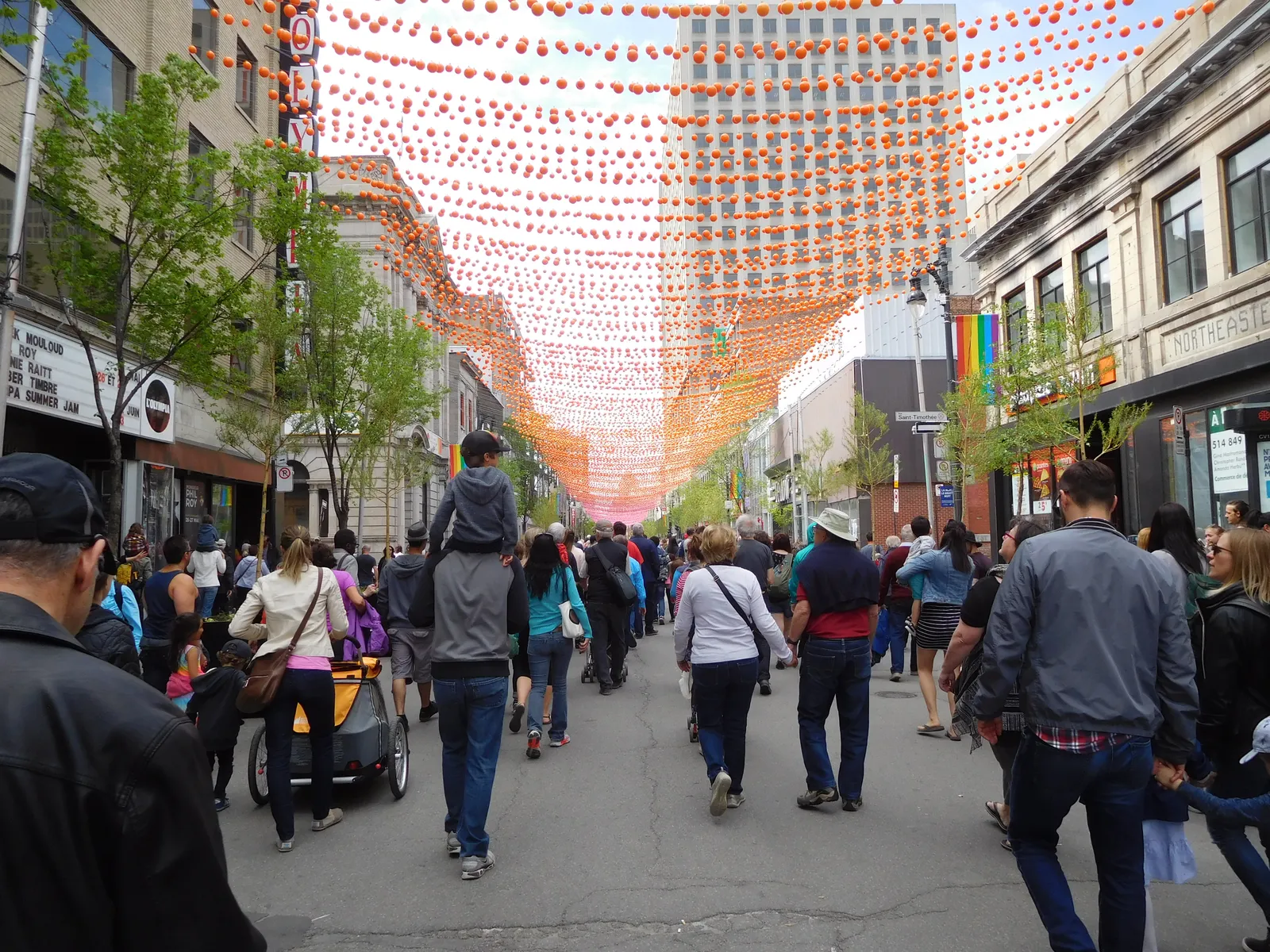
Out of season it reverts to an ordinary traffic street and the argument for walking it largely goes with the terraces, so this is the one stop here that depends entirely on when you turn up. The library and the steeple work in any weather; this does not.
Frequently asked questions
What should I do during a layover near the Gare d'autocars de Montréal at Berri-UQAM in Montreal?
Everything worth doing here is within about five minutes on foot of the terminal doors, which is the whole argument for this corner. Quebec's national library is the first stop and costs nothing: six floors, 2,520 seats and warmth, which matters between November and April. The old Saint-Jacques steeple standing inside the university block across the road is a two-minute look. If the weather is good and it is anywhere between late spring and September, rue Sainte-Catherine east of here is shut to cars and is the better hour.
Is the Grande Bibliothèque worth going into if you are not a member?
Yes, and nothing about it requires one. Walking in is free for anyone, the building runs six levels over 33,000 square metres with 2,520 seats, and the collection behind them tops 3.5 million items. The exterior is the part people photograph: roughly 6,000 frosted glass plates in a glacier-green ceramic coating, meant to read as northern Quebec light. Borrowing needs a card, sitting down and reading does not. Check the day's hours before counting on it, since they are shorter at weekends than midweek.
Which buses and trains actually use Berri-UQAM?
More than anywhere else in the city. The coach terminal at 1717 rue Berri handles close to 300 intercity departures and arrivals a day and is where most long-distance coaches into Montreal end up, including services Amtrak sells as connections. Underneath it, Berri-UQAM is the only station where three of the metro's lines meet, the green, the orange and the yellow, and it has been the network's largest and busiest since it opened on 14 October 1966.
How do you get from Berri-UQAM to Trudeau airport?
The airport bus turns round here, which is the practical advantage of this corner. Line 747 runs between the Berri terminal and Montréal-Trudeau International Airport (YUL) 24 hours a day, every ten to twenty minutes, for CA$11.25, a fare that then works as a 24-hour pass on the rest of the network. The full run makes eleven stops and takes 45 to 70 minutes of riding time depending on traffic, so leave a clear three hours before an international departure. Since 26 January 2026 the downtown departure point has been a stop on René-Lévesque at Berri rather than inside the terminal building, because of construction work on the block.