Las Vegas Layover at the Neon Museum
Part of the full Las Vegas Layover: Walking the Strip From LAS
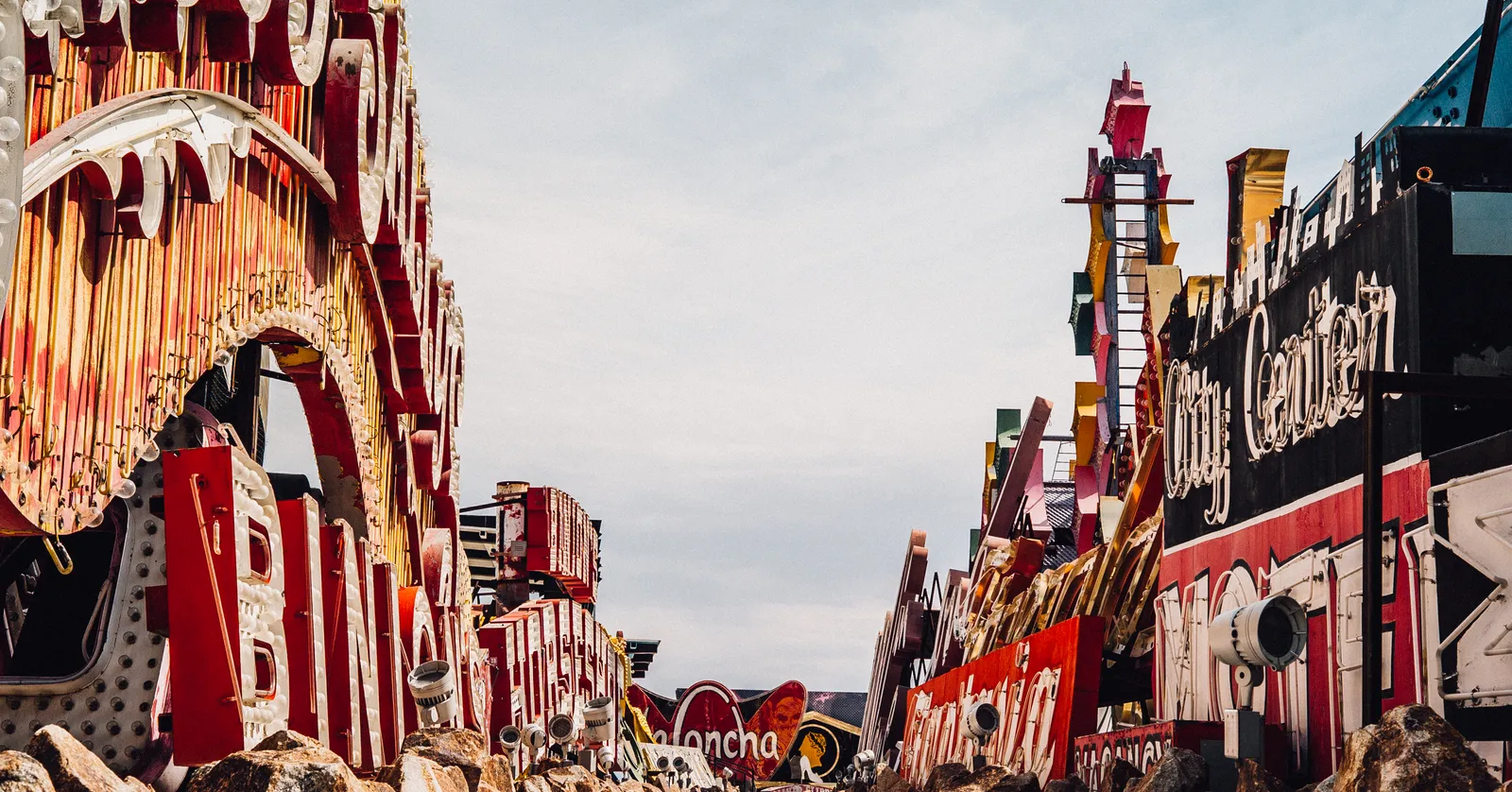
The Neon Museum’s boneyard stands more than 250 retired casino and motel signs upright in a yard at 770 Las Vegas Boulevard North, a few hundred yards from an 1855 adobe fort that is the oldest building in Nevada.
More than 250 retired signs in the Neon Museum’s boneyard
Signs came off the Stardust, the Sahara, the Golden Nugget and dozens of smaller motels as those buildings were demolished, and rather than being scrapped they were dragged into a yard on the north end of the boulevard and stood back up. Some are three storeys tall. Nearly all of them are the original steel, glass and paint, unrestored, which is the point: you can see the hand-lettering and the bulb sockets and the rust from three feet away instead of from a moving car.
Twenty-seven have been rewired and relit, and those are the argument for the evening ticket at $35 rather than the daytime one at $25. Entry is timed either way, self-guided or with a guide, and ninety minutes covers it comfortably; a slot is worth booking before you arrive, since walking up and waiting for the next one costs more time than a flight day usually has.
The La Concha Motel’s shell-shaped lobby, moved here in 2006
The building you buy tickets in is the reason architects come to this address. Paul Revere Williams designed the La Concha Motel’s lobby in 1961 as three white concrete shells sweeping up off the ground, and it stood on the Strip beside the Riviera for forty-odd years until the motel was cleared.
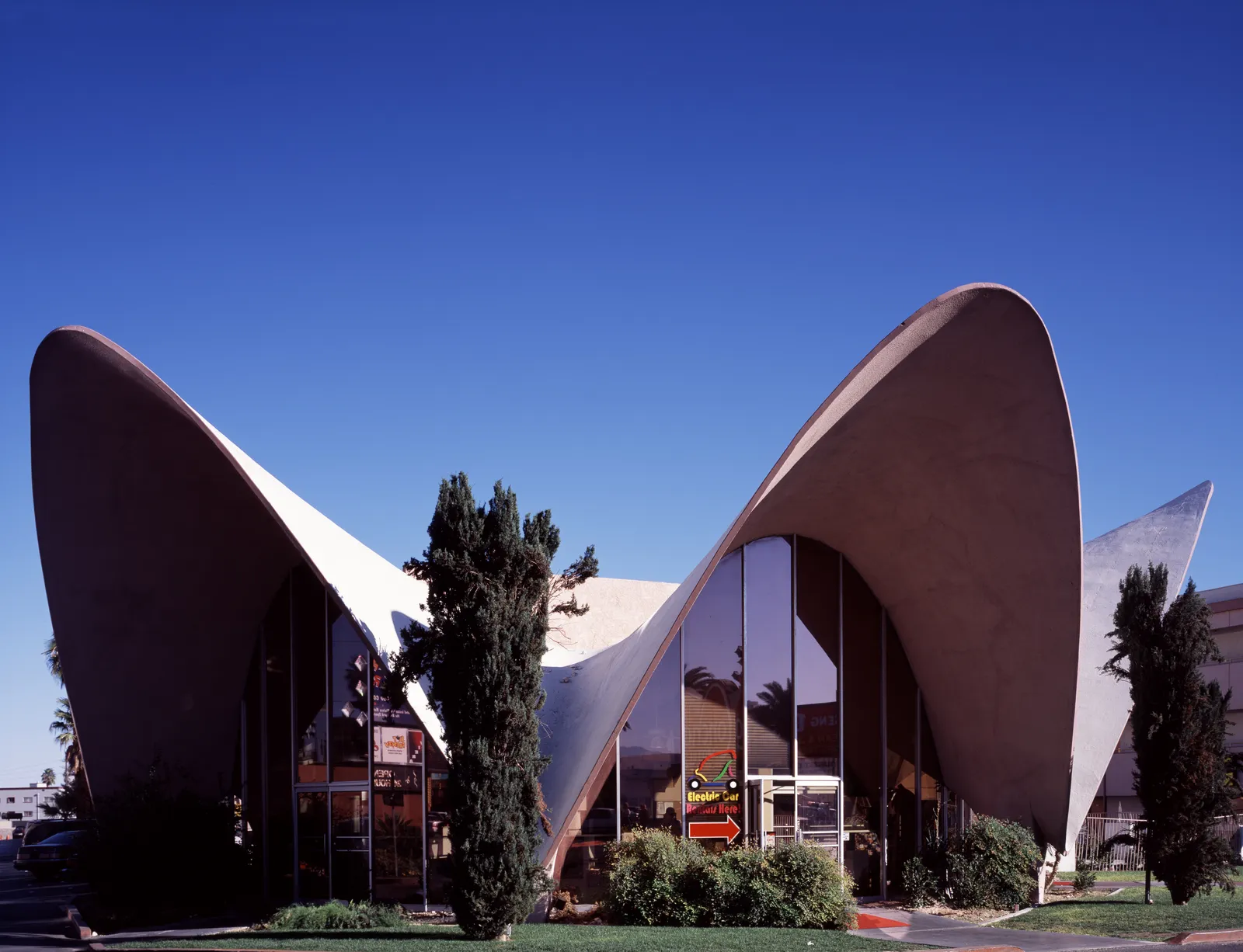
It was saved from demolition in 2005, cut into sections, trucked north up the boulevard and reassembled here in 2006 as the museum’s visitors’ centre. Williams became the first African American member of the American Institute of Architects in 1923 and its first African American Fellow in 1957, and designed some 3,000 buildings, most of them in Los Angeles; this one survived by being cut up and driven away. The museum has since floated relocating it a second time, to the Arts District, so if the building rather than the signs is what you are coming for, check where it is standing first.
The 1855 adobe fort at Las Vegas Boulevard and Washington Avenue
At the corner of Las Vegas Boulevard and Washington Avenue, a few minutes’ walk north of the boneyard, a low adobe building sits under cottonwoods beside a running creek, and it is the oldest building in Nevada. Mormon missionaries put up a fort here in 1855, a square of adobe wall 150 feet on each side with towers at two corners, half a century before the railroad auctioned the town into being.
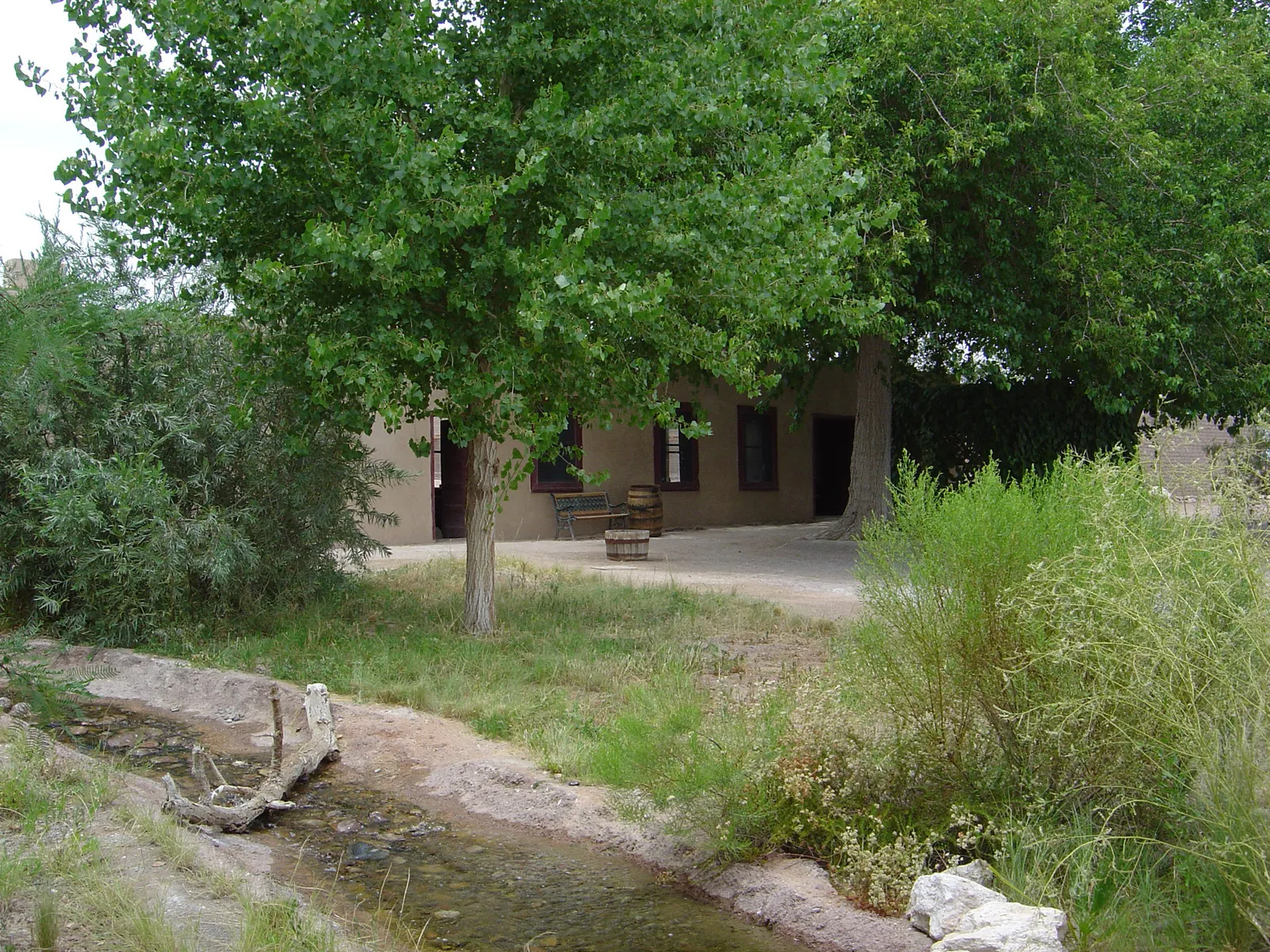
One section of the original wall survives, and the state park around it costs $3 for an adult and nothing for anyone twelve or under. It opens Tuesday to Saturday, 8am to 4:30pm, with the last admission at 4pm, so it goes before a boneyard slot rather than after one, and on a Sunday or Monday it is shut altogether. The Las Vegas Natural History Museum stands on the same block at 900 Las Vegas Boulevard North, open daily 9am to 4pm, with dinosaurs, marine tanks and a gallery built around Tutankhamun.
The boneyard’s paths are gravel and decomposed granite rather than paving, which is soft enough that a wheeled bag stops rolling within a few feet of the gate.
The boneyard is the far end of the boulevard from the airport
The Bonneville Transit Center is at 101 East Bonneville Avenue, about a mile south of the boneyard, and both routes to the airport start there: Route 108 down Paradise Road, about 34 minutes to Level Zero at Terminal 1 of Harry Reid International Airport (LAS) and leaving roughly every half hour, and the Red Line down Maryland Parkway, which reaches the same stop every 12 minutes through the day. From Terminal 3 you finish on the airport’s own free inter-terminal shuttle.
A taxi or rideshare from here runs about 20 minutes, which is longer than from the middle of the Strip, because this is the far end of the boulevard rather than the middle of it. That distance is the whole trade this end of town asks for, and it is the same one the main Las Vegas guide avoids by staying between Bellagio and the Venetian: half an hour of travel each way, in exchange for the only part of the city where its own history is still standing up in one place.
Frequently asked questions
Is the Neon Museum better by day or after dark?
They are two different visits. Twenty-seven of the signs have been fully restored and rewired, and those only do anything after dark, which is what the $35 evening ticket buys over the $25 daytime one. Daylight is the better half if you care about the objects themselves: the hand-painted lettering, the rusted steel, the bulb sockets, the sheer size of things that read as normal-sized from a car. Neither half needs more than about ninety minutes.
How far is the Neon Museum from Fremont Street?
Just over half a mile straight up Las Vegas Boulevard from the north end of the covered mall, which is 12 to 15 minutes on foot along a street with pavements the whole way. It is a different kind of walk from the mall itself: quiet, unshaded, and past a stretch of old motels rather than casinos. If you are combining the two, the museum first and the canopy afterwards works better, because the light shows downtown do not start until 6pm anyway.
Does the Neon Museum work with elderly parents?
With one caveat, yes. The whole visit is outdoors and the boneyard's paths are gravel and decomposed granite rather than paving, so it is uneven underfoot and there is very little shade or seating between the rows. The route is flat and short, though, and self-guided admission means you can stop whenever you like rather than keep pace with a guide. Between June and September the evening slot is the humane one; the same walk at 3pm in August is a different proposition entirely.
Can you fit the Neon Museum and the Mormon fort into the same afternoon?
Only Tuesday to Saturday, and only if you do the fort first. The state park shuts at 4:30pm with the last admission at 4pm, and it does not open at all on Sundays or Mondays, while the museum's evening slots do not begin until it is dark. On a Tuesday-to-Saturday afternoon the order writes itself: the fort before four, the quarter mile back down the boulevard, then a boneyard slot as the light goes. On a Sunday or Monday the fort is out and you have the museum and the Natural History Museum next door to it, which closes at 4pm as well.